Species details
Saffron milk cap
Lactarius deliciosus
Traditionally edible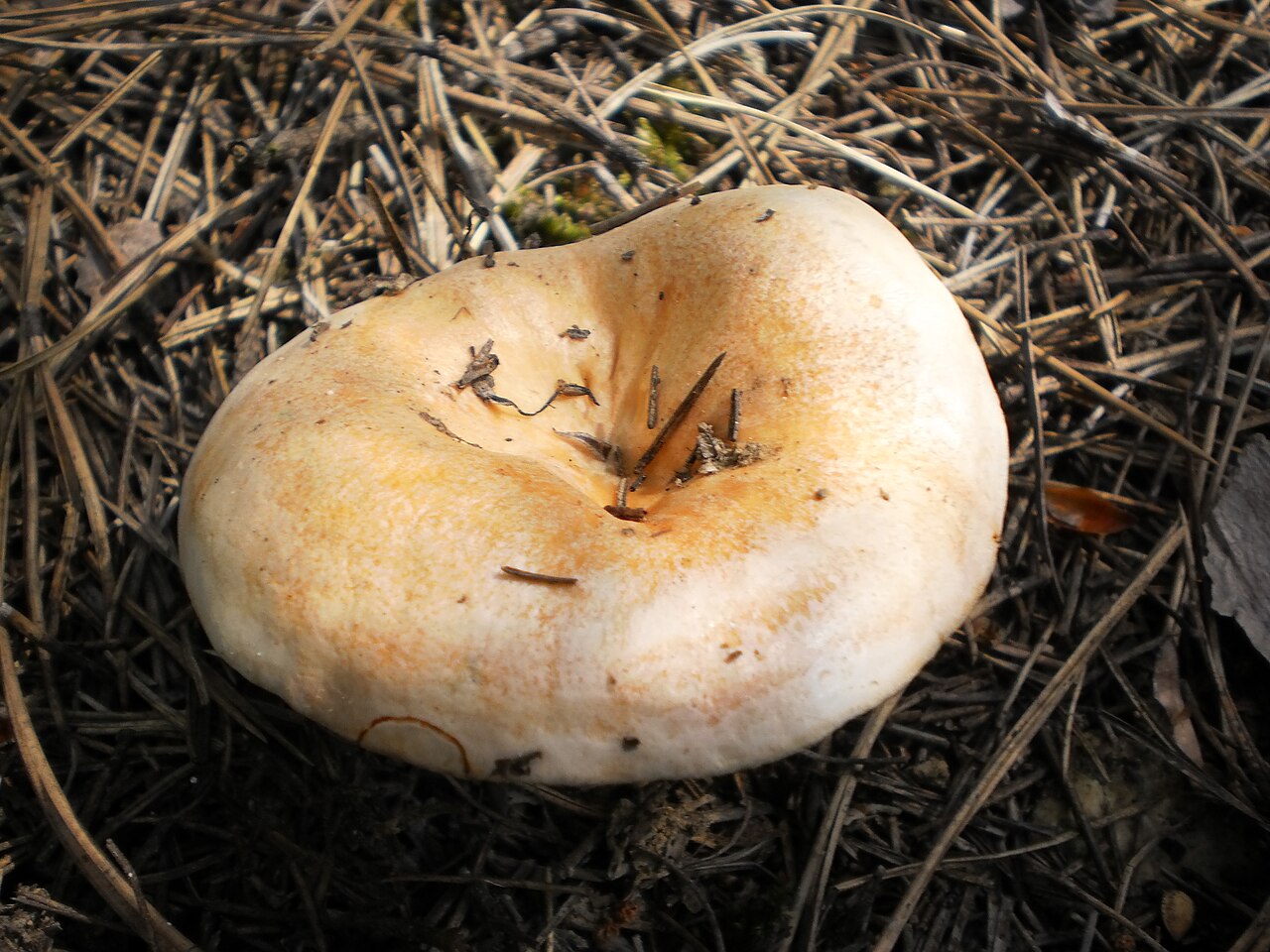
Photo: L.Payakoff · CC BY-SA 3.0 · Photo source · License

Description
An orange milkcap with a zoned cap, orange latex, and green staining where damaged.
Identification features
The gills and latex are orange, and damaged areas gradually turn green. It must be distinguished from other milkcaps.
Identification checklist
The orange, usually zoned cap is convex at first and later funnel-shaped. Orange gills run slightly down the stem and release carrot-orange latex when damaged; injured areas later turn green. The stem often has shallow orange pits, and the species grows mainly with pines.
Detailed features
- Cap
- 5–12 cm, pale orange to ochre, initially flat with a strongly inrolled margin, later depressed, often with darker concentric zones.
- Hymenophore
- Gills are orange, crowded, attached to slightly decurrent; damage releases orange latex.
- Stem
- 3–6 cm, pale orange, soon hollow, with characteristic darker pitted spots.
- Flesh
- Whitish to pale ochre; quickly coloured by orange latex when cut.
- Spore print
- Cream.
Size
- Cap diameter
- 5–12 cm
- Stem height
- 3–6 cm
- Stem diameter
- 1–2 cm
Habitat
Mycorrhizal with pine on sandy or calcareous soil.
Fruiting period
July, August, September, October, November
Ecology
- Trophic mode
- Mycorrhizal
- Host trees
- Pine (Pinus)
Distribution
- Notes
- In Europe it is characteristically associated with pines and pine woodland.
How to separate similar species
False saffron milkcap is mainly associated with spruce, often greens while young, and usually has a smooth stem without the characteristic pits. Woolly milkcap has a pink cap with a woolly margin, white latex, and grows with birch.
Similar species
Interesting facts
Did you know? Orange latex is a key feature of this saffron milkcap group; its colour and later changes help separate related species.