Species details
Oyster mushroom
Pleurotus ostreatus
Traditionally edible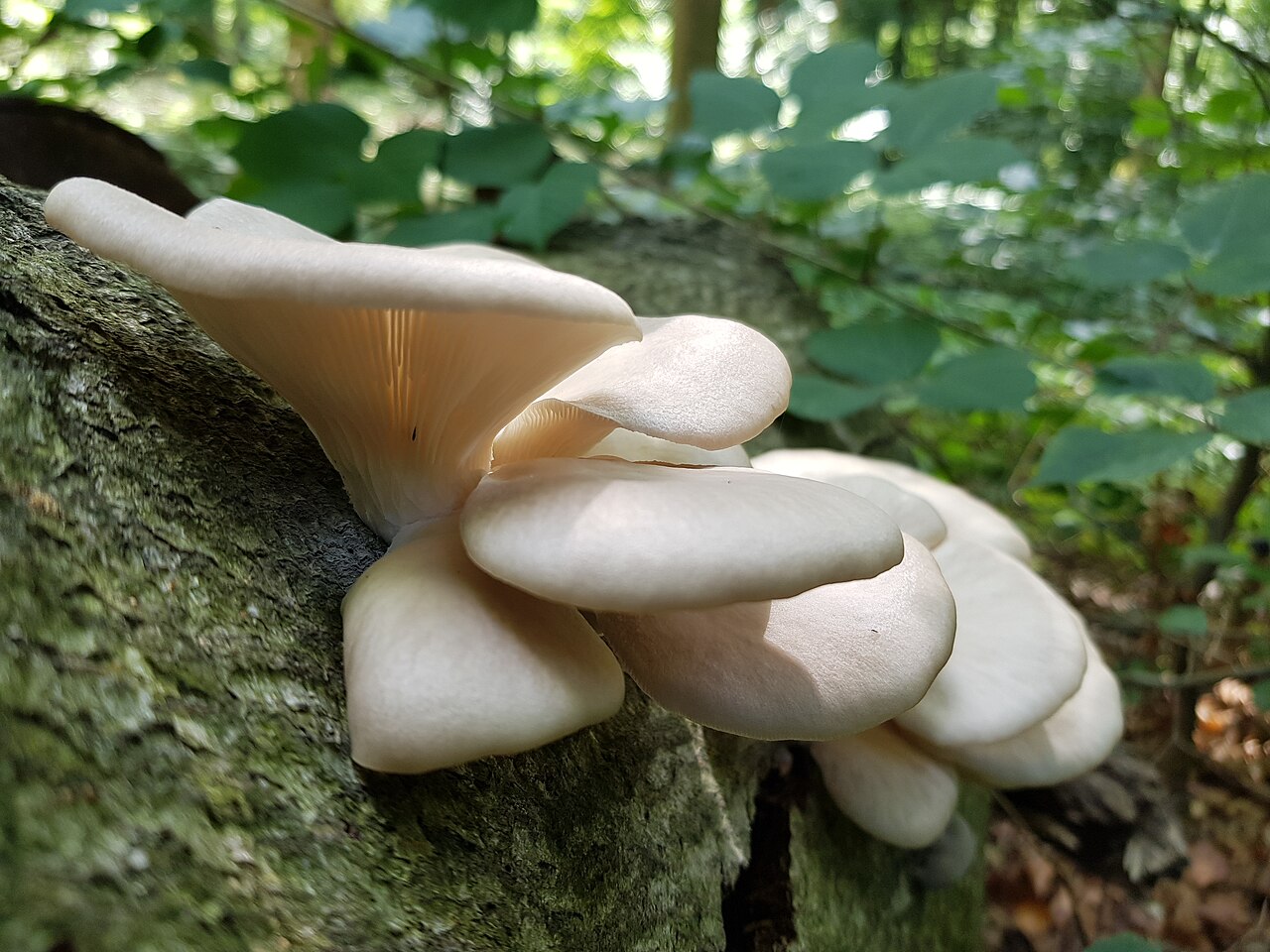
Photo: Franck Hidvégi · CC BY-SA 4.0 · Photo source · License

Description
A fan- to shell-shaped mushroom with white gills running down toward a short lateral stem.
Identification features
It grows in overlapping clusters. The cap is grey, blue-grey, or brownish, and the spore print is pale.
Identification checklist
Caps are shell- or fan-shaped, grey to brownish, often overlapping in clusters. White to cream gills run down toward a short lateral stem, and the flesh is relatively thick.
Detailed features
- Cap
- 4–10 cm, shell- to fan-shaped, grey to grey-brown, smooth and often laterally attached.
- Hymenophore
- Gills are whitish to cream, crowded and decurrent.
- Stem
- Short or nearly absent, often lateral, white and sometimes hairy at the base.
- Flesh
- White and firm; becomes tough with age.
- Smell
- Pleasant and mild.
- Spore print
- White with a faint lilac tint.
Size
- Cap diameter
- 4–10 cm
- Stem height
- 2–6 cm
- Stem diameter
- 1–2 cm
Habitat
On dead or weakened hardwood, especially beech, poplar, and willow.
Fruiting period
January, February, March, October, November, December
Ecology
- Trophic mode
- Saprotrophic
- Host trees
- Beech (Fagus)
- Substrate
- Dead hardwood, Stumps
Distribution
- Notes
- Widespread in Europe and extensively cultivated as a food mushroom.
How to separate similar species
Angel wings are thinner, pure white, usually stemless, and mainly grow on conifer wood. Jack-o’-lantern is orange, densely clustered, and poisonous. Check the host wood and spore-print colour.
Similar species
Interesting facts
Did you know? In the wild it often grows in overlapping clusters on dead wood, especially beech.