Species details
Common mushroom
Agaricus bisporus
Traditionally edible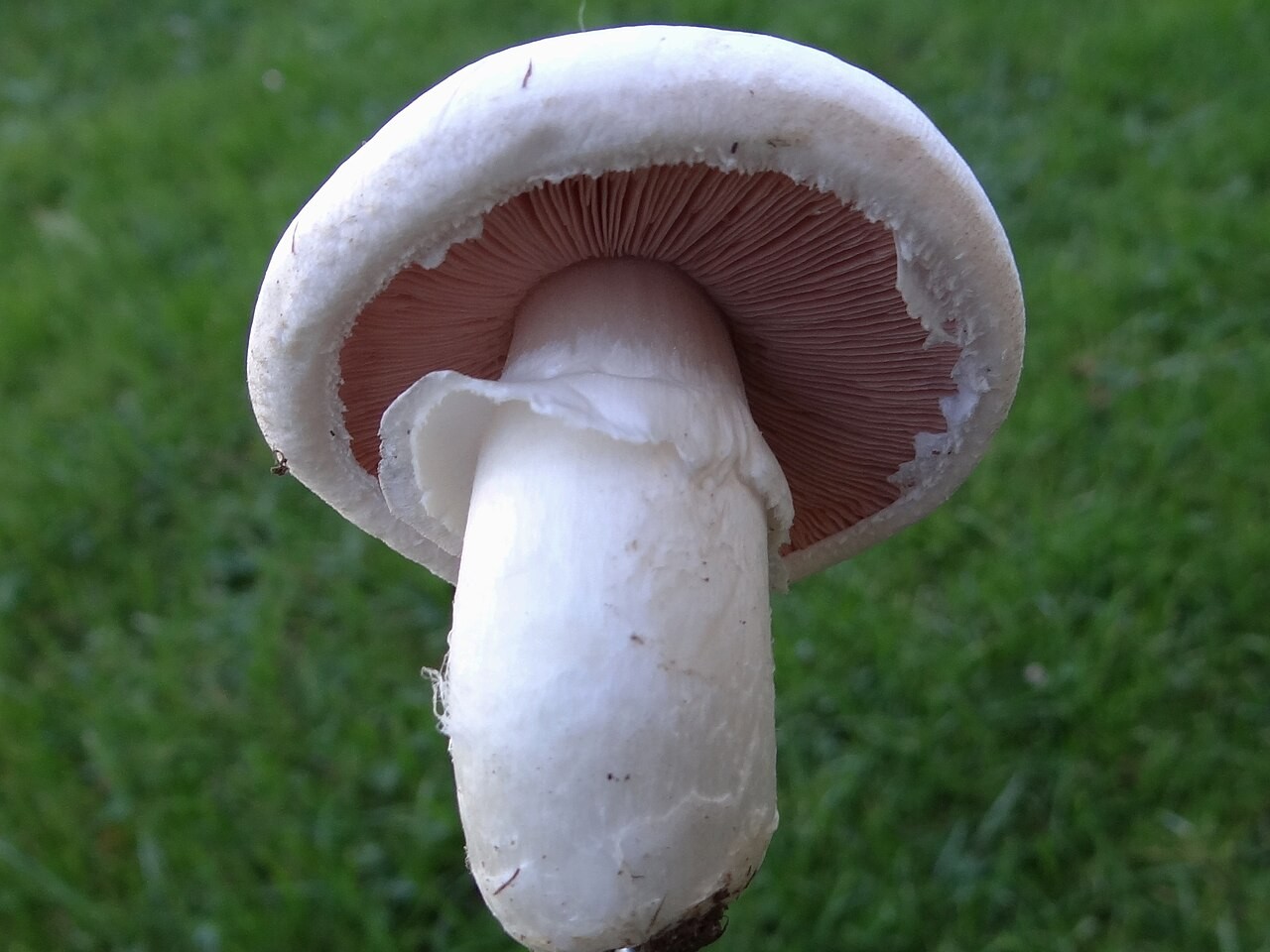
Photo: Jerzy Opioła · CC BY-SA 3.0 · Photo source · License

Description
The world's main cultivated Agaricus, also found outdoors on rich organic soils; young gills are pink and later chocolate brown.
Identification features
The cap reaches about 10 cm, white to tobacco-brown and sometimes brown-scaled. Gills are free, first pink then reddish-brown to dark brown. The stem is short and stout with a white ring.
Identification checklist
Check free gills maturing from pink to chocolate brown, a white ring, and the absence of strong yellow staining and phenolic odour.
Detailed features
- Cap
- The cap reaches about 10 cm, white to tobacco-brown and sometimes brown-scaled.
- Hymenophore
- Gills are free, first pink then reddish-brown to dark brown.
- Stem
- The stem is short and stout with a white ring.
Size
- Cap diameter
- ≤ 10 cm
Habitat
Outdoors on very rich soils, in gardens, pastures, roadsides and manured places, in summer and autumn.
Fruiting period
June, July, August, September, October
Ecology
- Substrate
- Grassland
- Notes
- Outdoors on very rich soils, in gardens, pastures, roadsides and manured places, in summer and autumn.
How to separate similar species
Poisonous yellow-staining Agaricus, especially A. xanthodermus, can cause gastrointestinal illness. Strong yellowing and an unpleasant phenolic smell are warning signs.