Species details
Pavement mushroom
Agaricus bitorquis
Traditionally edible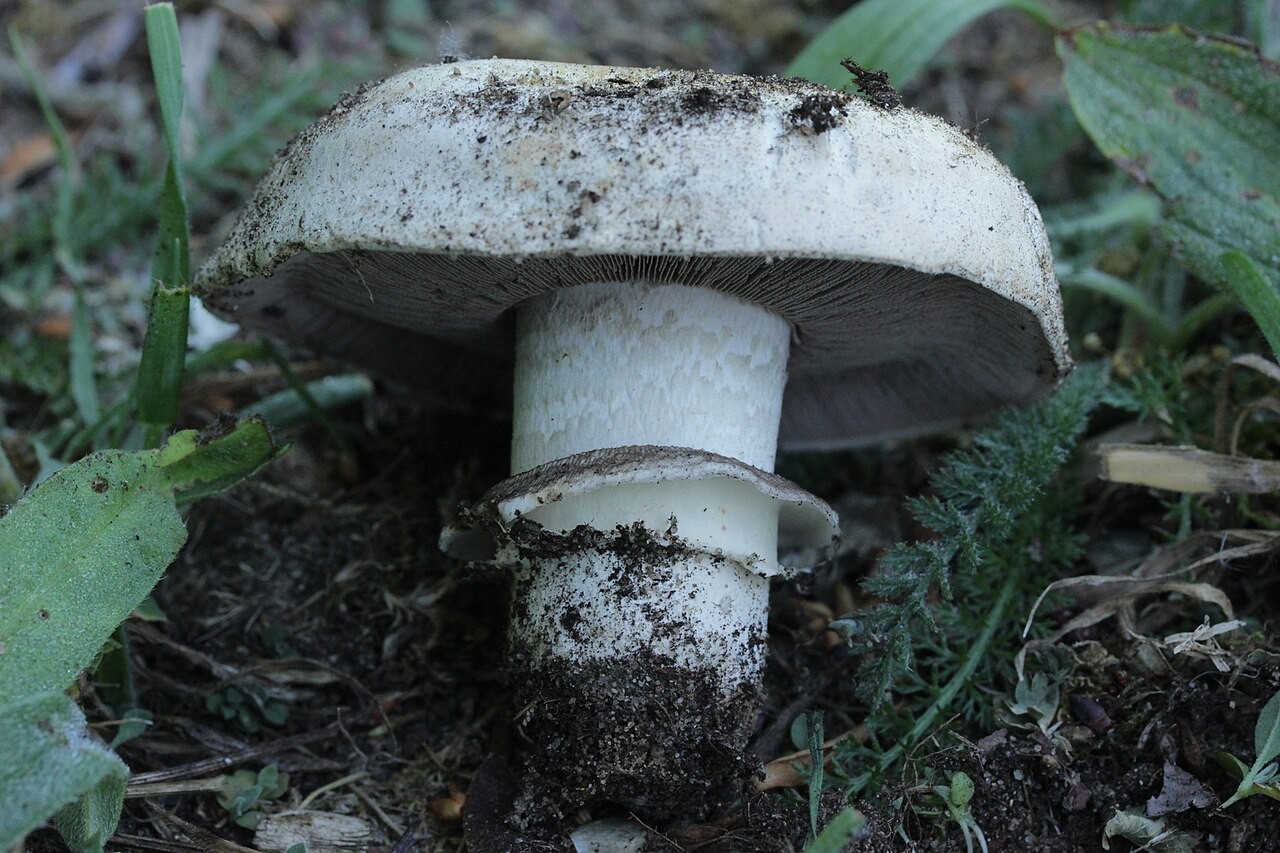
Photo: bjoerns · CC BY-SA 4.0 · Photo source · License

Description
A firm white to grey-yellow Agaricus with a characteristic double ring, often found beside paths, lawns, and compacted urban ground.
Identification features
The cap is white to grey-yellow, fleshy, and firm. Young gills are pink, becoming chocolate brown and remaining free. The stem is short and stout with a distinctive double ring.
Identification checklist
Check the double ring, free gills changing from pink to chocolate brown, and the firm short stem. Do not rely on urban habitat alone.
Detailed features
- Cap
- The cap is white to grey-yellow, fleshy, and firm.
- Hymenophore
- Young gills are pink, becoming chocolate brown and remaining free.
- Stem
- The stem is short and stout with a distinctive double ring.
- Smell
- No distinctive smell.
- Spore print
- Chocolate-brown.
Size
- Cap diameter
- 3–15 cm
- Stem height
- ≤ 6 cm
- Stem diameter
- ≤ 2 cm
Habitat
Grows in parks, lawns, beside paths and roads, and often in heavily compacted soil, from spring to autumn.
Fruiting period
May, June, July, August, September, October
Ecology
- Trophic mode
- Saprotrophic
- Substrate
- Grassland
- Notes
- Grows in parks, lawns, beside paths and roads, and often in heavily compacted soil, from spring to autumn.
How to separate similar species
Poisonous yellow-staining Agaricus often yellow strongly and smell unpleasantly phenolic or inky. Check odour, colour changes, and the whole stem.
Similar species
- Meadow mushroom (Agaricus campestris)
- Yellow stainer (Agaricus xanthodermus) DANGEROUS
The Yellow Stainer is poisonous, yellows strongly especially at the base, and has an unpleasant phenolic smell.
- Horse mushroom (Agaricus arvensis)
Interesting facts
Did you know? Check the double ring, free gills changing from pink to chocolate brown, and the firm short stem. Do not rely on urban habitat alone.