Species details
Scarletina bolete
Neoboletus luridiformis
Conditional / expert preparation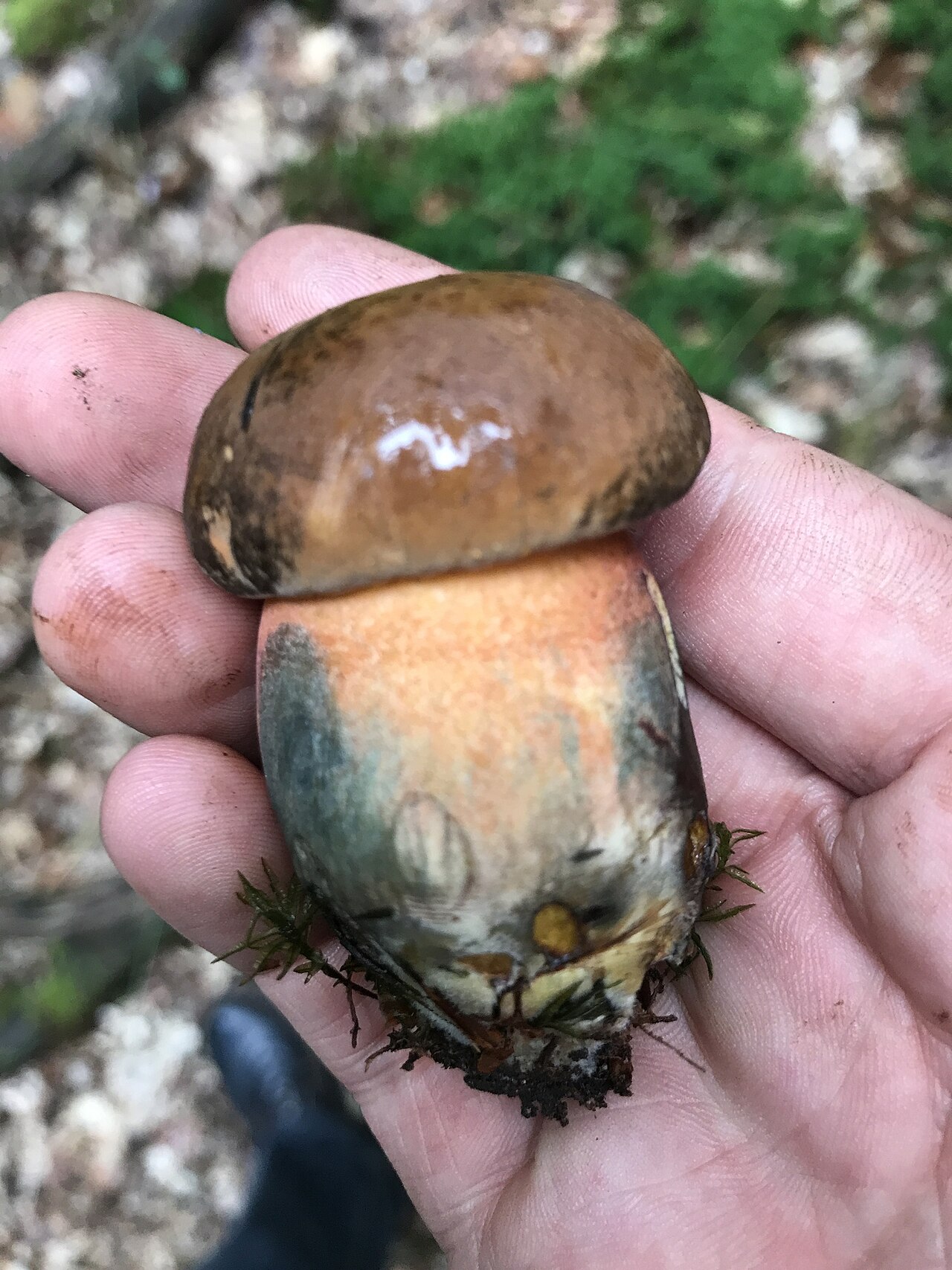
Photo: mangoblatt · CC0 · Photo source · License

Description
A dark brown bolete with red pores and a yellow stem densely covered in red dots.
Identification features
The flesh rapidly turns deep blue when cut and the stem has no net. It may cause poisoning if raw or undercooked.
Identification checklist
Check the entire fruitbody for identification. A dark brown bolete with red pores and a yellow stem densely covered in red dots. The flesh rapidly turns deep blue when cut and the stem has no net. It may cause poisoning if raw or undercooked. Typical habitat: In deciduous and coniferous woodland, often on acidic soil.
Detailed features
- Cap
- 5–20 cm, light to dark brown, dry and often velvety when young.
- Hymenophore
- Tubes are yellow to greenish; pores are orange-red to red and bruise rapidly and strongly blue.
- Stem
- 7–15 × 3–5 cm, yellow with dense fine bright-red dots; without a reticulum.
- Flesh
- Yellow; turns very rapidly and strongly blue when cut.
- Smell
- Mild mushroom-like smell.
- Spore print
- Olive-brown.
Size
- Cap diameter
- 5–20 cm
- Stem height
- 7–15 cm
- Stem diameter
- 3–5 cm
Habitat
In deciduous and coniferous woodland, often on acidic soil.
Fruiting period
May, June, July, August, September, October, November
Ecology
- Trophic mode
- Mycorrhizal
- Host trees
- Beech (Fagus), Oak (Quercus), Spruce (Picea)
- Substrate
- Forest soil
- Soil
- Acidic
- Notes
- A mycorrhizal species of deciduous, mixed and conifer woodland, often on more acidic soils.
Distribution
- Notes
- A widespread European woodland bolete, especially where suitable host trees occur.
How to separate similar species
Compare especially with these similar species: Suillellus luridus, Rubroboletus satanas. Check the combination of cap shape and colour, spore-bearing surface, stem, flesh changes and habitat. A single feature or photograph is not enough; if the key characters do not match the description, do not treat the identification as confirmed.
Similar species
- Lurid bolete (Suillellus luridus) DANGEROUS
Lurid bolete has a conspicuous reddish reticulum on the stem; scarletina bolete has fine red dots without a reticulum.
- Satan's bolete (Rubroboletus satanas) DANGEROUS
Satan’s bolete usually has a very pale to grey cap and a stout, strongly reticulate stem; red-pored boletes require particular care.
Interesting facts
Did you know? The intense blueing of damaged flesh is a rapid oxidation reaction of pigments and by itself says nothing about edibility.