Species details
Rosy brittlegill
Russula rosea
Traditionally edible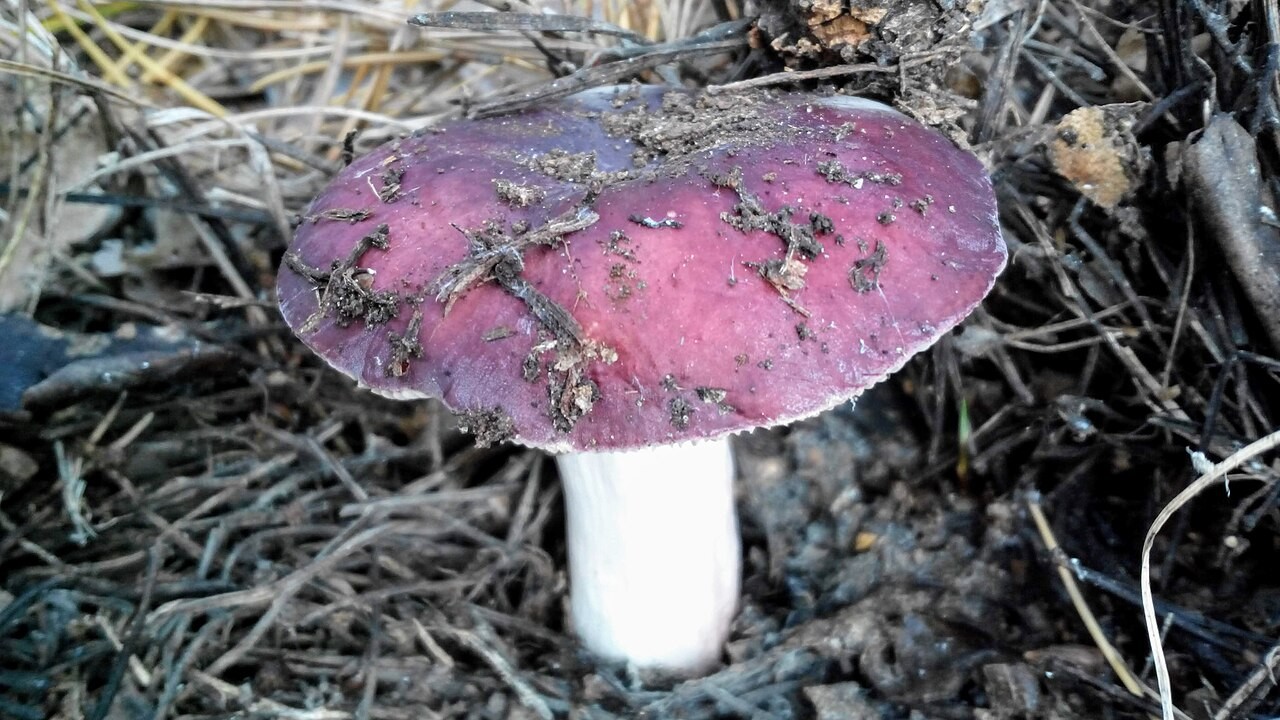
Photo: Мандрівниця · CC BY 4.0 · Photo source · License
_%D0%B2_%D1%81%D0%BE%D1%81%D0%BD%D0%BE%D0%B2%D0%B8%D1%85_%D0%BB%D1%96%D1%81%D0%B0%D1%85_%D0%9F%D0%BE%D0%BB%D1%82%D0%B0%D0%B2%D1%89%D0%B8%D0%BD%D0%B8_01.jpg)
Description
A medium-sized pink to carmine-red Russula with white gills, a white stem, and mild taste.
Identification features
The cap is smooth, pink to carmine-red, often darker centrally and may fade strongly. Gills are white and crowded. The stem is white; flesh is firm at first and later brittle.
Identification checklist
Check white gills and stem, pink-red cap, brittle Russula texture, and mild flesh. Reliable identification of red Russula may require additional characters.
Detailed features
- Cap
- The cap is smooth, pink to carmine-red, often darker centrally and may fade strongly.
- Hymenophore
- Gills are white and crowded.
- Stem
- The stem is white; flesh is firm at first and later brittle.
- Flesh
- White, initially firm, later rather brittle.
- Smell
- No distinctive smell.
- Spore print
- Whitish to very pale cream.
Size
- Cap diameter
- 4–8 cm
- Stem height
- 3–8 cm
- Stem diameter
- 1,5–2,5 cm
Habitat
Grows with deciduous and coniferous trees, often in beech woodland, in summer and autumn.
Fruiting period
July, August, September, October
Ecology
- Trophic mode
- Mycorrhizal
- Host trees
- Beech (Fagus)
- Substrate
- Forest soil
- Notes
- Grows with deciduous and coniferous trees, often in beech woodland, in summer and autumn.
How to separate similar species
Russula nobilis and R. emetica can be similarly red but have acrid flesh and are unsuitable for eating.
Similar species
- Beechwood sickener (Russula nobilis) DANGEROUS
- Sickener (Russula emetica) DANGEROUS
- Russula silvestris
Interesting facts
Did you know? Its mild taste is a useful supporting character compared with similar red Russulas that can be distinctly acrid.