Species details
Sickener
Russula emetica
Poisonous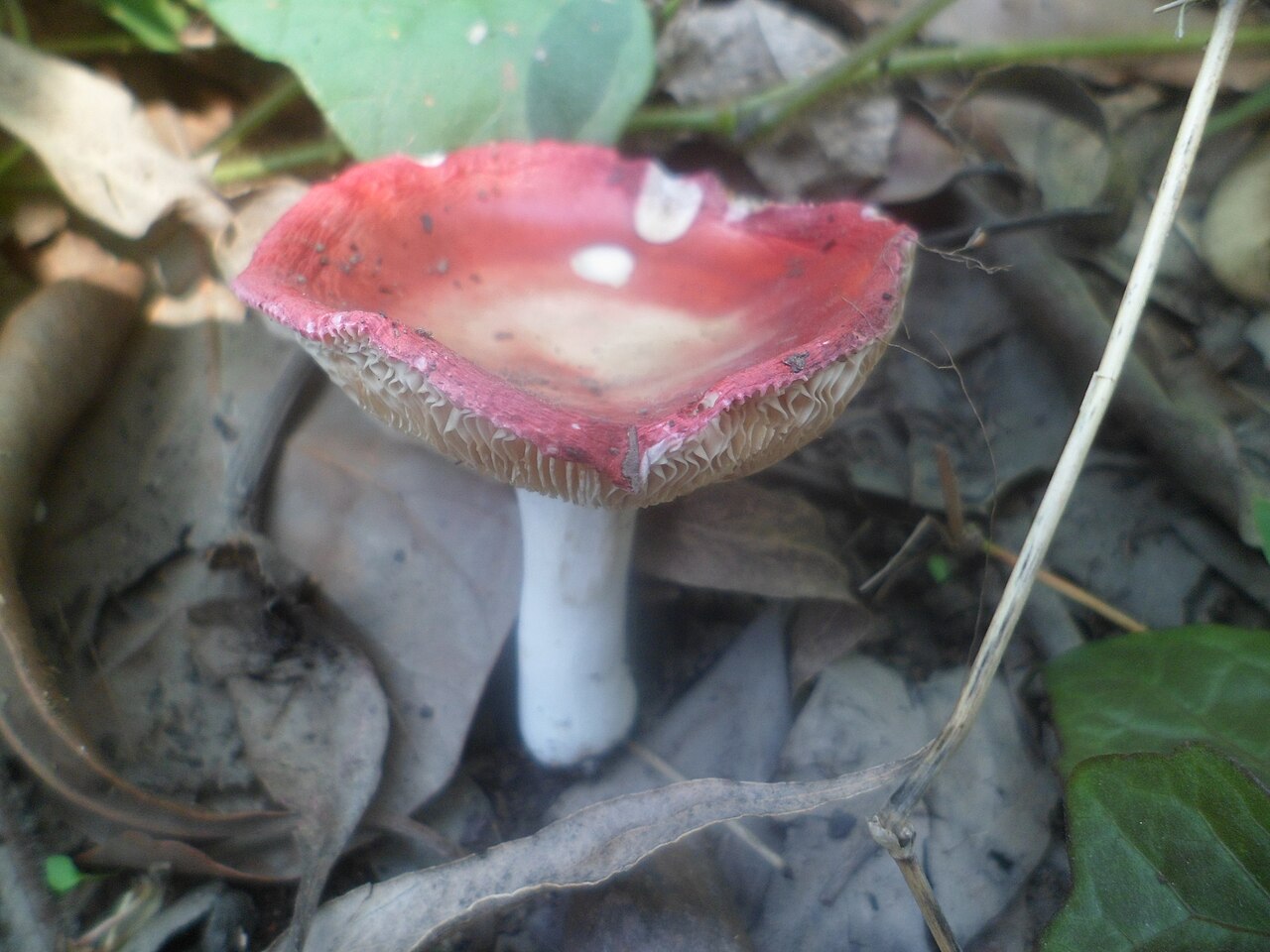
Photo: Chiranjivisubedi · CC BY-SA 4.0 · Photo source · License

Description
A bright red brittlegill with white gills, a white stem, and intensely acrid flesh.
Identification features
The cap skin peels partly, while the gills and spore print remain white. Red brittlegills resemble one another, and tasting unknown mushrooms is not a safe home method.
Identification checklist
The cap is glossy scarlet to cherry-red, often with a slightly paler centre; the skin peels partly. Gills, stem, and flesh are white, with a white to very pale cream spore print. It is common in damp conifer woodland.
Detailed features
- Cap
- 3–5 cm, bright red to pinkish red, smooth and glossy; the cap skin peels fairly readily at least near the margin.
- Hymenophore
- Gills are snow-white, crowded and brittle.
- Stem
- 3–6 × 0.6–1 cm, white, brittle and cylindrical.
- Flesh
- White and very brittle, without conspicuous colour change.
- Smell
- Mild to scarcely noticeable.
- Spore print
- White.
Size
- Cap diameter
- 3–5 cm
- Stem height
- 3–6 cm
- Stem diameter
- 0,6–1 cm
Habitat
On wet acidic soil, often with spruce, pine, or birch.
Fruiting period
July, August, September, October, November
Ecology
- Trophic mode
- Mycorrhizal
- Host trees
- Spruce (Picea), Pine (Pinus), Birch (Betula)
- Substrate
- Forest soil
- Soil
- Acidic, Moist
- Notes
- Mycorrhizal on wet acidic woodland soils, often with spruce, pine and birch.
Distribution
- Notes
- Distributed mainly in cooler, wet, acidic woodland habitats of Europe.
How to separate similar species
Beechwood sickener is very similar but mainly associated with beech. Other red brittlegills such as Russula paludosa may overlap in appearance. Reliable identification often requires ecology and microscopy.
Similar species
- Swamp brittlegill (Russula paludosa)
The sickener can be confused with other red brittlegills; reliable identification requires more than cap colour alone.
Interesting facts
Did you know? The species name reflects its strongly irritating, acrid nature and association with gastrointestinal illness after ingestion.