Species details
Swamp brittlegill
Russula paludosa
Traditionally edible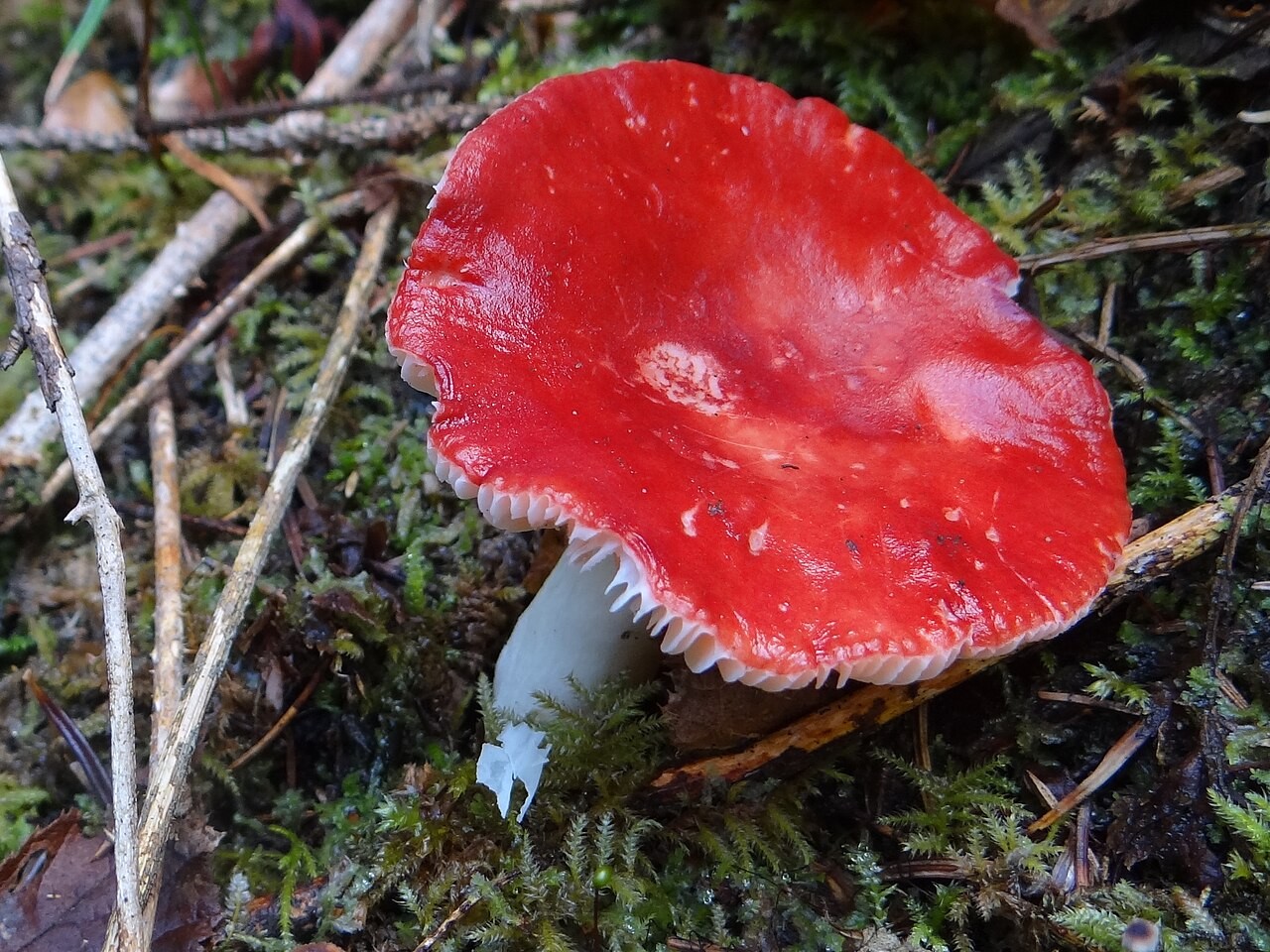
Photo: Jerzy Opioła · CC BY-SA 4.0 · Photo source · License

Description
A large strawberry-red Russula with a white or pink-flushed stem, typical of damp coniferous habitats.
Identification features
The cap is 8–15 cm wide, smooth, glossy, and strawberry-red to reddish-brown. Gills start white and become pale ochre. The stem is white or reddish-flushed and firm.
Identification checklist
Check the large robust fruitbody, glossy strawberry-red cap, pale ochre gills, and damp conifer habitat. Do not identify red Russula by colour alone.
Detailed features
- Cap
- The cap is 8–15 cm wide, smooth, glossy, and strawberry-red to reddish-brown.
- Hymenophore
- Gills start white and become pale ochre.
- Stem
- The stem is white or reddish-flushed and firm.
- Smell
- No distinctive smell.
- Spore print
- Pale ochre.
Size
- Cap diameter
- 8–15 cm
- Stem height
- 5–10 cm
- Stem diameter
- 1,5–3 cm
Habitat
Grows on damp to boggy soils with conifers, singly or in groups, in summer and early autumn.
Fruiting period
June, July, August, September, October
Ecology
- Trophic mode
- Mycorrhizal
- Host trees
- Spruce (Picea), Pine (Pinus)
- Substrate
- Forest soil
- Soil
- Moist
- Notes
- Grows on damp to boggy soils with conifers, singly or in groups, in summer and early autumn.
How to separate similar species
Russula emetica is usually smaller, has pure white gills, and is acrid. Other red Russula can also be very similar.
Similar species
Interesting facts
Did you know? Check the large robust fruitbody, glossy strawberry-red cap, pale ochre gills, and damp conifer habitat. Do not identify red Russula by colour alone.