Species details
Beechwood sickener
Russula nobilis
Inedible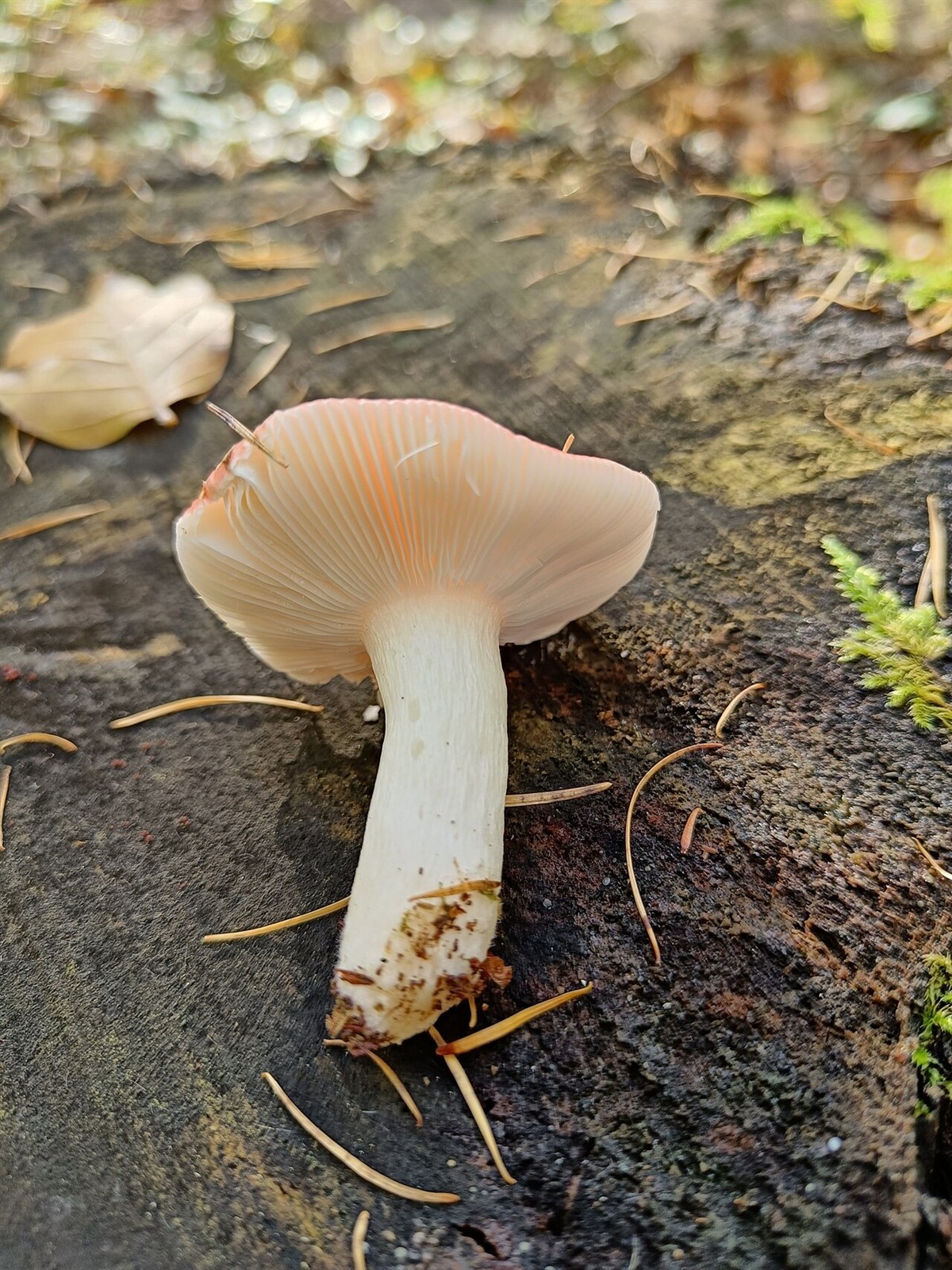
Photo: Maria · CC BY 4.0 · Photo source · License

Description
A reddish to pink Russula with a velvety cap surface, white gills, and distinctly acrid flesh.
Identification features
The cap is 3–6 cm wide, reddish to pink, darker centrally and velvety. Gills are white, crowded, and brittle. The stem is white and firm.
Identification checklist
Check the velvety reddish cap, white gills, beech habitat, and brittle texture. FungiTrail does not use acrid taste as a field test.
Detailed features
- Cap
- The cap is 3–6 cm wide, reddish to pink, darker centrally and velvety.
- Hymenophore
- Gills are white, crowded, and brittle.
- Stem
- The stem is white and firm.
- Smell
- No distinctive smell.
Size
- Cap diameter
- 3–6 cm
Habitat
Grows mainly under beech in deciduous and mixed woodland, in summer and autumn.
Fruiting period
July, August, September, October
Ecology
- Trophic mode
- Mycorrhizal
- Host trees
- Beech (Fagus)
- Substrate
- Forest soil
- Notes
- Grows mainly under beech in deciduous and mixed woodland, in summer and autumn.
How to separate similar species
Russula rosea is similarly red but has mild flesh. Russula emetica can also be red and acrid and grows mainly with conifers.
Similar species
Interesting facts
Did you know? Check the velvety reddish cap, white gills, beech habitat, and brittle texture. FungiTrail does not use acrid taste as a field test.