Species details
Common inkcap
Coprinopsis atramentaria
Conditional / expert preparation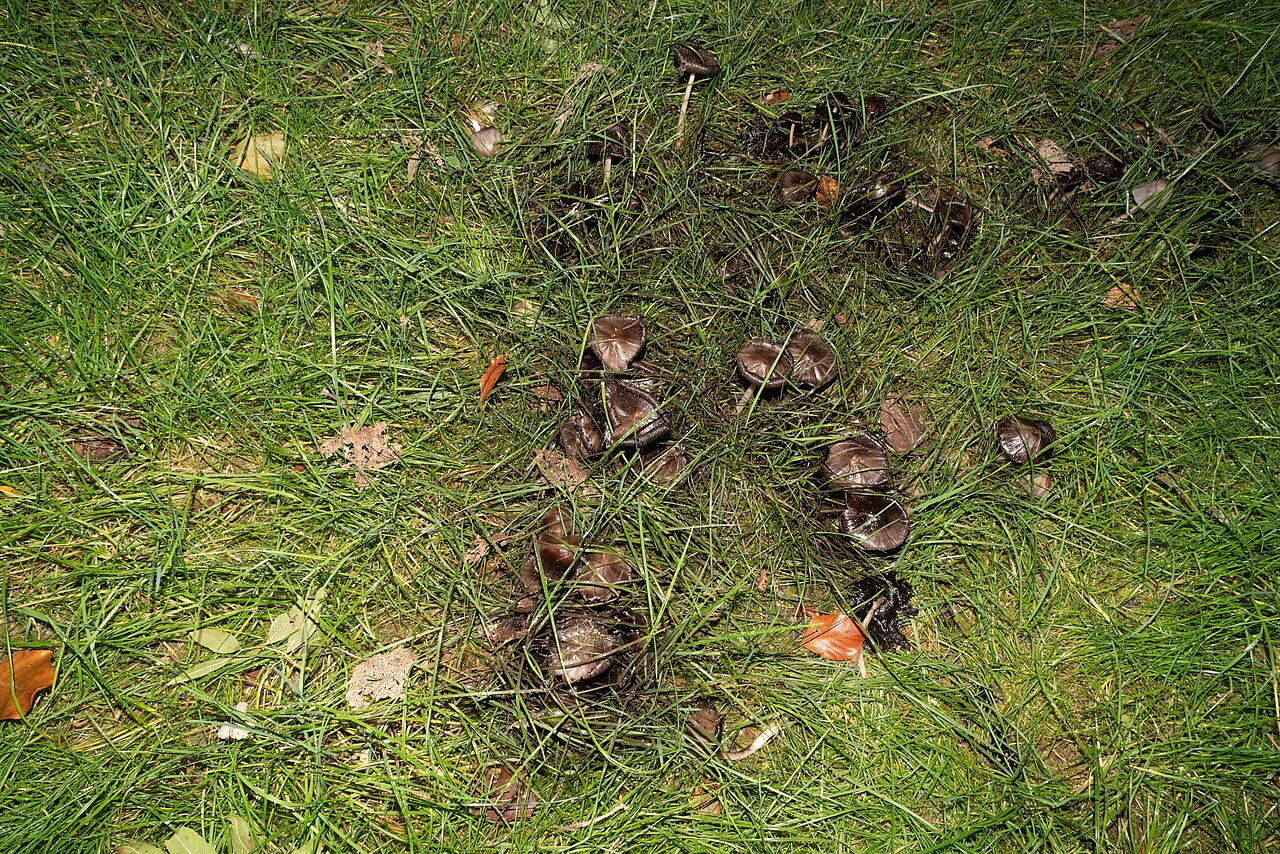
Photo: Donald Hobern from Copenhagen, Denmark · CC BY 2.0 · Photo source · License
.jpg)
Description
A grey inkcap often growing in dense groups; the gills blacken and dissolve into an inky liquid.
Identification features
Contains coprine, which may cause an unpleasant reaction with alcohol. The risk may persist after the meal.
Identification checklist
The cap starts egg-shaped, then becomes bell-shaped, grey to grey-brown and usually fairly smooth. Crowded gills change from white through grey to black and dissolve from the margin. It often grows in dense clusters beside stumps, roots, or buried wood.
Detailed features
- Cap
- 3–7 cm, grey to grey-brown, initially egg-shaped then bell-shaped; the margin is often striate and deliquesces black with age.
- Hymenophore
- Gills are crowded, initially white, then brown and finally black; they deliquesce with the cap.
- Stem
- 5–12 cm, white, hollow, smooth to slightly fibrillose, without a persistent ring.
- Flesh
- White to greyish and fairly thin.
- Spore print
- Black.
Size
- Cap diameter
- 3–7 cm
- Stem height
- 5–12 cm
- Stem diameter
- 0,8–1,5 cm
Habitat
On buried wood, near stumps, paths, parks, and nutrient-rich ground.
Fruiting period
April, May, June, July, August, September, October, November
Ecology
- Trophic mode
- Saprotrophic
- Substrate
- Buried wood, Stumps, Dead hardwood
Distribution
- Notes
- A common European species, especially around stumps, buried wood, paths and parks.
How to separate similar species
Shaggy ink cap has a tall white cap with conspicuous shaggy scales. Magpie inkcap has a dark cap with large white patches. Old, already blackened inkcaps have lost key characters and should not be identified for food.
Similar species
Interesting facts
Did you know? At maturity the cap and gills can dissolve into black 'ink'; alcohol consumed around this species can trigger a disulfiram-like reaction.