Species details
Bitter bolete
Tylopilus felleus
Inedible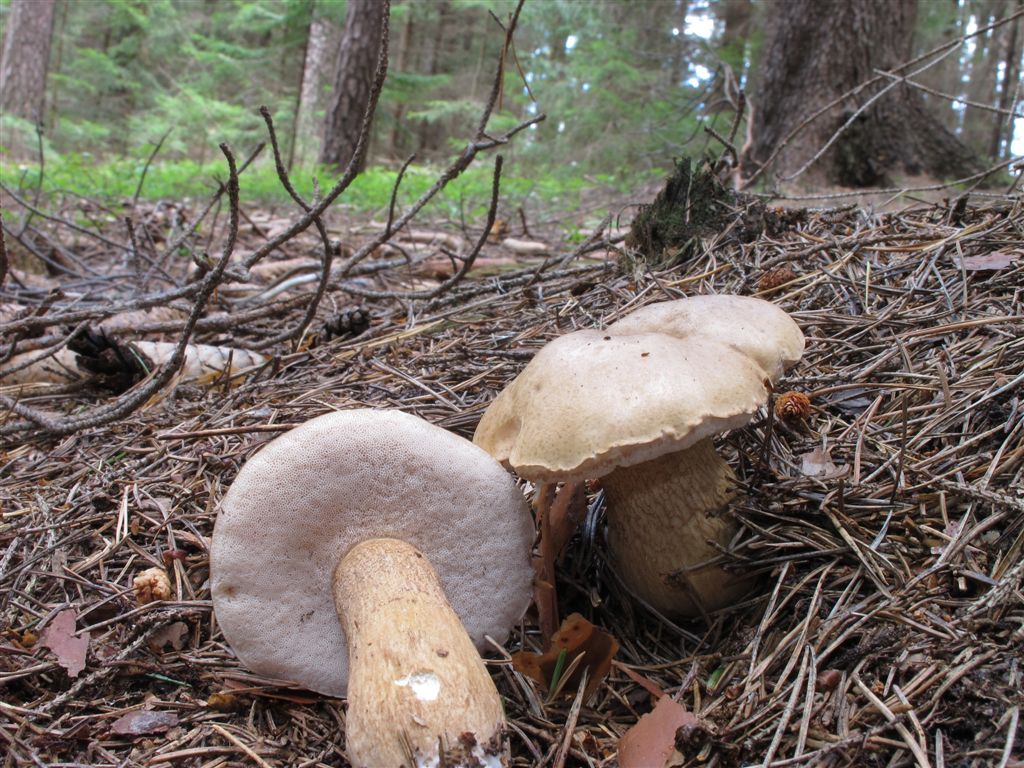
Photo: Dr. Hans-Günter Wagner · CC BY-SA 2.0 · Photo source · License
.jpg)
Description
A bolete lookalike with intensely bitter flesh, pores that become pink, and a darker net on the stem.
Identification features
The pores turn pink and the stem net is often brown. Even a small piece may make a dish extremely bitter.
Identification checklist
The cap is brown; pores start pale and later become pinkish. The stem usually carries a coarse dark-brown net, while the flesh stays pale and normally does not blue.
Detailed features
- Cap
- Brown and fleshy, initially hemispherical, later convex to cushion-shaped.
- Hymenophore
- Tubes and pores are initially white and become distinctly pink as spores mature.
- Stem
- Club-shaped, brownish, with a strong raised brown reticulum.
- Flesh
- White, sometimes slightly reddening in air; intensely bitter.
- Spore print
- Pink.
Size
- Cap diameter
- 5–10 cm
- Stem height
- 7–14 cm
- Stem diameter
- 2–4 cm
Habitat
In coniferous and deciduous woodland, often on acidic soil and near stumps.
Fruiting period
June, July, August, September, October
Ecology
- Trophic mode
- Mycorrhizal
- Host trees
- Oak (Quercus), Beech (Fagus), Spruce (Picea)
Distribution
- Notes
- Widespread in Europe in several woodland types.
How to separate similar species
Most often confused with penny bun or summer bolete. Their pores do not become coral-pink and the stem net is usually paler; tasting for identification is not recommended.
Similar species
Interesting facts
Did you know? The pink pore surface of older specimens and the dark reticulum help separate it from true boletes.