Species details
Ugly milkcap
Lactarius turpis
Poisonous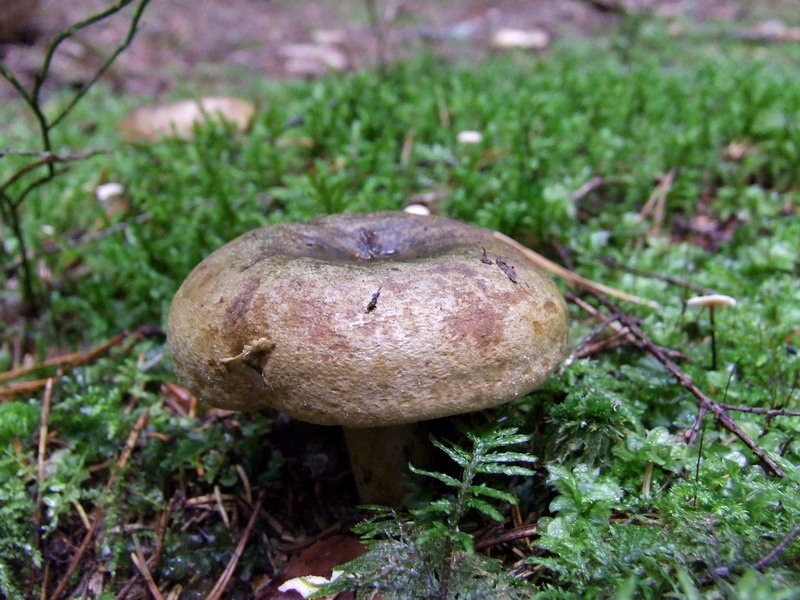
Photo: Tomas Čekanavičius · CC BY-SA 3.0 · Photo source · License

Description
An olive-brown to almost black milkcap with a sticky cap and frequent dark staining.
Identification features
Latex is white and damaged gills stain dirty brown; consumption is not recommended.
Identification checklist
Check the entire fruitbody for identification. An olive-brown to almost black milkcap with a sticky cap and frequent dark staining. Latex is white and damaged gills stain dirty brown; consumption is not recommended. Typical habitat: Damp woodland, especially with birch and spruce on acidic soils.
Detailed features
- Cap
- 5–20 cm, dark olive-brown to almost black, centrally depressed; strongly slimy and sticky when wet, with a hairy margin when young.
- Hymenophore
- Gills whitish to pale yellow, crowded and slightly decurrent; damaged areas turn yellow-brown and exude abundant white latex.
- Stem
- 3–7 × 1–2.5 cm, firm, cylindrical, dirty greenish to olive-brown, later sometimes hollow.
- Flesh
- Whitish, browning in air; latex is white and very acrid.
- Smell
- Indistinct.
- Taste
- Very acrid; tasting is not recommended.
- Spore print
- Cream to pale yellowish.
Size
- Cap diameter
- 5–20 cm
- Stem height
- 3–7 cm
- Stem diameter
- 1–2,5 cm
Habitat
Damp woodland, especially with birch and spruce on acidic soils.
Fruiting period
July, August, September, October, November
Ecology
- Trophic mode
- Mycorrhizal
- Host trees
- Birch (Betula), Spruce (Picea)
- Substrate
- Forest soil
- Soil
- Acidic, Moist
- Notes
- Common on moist acidic soils, especially with birch and spruce.
How to separate similar species
Compare especially with these similar species: Lactarius quietus, Lactarius vellereus. Check the combination of cap shape and colour, spore-bearing surface, stem, flesh changes and habitat. A single feature or photograph is not enough; if the key characters do not match the description, do not treat the identification as confirmed.
Similar species
- Oak milkcap (Lactarius quietus)
Oak milkcap is smaller, more cinnamon-brown, not so dark olive and associated with oak.
- Fleecy milkcap (Lactarius vellereus)
Fleecy milkcap is almost white, with a large velvety cap and much paler fruitbody.
Interesting facts
Did you know? Dark olive colour, a slimy cap and very acrid white latex form a characteristic combination.