Species details
Oilslick brittlegill
Russula ionochlora
Traditionally edible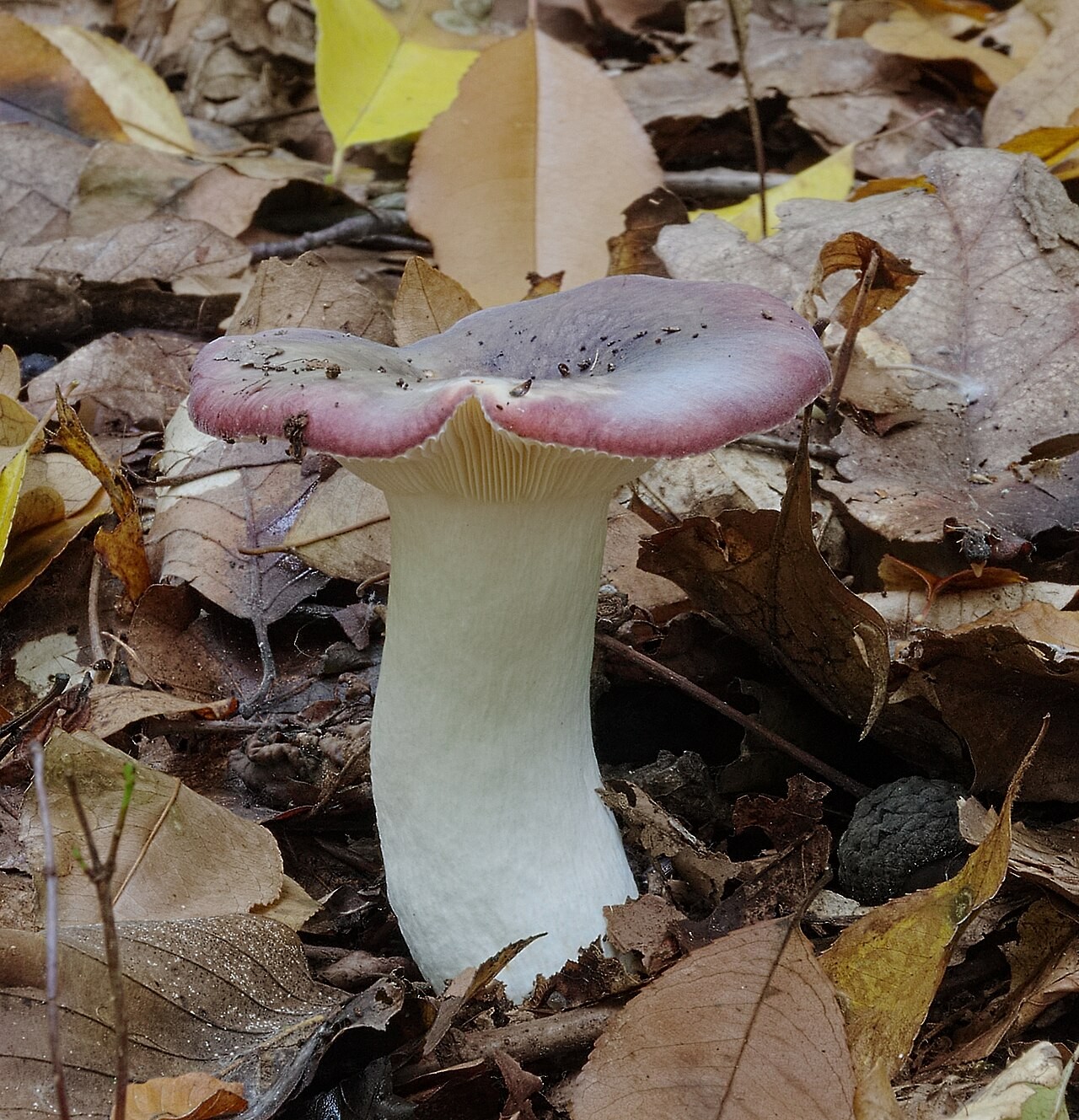
Photo: Andreas Eichler · CC BY-SA 4.0 · Photo source · License

Description
A smaller grey to lilac Russula of damp deciduous woods, especially with beech, with white to pale cream gills.
Identification features
The cap is 4–7 cm wide, grey, grey-lilac or mixed with violet, greenish and yellowish tones. Gills are white to pale cream and crowded. The stem is white, sometimes faintly violet or salmon tinted.
Identification checklist
Check the smaller size, mixed grey-lilac tones, white to cream gills and beech habitat. Several similar Russula are edible, but identification can still be difficult.
Detailed features
- Cap
- The cap is 4–7 cm wide, grey, grey-lilac or mixed with violet, greenish and yellowish tones.
- Hymenophore
- The gills are white to pale cream and crowded.
- Stem
- The stem is white, sometimes faintly violet or salmon tinted.
Size
- Cap diameter
- 4–7 cm
Habitat
Grows in deciduous woodland, especially with beech in damp places, in summer and early autumn.
Fruiting period
June, July, August, September
Ecology
- Host trees
- Beech (Fagus)
- Soil
- Moist
- Notes
- Grows in deciduous woodland, especially with beech in damp places, in summer and early autumn.
How to separate similar species
Russula cyanoxantha is usually larger with more flexible gills; R. grisea often has a darker centre. Colour is highly variable in Russula.