Species details
Lion's mane
Hericium erinaceus
Traditionally edible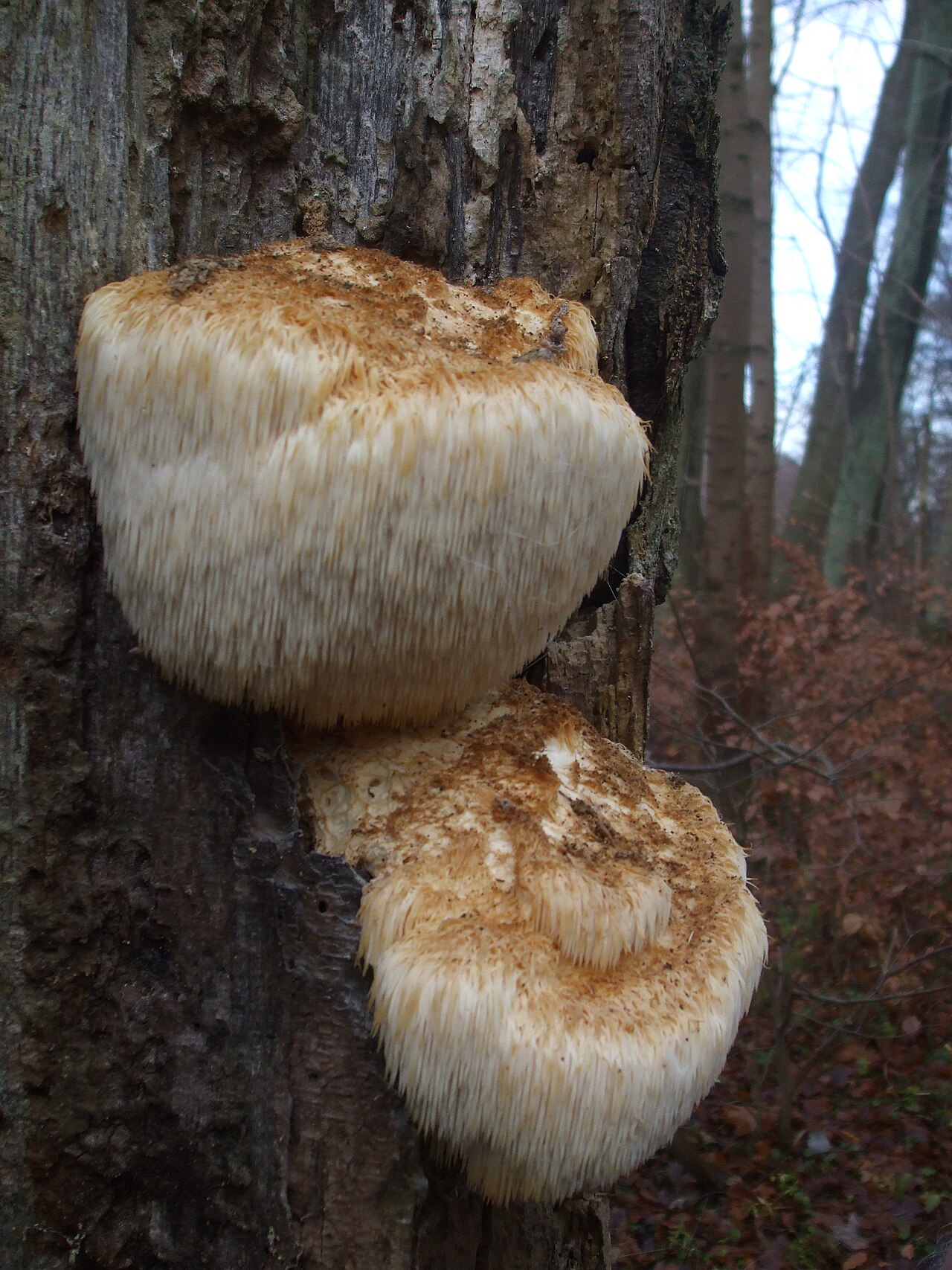
Photo: Tomasz Przechlewski · CC BY 2.0 · Photo source · License

Description
A white rounded wood fungus with long hanging spines, resembling a white mane.
Identification features
Spines hang downward and are not borne on coral-like branches; older fruitbodies yellow.
Identification checklist
Check the entire fruitbody for identification. A white rounded wood fungus with long hanging spines, resembling a white mane. Spines hang downward and are not borne on coral-like branches; older fruitbodies yellow. Typical habitat: On old living or dead hardwoods, especially beech and oak; rare in many areas.
Detailed features
- Cap
- Up to about 25 cm wide, a compact white to cream fruitbody with numerous long parallel hanging spines.
- Hymenophore
- The fertile surface covers 3–6 cm long hanging spines, initially white and later ochre.
- Stem
- The true stem is short and thick and mostly hidden at the point of attachment to the wood.
- Flesh
- White, fleshy and soft to firm when young.
- Smell
- No distinctive smell.
- Spore print
- Whitish.
Habitat
On old living or dead hardwoods, especially beech and oak; rare in many areas.
Fruiting period
August, September, October, November
Ecology
- Trophic mode
- Parasitic
- Substrate
- Living wood, Dead hardwood
- Notes
- Grows on broadleaved trees, often old or damaged ones; fruitbodies appear mainly in autumn.
How to separate similar species
Compare especially with these similar species: Hericium coralloides. Check the combination of cap shape and colour, spore-bearing surface, stem, flesh changes and habitat. A single feature or photograph is not enough; if the key characters do not match the description, do not treat the identification as confirmed.
Similar species
- Coral tooth fungus (Hericium coralloides)
Coral tooth is strongly coral-branched, with shorter spines distributed along the branches.
- Hericium clathroides
Hericium clathroides is also branched and mainly associated with hardwood; individual spines are shorter than in lion’s mane.
Conservation
- Protected species
- Yes
- Red list
- R – rare species
- Notes
- The species is legally protected in Slovenia under the regulation on protected wild fungi. On the Slovenian Red List: R – rare species.
Interesting facts
Did you know? The long hanging spines give the fruitbody the appearance of a beard or lion’s mane.