Species details
Jelly ear
Auricularia auricula-judae
Traditionally edible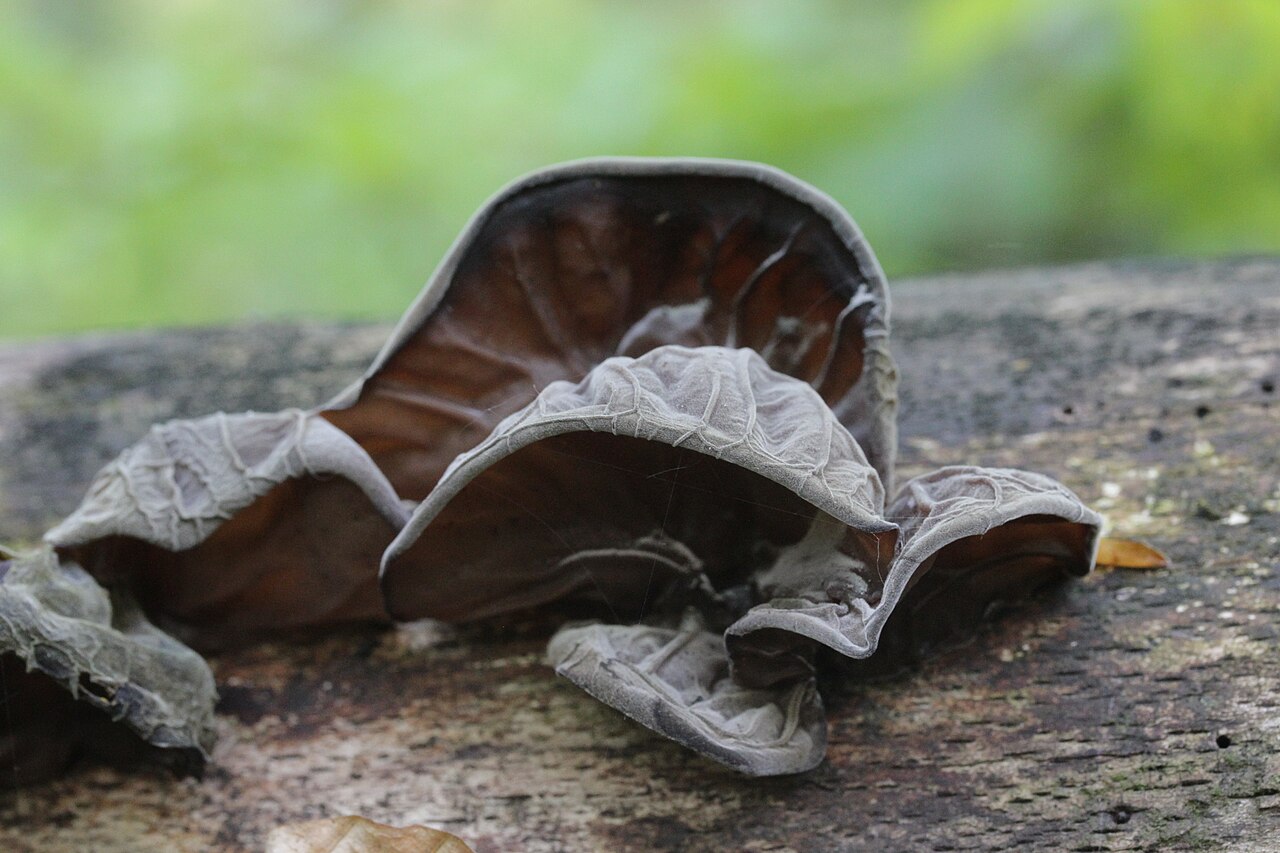
Photo: Björn S... · CC BY-SA 2.0 · Photo source · License
.jpg)
Description
A brown gelatinous ear-shaped fungus with a velvety outer and smooth inner surface.
Identification features
It shrivels and hardens when dry, swelling again after rain; the stem is absent or very short.
Identification checklist
Check the entire fruitbody for identification. A brown gelatinous ear-shaped fungus with a velvety outer and smooth inner surface. It shrivels and hardens when dry, swelling again after rain; the stem is absent or very short. Typical habitat: Mainly on dead elder wood, also other hardwoods, throughout the year.
Detailed features
- Cap
- 3–10 cm, irregularly ear- to cup-shaped, reddish-brown with olive or violet tones; finely hairy outside.
- Hymenophore
- The fertile surface is the smooth to slightly wrinkled inner side of the fruitbody.
- Stem
- Very short or absent; the fruitbody attaches directly to wood.
- Flesh
- Thin, flexible and gelatinous; dries hard and re-expands when moistened.
- Smell
- No distinctive smell.
- Spore print
- White.
Habitat
Mainly on dead elder wood, also other hardwoods, throughout the year.
Fruiting period
January, February, March, April, May, June, July, August, September, October, November, December
Ecology
- Trophic mode
- Saprotrophic
- Host trees
- Elder (Sambucus)
- Substrate
- Dead hardwood, Wood
- Notes
- Most characteristic on elder, but also on other hardwood; grows on dead branches and trunks.
How to separate similar species
Compare especially with these similar species: Auricularia mesenterica, Exidia nigricans. Check the combination of cap shape and colour, spore-bearing surface, stem, flesh changes and habitat. A single feature or photograph is not enough; if the key characters do not match the description, do not treat the identification as confirmed.
Similar species
- Tripe fungus (Auricularia mesenterica)
Usually more shelf-like, with a hairier zoned outer surface.
- Warlock's butter (Exidia nigricans)
Forms dark irregular gelatinous masses rather than characteristic thin ear-like lobes.