Species details
Bare-toothed russula
Russula vesca
Extra caution required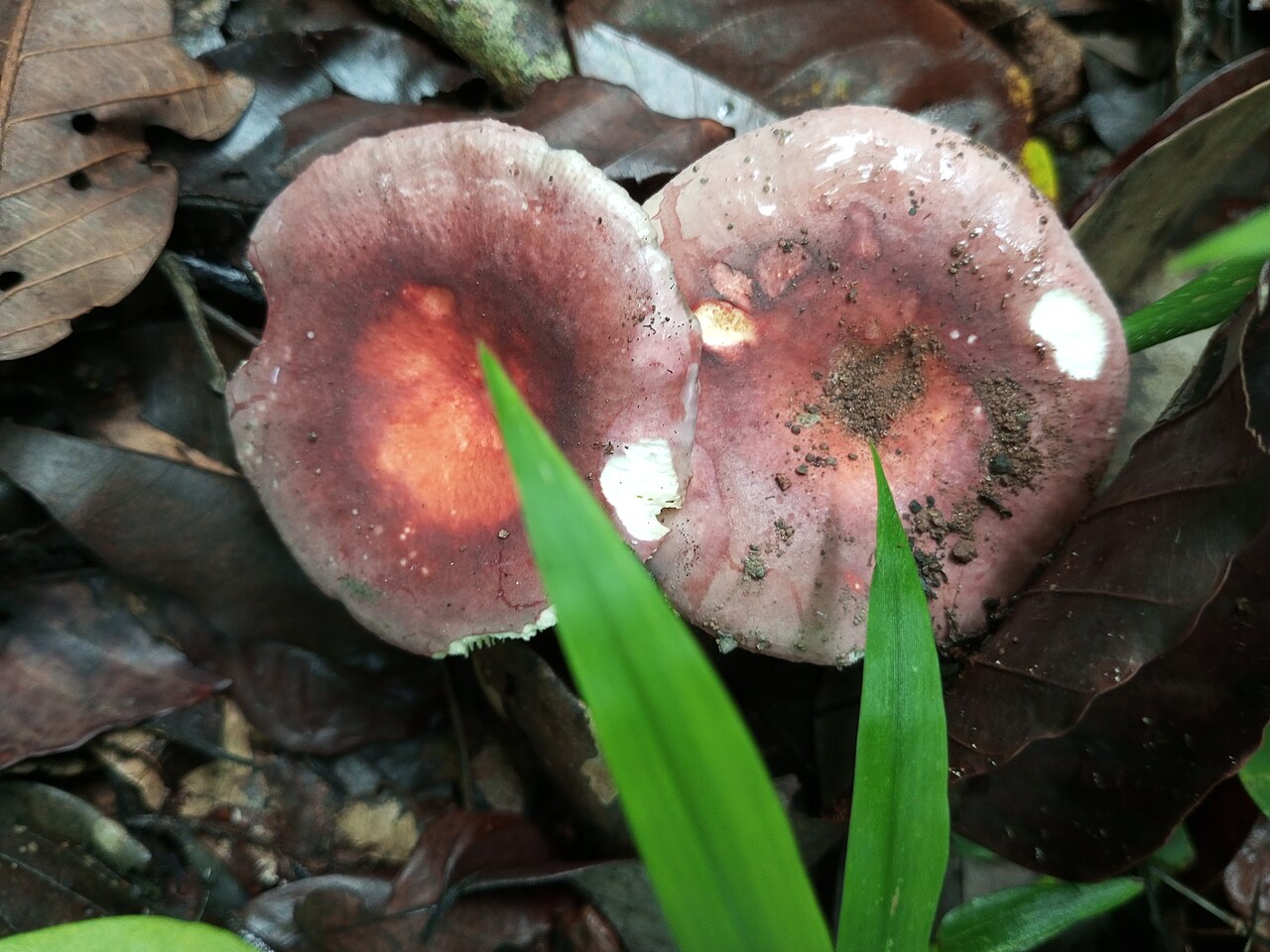
Photo: Nativeplants garden · CC BY-SA 4.0 · Photo source · License

Description
A pink to flesh-red russula with pale gills and cap skin often stopping short of the margin.
Identification features
A white band of flesh may show at the cap margin like small teeth; taste is mild and stem white.
Identification checklist
Check the entire fruitbody for identification. A pink to flesh-red russula with pale gills and cap skin often stopping short of the margin. A white band of flesh may show at the cap margin like small teeth; taste is mild and stem white. Typical habitat: Deciduous and mixed woodland, especially with beech, oak, and hazel.
Detailed features
- Cap
- 6–11 cm, initially hemispherical, later flattened and centrally depressed; flesh-red to brownish, paler toward the margin.
- Hymenophore
- Gills white, fairly crowded and sometimes forked; older specimens may develop brown spotting.
- Stem
- 2–8 × 1–2 cm, white, solid and cylindrical, often slightly tapered at the base; bruising may yellow and then brown.
- Flesh
- White and brittle, sometimes browning slightly, especially in the stem.
- Smell
- Indistinct to pleasant.
- Spore print
- Whitish.
Size
- Cap diameter
- 6–11 cm
- Stem height
- 2–8 cm
- Stem diameter
- 1–2 cm
Habitat
Deciduous and mixed woodland, especially with beech, oak, and hazel.
Fruiting period
June, July, August, September, October
Ecology
- Trophic mode
- Mycorrhizal
- Substrate
- Forest soil
- Notes
- A mycorrhizal species of deciduous, coniferous and mixed woodland; solitary or in groups.
How to separate similar species
Compare especially with these similar species: Russula atropurpurea, Russula rosea, Russula xerampelina. Check the combination of cap shape and colour, spore-bearing surface, stem, flesh changes and habitat. A single feature or photograph is not enough; if the key characters do not match the description, do not treat the identification as confirmed.
Similar species
- Purple brittlegill (Russula atropurpurea)
Usually has a darker purplish-red cap and may be distinctly acrid or unpleasant.
- Shrimp russula (Russula xerampelina)
Often develops a characteristic fishy or shellfish-like smell and different flesh reactions.