Species details
Russet brittlegill
Russula mustelina
Traditionally edible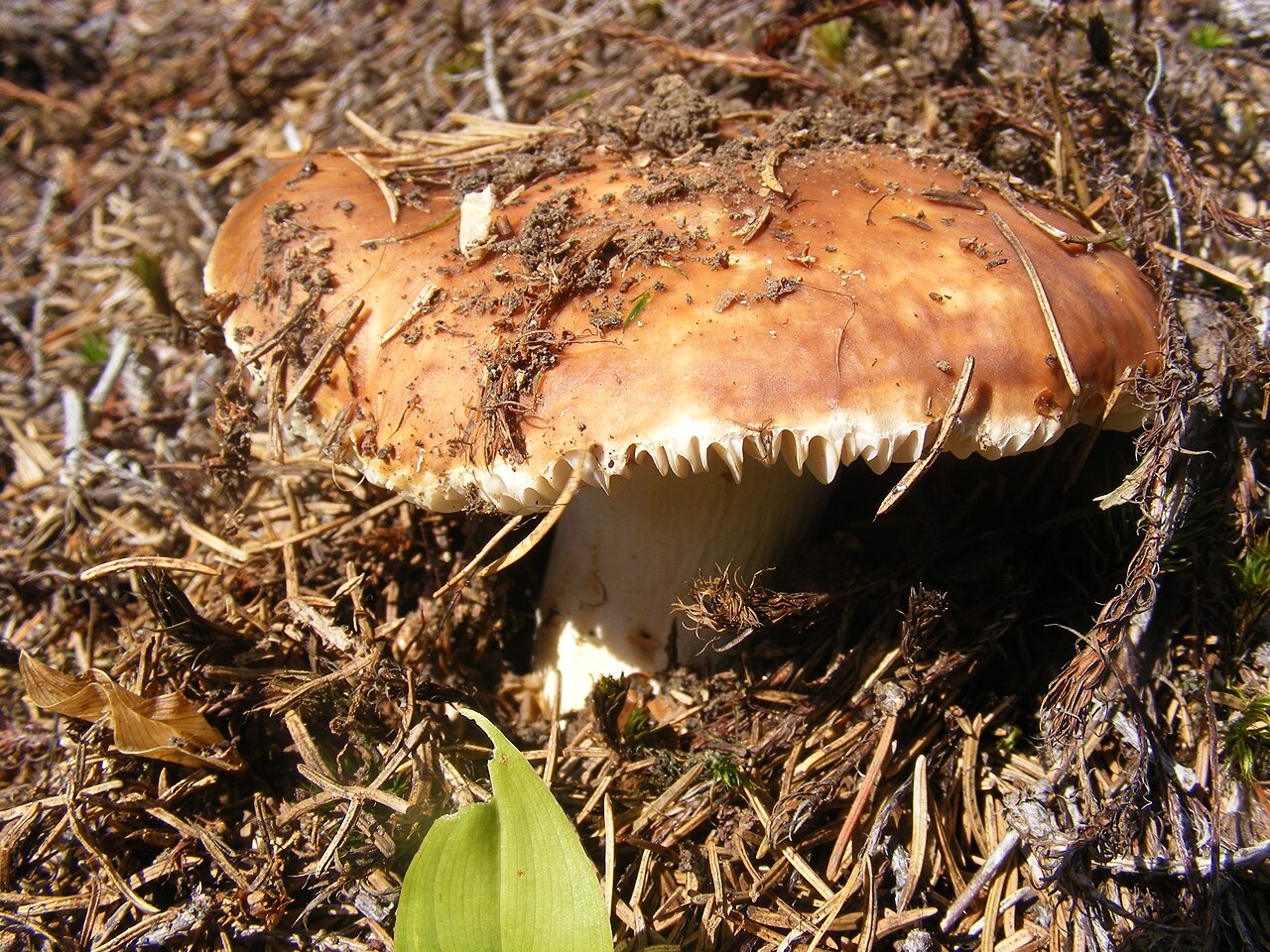
Photo: Szabi237 · CC BY 3.0 · Photo source · License

Description
A robust hazel to ochre-brown brittlegill that can resemble a bolete from above but has gills beneath the cap.
Identification features
The cap is thick and smooth and the skin peels poorly. Gills begin whitish and become cream to brownish. The stout white stem may brown where damaged.
Identification checklist
Check the stout fruitbody, hazel-brown cap, pale gills, brittle flesh and spruce association. Young specimens can look remarkably bolete-like from above.
Detailed features
- Cap
- A robust hazel to ochre-brown brittlegill that can resemble a bolete from above but has gills beneath the cap.
- Hymenophore
- Gills begin whitish and become cream to brownish.
- Stem
- The stout white stem may brown where damaged.
- Flesh
- Whitish, later brownish, firm and brittle.
- Smell
- Pleasant, mild smell.
- Spore print
- Cream to pale cream.
Size
- Cap diameter
- 5–14 cm
- Stem height
- 3–11 cm
- Stem diameter
- 1,5–3 cm
Habitat
Especially at higher elevations with spruce and other conifers; late summer and autumn.
Fruiting period
August, September, October
Ecology
- Trophic mode
- Mycorrhizal
- Host trees
- Spruce (Picea)
- Substrate
- Forest soil
- Notes
- Mycorrhizal species. Especially at higher elevations with spruce and other conifers; late summer and autumn.
How to separate similar species
Leather brittlegill can have a similarly brown cap but usually yellower gills. Old specimens may resemble fetid or almond-scented Russulas; smell and cap margin are useful additional characters.
Similar species
Interesting facts
Did you know? When its brown cap emerges through spruce needles, it can initially resemble a bolete.