Species details
Entire russula
Russula integra
Conditional / expert preparation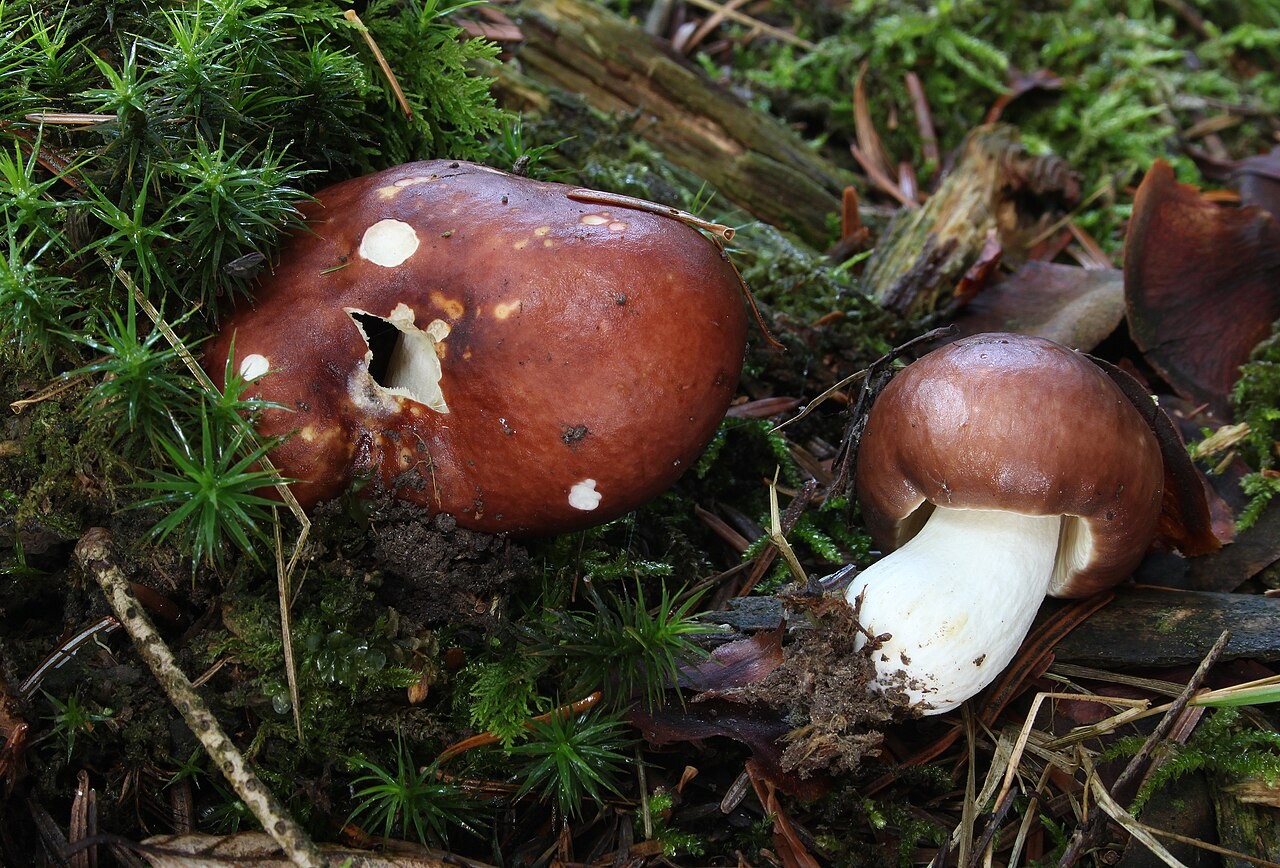
Photo: Holger Krisp · CC BY 3.0 · Photo source · License

Description
A large Russula with a leathery brownish cap, thick ochre-yellow gills, and a white stem.
Identification features
The cap is 6–15 cm wide, moist and shiny, brownish with possible purple, wine-red, or olive tones. Gills become ochre-yellow. The stem remains white to slightly ochre.
Identification checklist
Check the large robust fruitbody, thick ochre gills, yellow spore print, white non-reddish stem, and mild flesh.
Detailed features
- Cap
- The cap is 6–15 cm wide, moist and shiny, brownish with possible purple, wine-red, or olive tones.
- Hymenophore
- Gills become ochre-yellow.
- Stem
- The stem remains white to slightly ochre.
- Smell
- No distinctive smell.
- Spore print
- Yellow.
Size
- Cap diameter
- 6–15 cm
- Stem height
- 4–8 cm
- Stem diameter
- 1,5–3 cm
Habitat
Mycorrhizal with conifers, often in upland woodland, from early summer to autumn.
Fruiting period
June, July, August, September, October
Ecology
- Trophic mode
- Mycorrhizal
- Host trees
- Spruce (Picea), Fir (Abies)
- Substrate
- Forest soil
- Notes
- Mycorrhizal with conifers, often in upland woodland, from early summer to autumn.
How to separate similar species
Russula olivacea can be very similar and is also problematic when raw. Cap colour is variable in both.
Similar species
Interesting facts
Did you know? Check the large robust fruitbody, thick ochre gills, yellow spore print, white non-reddish stem, and mild flesh.