Species details
Pinkmottle woodwax
Hygrophorus russula
Traditionally edible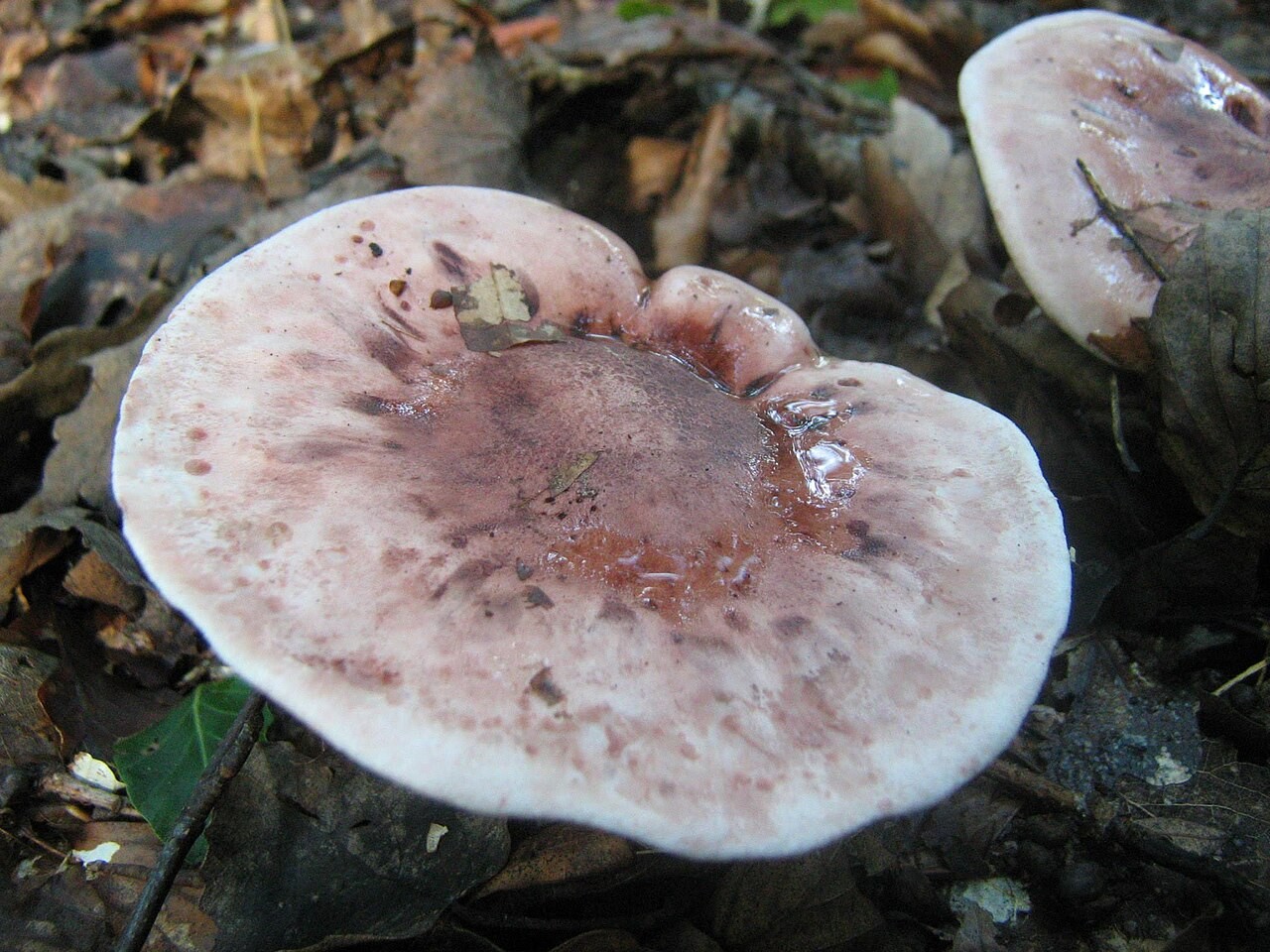
Photo: GLJIVARSKO DRUSTVO NIS from Serbia · CC BY 2.0 · Photo source · License
_Kauffman._(15707689229).jpg)
Description
A large fleshy woodwax with wine-red mottling on a pale cap, thick spaced gills, and a stout stem.
Identification features
The cap is thick-fleshed, pale and wine-red mottled. Gills are thick, spaced, and attached. The stem is whitish, often reddish spotted, and the flesh may redden slightly.
Identification checklist
Check the large robust fruitbody, very thick spaced gills, and wine-red mottling on cap and stem.
Detailed features
- Cap
- The cap is thick-fleshed, pale and wine-red mottled.
- Hymenophore
- Gills are thick, spaced, and attached.
- Stem
- The stem is whitish, often reddish spotted, and the flesh may redden slightly.
- Smell
- No distinctive smell.
- Spore print
- White.
Size
- Cap diameter
- 5–15 cm
- Stem height
- 4–8 cm
- Stem diameter
- 1–2 cm
Habitat
Mycorrhizal mainly with broadleaved trees, especially oak and chestnut, in autumn.
Fruiting period
September, October, November
Ecology
- Trophic mode
- Mycorrhizal
- Host trees
- Oak (Quercus), Sweet chestnut (Castanea)
- Substrate
- Forest soil
- Notes
- Mycorrhizal mainly with broadleaved trees, especially oak and chestnut, in autumn.
How to separate similar species
Hygrophorus erubescens is smaller, more bitter, and often yellows. Similar Tricholoma usually have thinner and more crowded gills.
Similar species
- Blotched woodwax (Hygrophorus erubescens)
- Tricholoma colossus
Interesting facts
Did you know? Check the large robust fruitbody, very thick spaced gills, and wine-red mottling on cap and stem.