Species details
Blotched woodwax
Hygrophorus erubescens
Inedible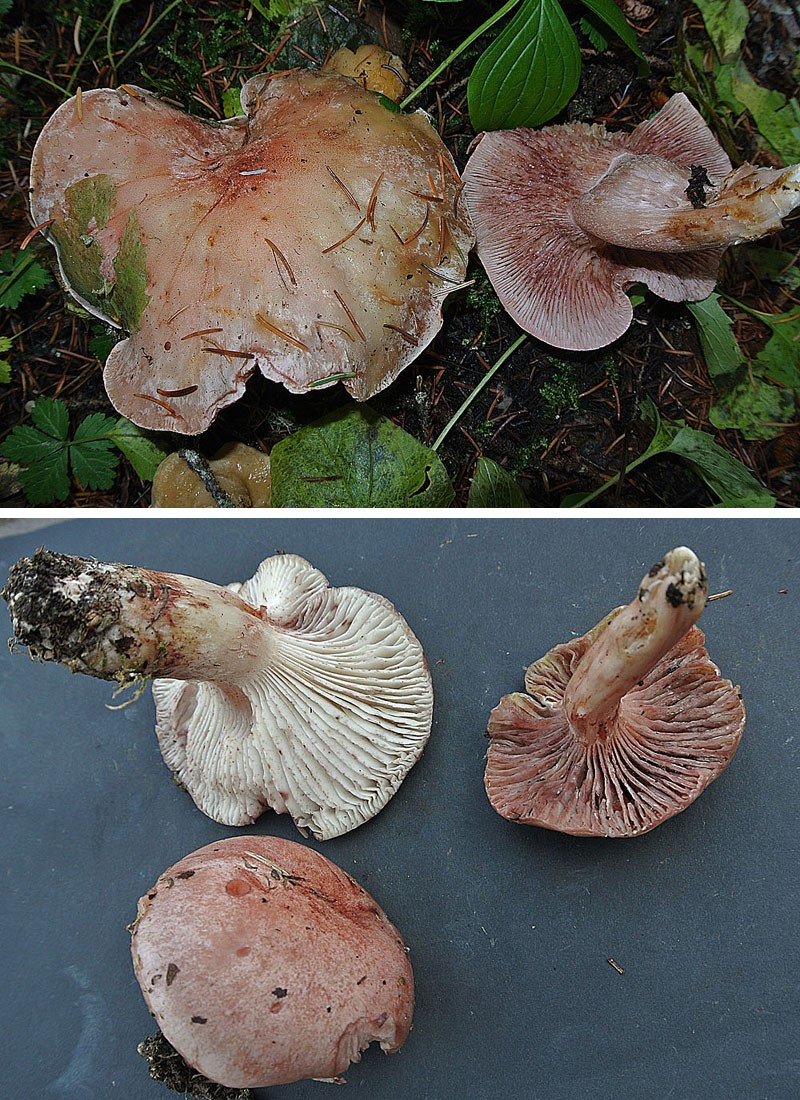
Photo: Dick Culbert from Gibsons, B.C., Canada · CC BY 2.0 · Photo source · License
.jpg)
Description
A whitish woodwax with wine-red fibres and blotches on the cap and gills, reddening when handled.
Identification features
The cap is whitish with irregular wine-red fibres or tiny scales. Gills are thick, spaced, and become reddish-spotted with age. The whitish stem has reddish granules and reddens on pressure.
Identification checklist
Check the thick spaced gills, wine-red blotches and fibres, and reddening of the stem when pressed. Spruce habitat is a useful supporting clue.
Detailed features
- Cap
- The cap is whitish with irregular wine-red fibres or tiny scales.
- Hymenophore
- Gills are thick, spaced, and become reddish-spotted with age.
- Stem
- The whitish stem has reddish granules and reddens on pressure.
- Smell
- No distinctive smell.
- Spore print
- White.
Size
- Cap diameter
- 4–10 cm
- Stem height
- 5–7 cm
- Stem diameter
- 1,5–1,8 cm
Habitat
Grows mainly in shady spruce woodland on calcareous soils, mostly in autumn.
Fruiting period
September, October
Ecology
- Trophic mode
- Mycorrhizal
- Host trees
- Spruce (Picea)
- Substrate
- Forest soil
- Soil
- Calcareous
- Notes
- Grows mainly in shady spruce woodland on calcareous soils, mostly in autumn.
How to separate similar species
Hygrophorus russula is usually larger, grows mainly with broadleaved trees, and is less bitter. Compare habitat and colour changes.
Similar species
- Pinkmottle woodwax (Hygrophorus russula)
- Hygrophorus purpurascens
Interesting facts
Did you know? Check the thick spaced gills, wine-red blotches and fibres, and reddening of the stem when pressed. Spruce habitat is a useful supporting clue.