Species details
Pale chanterelle
Cantharellus pallens
Traditionally edible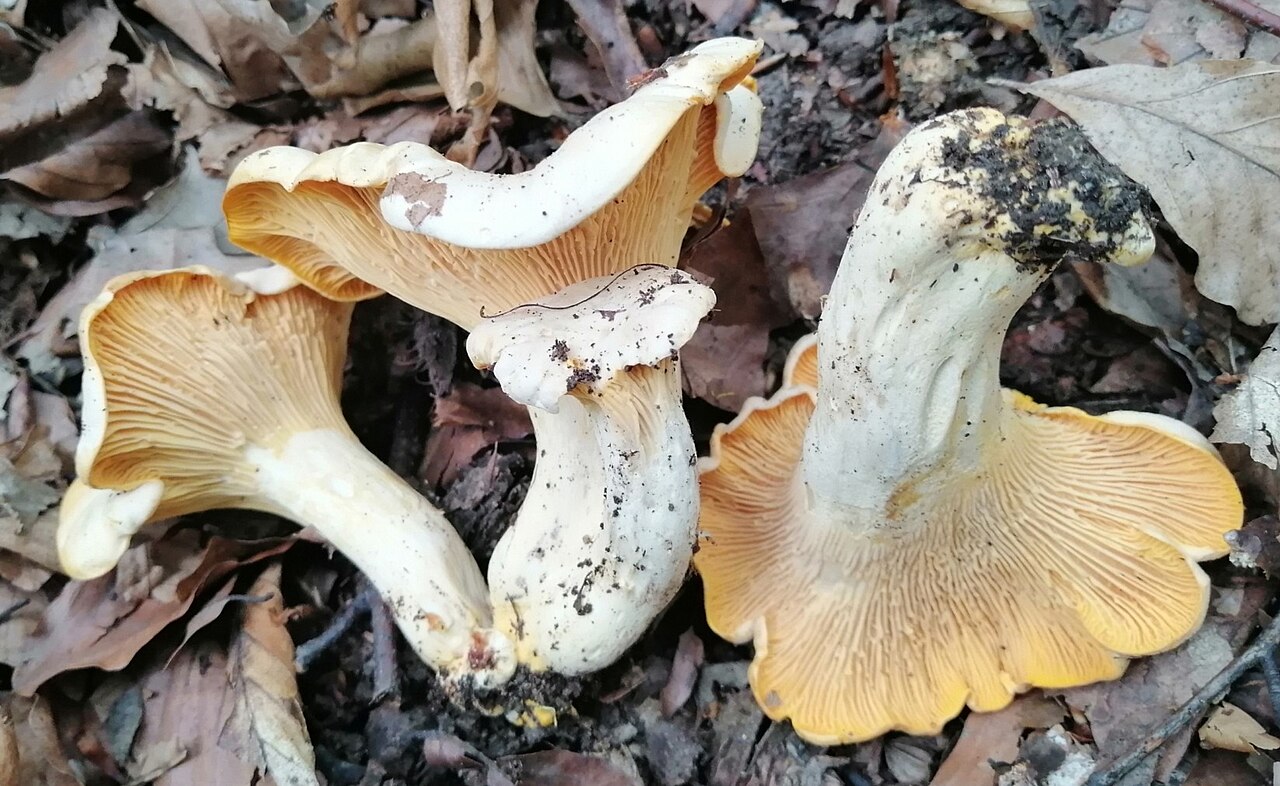
Photo: szegedigombasz · CC0 · Photo source · License

Description
A robust pale-yellow chanterelle with an often whitish-bloomed cap and blunt ridges.
Identification features
The ridges run down the stem; pale flesh may yellow or brown slightly.
Identification checklist
Check the entire fruitbody for identification. A robust pale-yellow chanterelle with an often whitish-bloomed cap and blunt ridges. The ridges run down the stem; pale flesh may yellow or brown slightly. Typical habitat: Warm deciduous woodland, especially with oak and beech on calcareous soil.
Detailed features
- Cap
- 3–10 cm, white to cream, dry and smooth, wavy; may stain yellow-brown when handled.
- Hymenophore
- Instead of true gills it has branched blunt ridges running down the stem.
- Stem
- 2–5 × 1–2 cm, fleshy, pale like the cap, narrowing to the base; may yellow when handled.
- Flesh
- White and dense.
- Smell
- Mild, sometimes faintly apricot-like.
- Spore print
- White.
Size
- Cap diameter
- 3–10 cm
- Stem height
- 2–5 cm
- Stem diameter
- 1–2 cm
Habitat
Warm deciduous woodland, especially with oak and beech on calcareous soil.
Fruiting period
May, June, July, August, September, October
Ecology
- Trophic mode
- Mycorrhizal
- Host trees
- Beech (Fagus), Oak (Quercus), Spruce (Picea)
- Substrate
- Forest soil
- Notes
- Mycorrhizal in mixed, deciduous, and coniferous woodland.
How to separate similar species
Compare especially with these similar species: Cantharellus cibarius, Hygrophoropsis aurantiaca, Omphalotus olearius. Check the combination of cap shape and colour, spore-bearing surface, stem, flesh changes and habitat. A single feature or photograph is not enough; if the key characters do not match the description, do not treat the identification as confirmed.
Similar species
- Golden chanterelle (Cantharellus cibarius)
Usually more distinctly yellow and less pale.
- False chanterelle (Hygrophoropsis aurantiaca)
Has true thin crowded orange gills rather than blunt chanterelle ridges.
- Jack-o'-lantern mushroom (Omphalotus olearius) DANGEROUS
Usually bright orange, clustered on wood, and has true gills; it is toxic.