Species details
Acrid milkcap
Lactarius acris
Inedible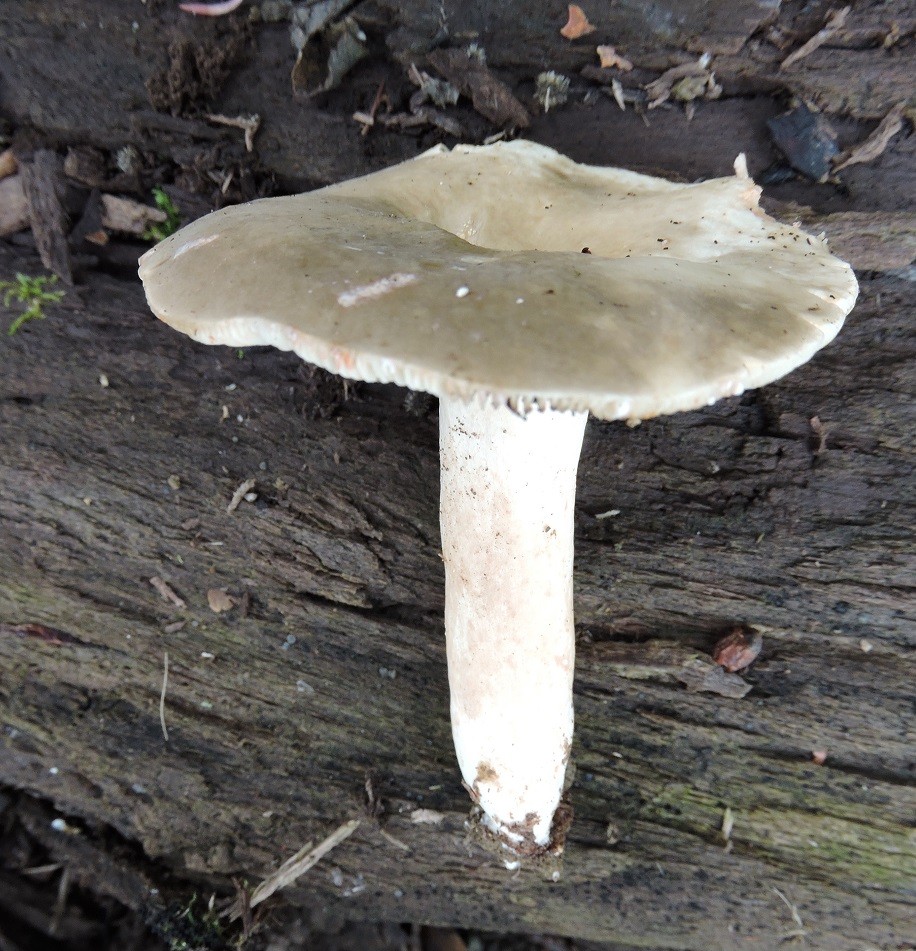
Photo: James Baker (cepecity) · CC BY-SA 3.0 · Photo source · License
_Gray_571288.jpg)
Description
A brownish milkcap with very acrid white latex that rapidly turns pink in air.
Identification features
The cap is dirty- to grey-brown, velvety when dry and slightly greasy when wet. Gills are ochre; white latex quickly turns pink after damage.
Identification checklist
The key feature is the rapid pink colour change of white latex. Also check the brown velvety cap and beech habitat; FungiTrail does not recommend tasting.
Detailed features
- Cap
- The cap is dirty- to grey-brown, velvety when dry and slightly greasy when wet.
- Hymenophore
- Gills are ochre; white latex quickly turns pink after damage.
- Stem
- The cap is dirty to grey-brown, velvety when dry and slightly greasy when damp. The gills are ochre; white milk quickly turns pink after damage.
- Flesh
- Pale; white latex turns pink very quickly in air.
- Smell
- No clearly distinctive smell.
- Spore print
- Whitish.
Size
- Cap diameter
- 6–11 cm
- Stem height
- 4–8 cm
- Stem diameter
- 0,8–1,5 cm
Habitat
Occurs mainly in beech woodland, often on calcareous soils, in summer and autumn.
Fruiting period
August, September, October
Ecology
- Trophic mode
- Mycorrhizal
- Host trees
- Beech (Fagus)
- Substrate
- Forest soil
- Soil
- Calcareous
- Notes
- Occurs mainly in beech woodland, often on calcareous soils, in summer and autumn.
How to separate similar species
Several brown milkcaps look similar; compare latex changes, tree association, and cap surface together. One feature alone is insufficient.
Similar species
- Lactarius fuliginosus
- Lactarius romagnesii
- Lactarius azonites
Interesting facts
Did you know? The white latex turns pink almost immediately on exposure to air.