Species details
White-stemmed aspen bolete
Leccinum albostipitatum
Conditional / expert preparation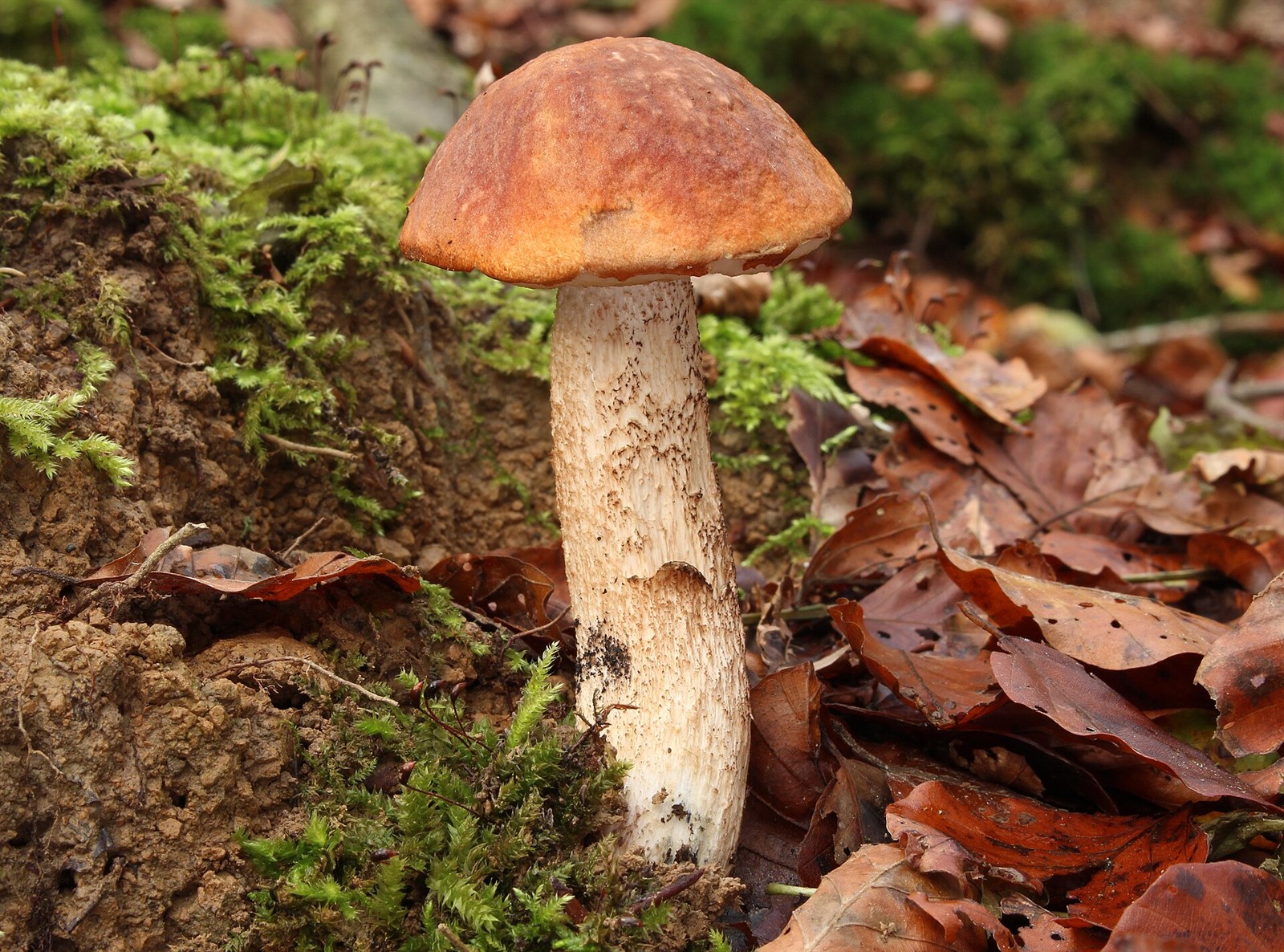
Photo: Holger Krisp · CC BY 3.0 · Photo source · License

Description
An orange-red Leccinum with a characteristically white stem and pale scabers, growing mainly with aspen and poplar.
Identification features
The cap is 5–10 cm, hemispherical to cushion-shaped, orange-red. The long white stem has white to slightly orange-brown scabers that do not turn black. Cut flesh first becomes wine-red, then grey and may blacken.
Identification checklist
Key features are the orange-red cap, white stem with pale scabers and association with aspen or poplar. Check colour changes in cut flesh.
Detailed features
- Cap
- The cap is 5–10 cm, hemispherical to cushion-shaped, orange-red.
- Stem
- The long white stem has white to slightly orange-brown scabers that do not turn black.
- Flesh
- Cut flesh first becomes wine-red, then grey and may blacken.
Size
- Cap diameter
- 5–10 cm
Habitat
Grows on damp acidic soils with aspen and poplar, less often elsewhere, in summer and autumn; rare.
Fruiting period
June, July, August, September, October
Ecology
- Host trees
- Poplar / aspen (Populus)
- Soil
- Acidic, Moist
- Notes
- Grows on damp acidic soils with aspen and poplar, less often elsewhere, in summer and autumn; rare.
How to separate similar species
Leccinum aurantiacum and L. versipelle usually have darker stem scabers. Tree association is an important clue.