Species details
Terracotta hedgehog
Hydnum rufescens
Traditionally edible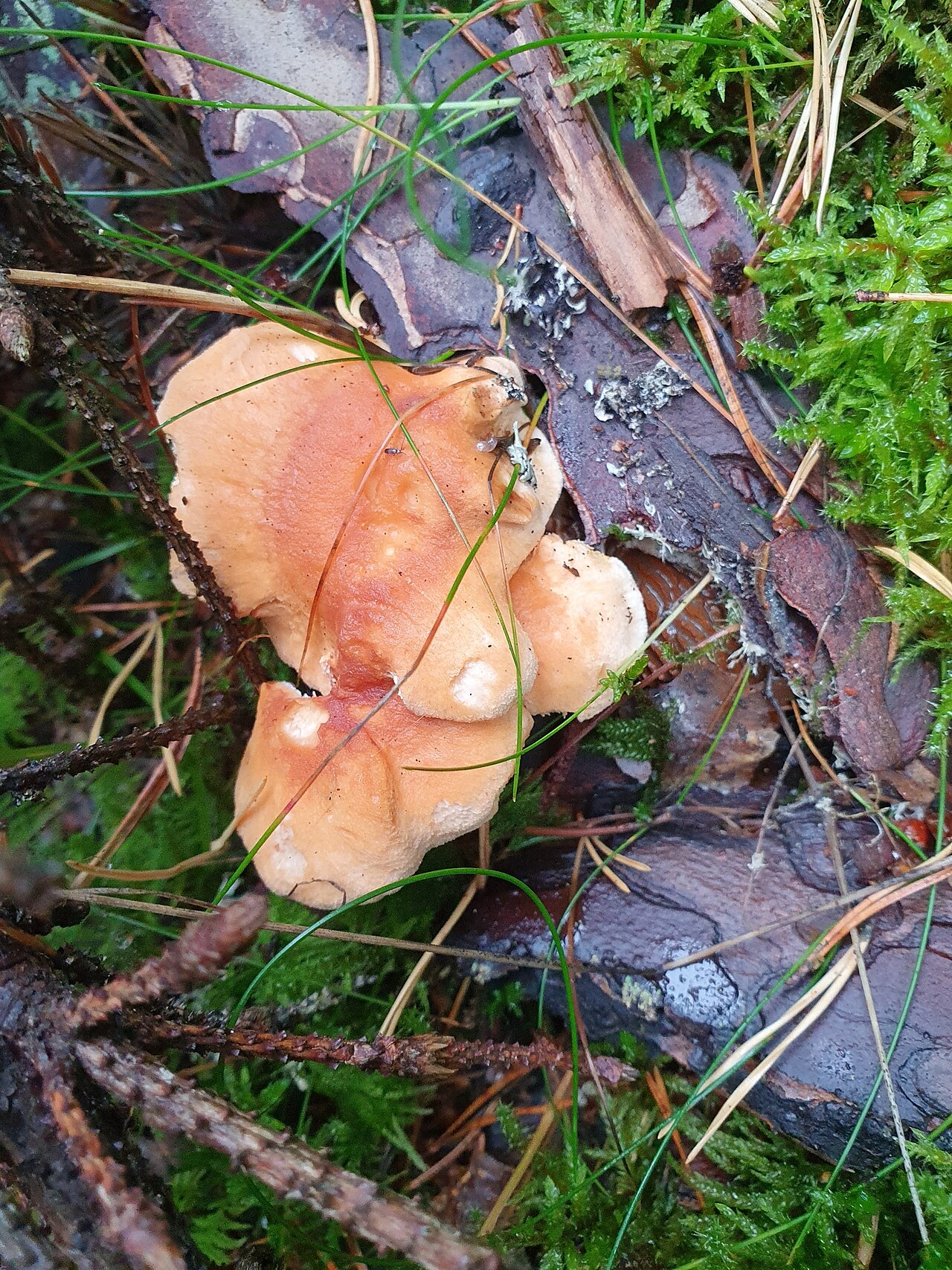
Photo: jensu · CC0 · Photo source · License

Description
A small orange to reddish-brown hedgehog fungus with fine pale spines beneath the cap.
Identification features
The spines run slightly down the stem; the cap is thinner and more orange than the wood hedgehog.
Identification checklist
Check the entire fruitbody for identification. A small orange to reddish-brown hedgehog fungus with fine pale spines beneath the cap. The spines run slightly down the stem; the cap is thinner and more orange than the wood hedgehog. Typical habitat: Conifer and deciduous woodland, often among moss on acidic soils.
Detailed features
- Cap
- 3–6 cm, reddish-orange to flesh-brown, soon flattened and often depressed in the centre.
- Hymenophore
- The fertile surface has brittle pinkish to flesh-coloured spines up to about 5 mm, not strongly decurrent.
- Stem
- 3–6 × 0.5–1 cm, smooth, somewhat paler than the cap; may become hollow when old.
- Flesh
- Initially whitish, later yellowing and sometimes becoming flesh-red.
- Smell
- Pleasant.
- Spore print
- Pale yellowish.
Size
- Cap diameter
- 3–6 cm
- Stem height
- 3–6 cm
- Stem diameter
- 0,5–1 cm
Habitat
Conifer and deciduous woodland, often among moss on acidic soils.
Fruiting period
July, August, September, October, November
Ecology
- Trophic mode
- Saprotrophic
- Substrate
- Forest soil
- Soil
- Moist
- Notes
- In damp woodland, often in groups and late in the season.
How to separate similar species
Compare especially with these similar species: Hydnum repandum, Hydnum umbilicatum. Check the combination of cap shape and colour, spore-bearing surface, stem, flesh changes and habitat. A single feature or photograph is not enough; if the key characters do not match the description, do not treat the identification as confirmed.
Similar species
- Wood hedgehog (Hydnum repandum)
Usually larger, paler, and fleshier, with spines running further down the stem.
- Hydnum umbilicatum
Usually has a more pronounced deep umbilicus or funnel-like cap centre.
- Scaly tooth (Sarcodon imbricatus)
Is larger, darker, and has a distinctly scaly cap.