Species details
Red-belted conk
Fomitopsis pinicola
Inedible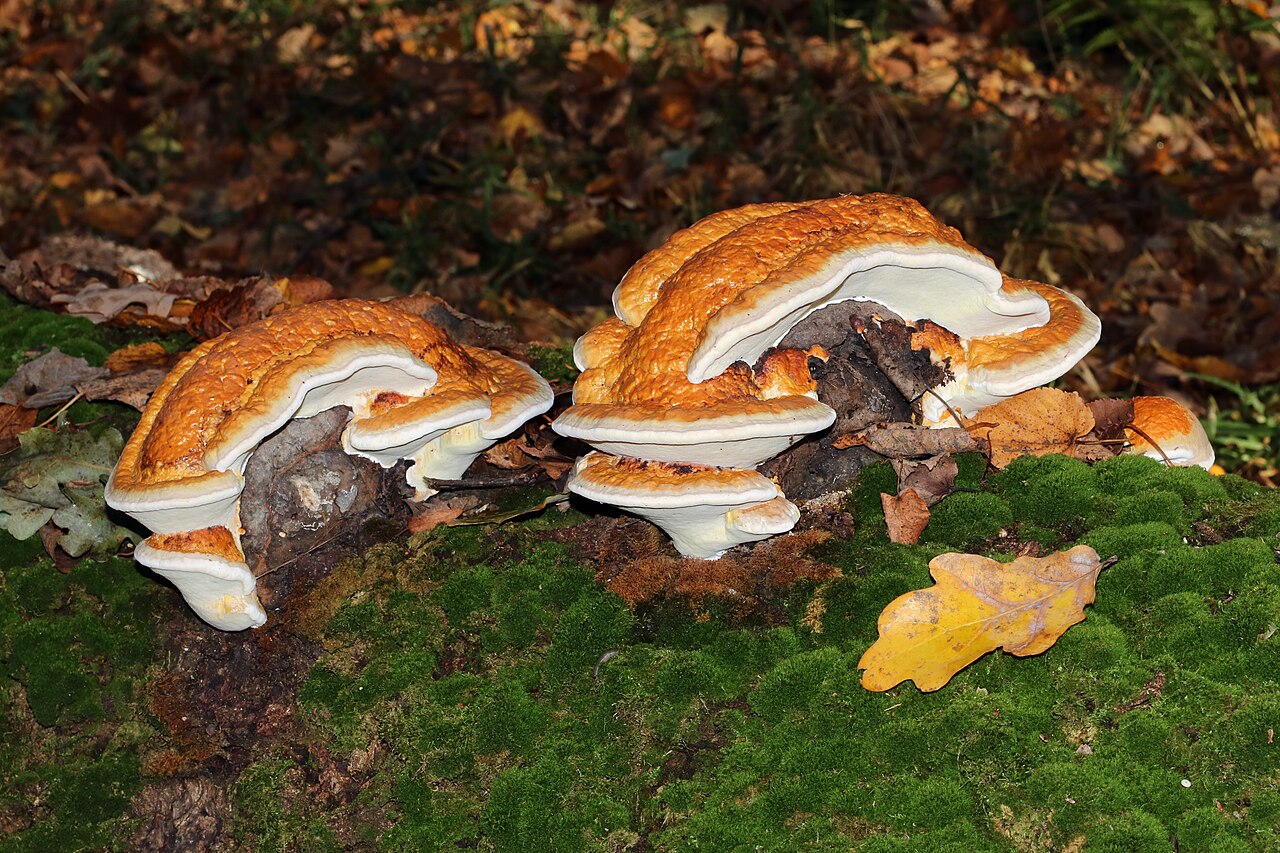
Photo: George Chernilevsky · CC BY 4.0 · Photo source · License

Description
A hard perennial bracket with a distinctly zoned surface, often with a pale margin and orange-red to dark older zones.
Identification features
The underside has fine pale pores; there is no stem and the flesh is hard and woody.
Identification checklist
Check the entire fruitbody for identification. A hard perennial bracket with a distinctly zoned surface, often with a pale margin and orange-red to dark older zones. The underside has fine pale pores; there is no stem and the flesh is hard and woody. Typical habitat: On living and dead wood, especially conifers and often spruce; perennial fruitbodies can be seen throughout the year.
Detailed features
- Cap
- A hard perennial bracket fungus with a distinctly zoned surface, often with a pale margin and orange-red to dark older zones.
- Hymenophore
- The underside has fine pale pores; there is no stem and the flesh is hard and woody.
- Flesh
- Wood-coloured, very hard and woody.
- Smell
- Strong unpleasant smell.
Size
- Cap diameter
- 5–25 cm
Habitat
On living and dead wood, especially conifers and often spruce; perennial fruitbodies can be seen throughout the year.
Fruiting period
January, February, March, April, May, June, July, August, September, October, November, December
Ecology
- Trophic mode
- Parasitic
- Host trees
- Spruce (Picea), Fir (Abies), Pine (Pinus), Birch (Betula), Beech (Fagus)
- Substrate
- Living wood, Dead wood, Stumps
- Notes
- Parasitic species that can also occur on dead wood. On living and dead wood, especially conifers and often spruce; perennial fruitbodies can be seen throughout the year.
How to separate similar species
Compare especially with these similar species: Fomes fomentarius, Ganoderma applanatum, Fomitopsis betulina. Check the entire fruitbody, spore-bearing surface, stem, texture, changes after bruising and habitat. A single feature or photograph is not enough for reliable identification.
Similar species
Interesting facts
Did you know? The perennial fruitbody can persist on the same trunk for several seasons and add a new tube layer each year.