Species details
Oak waxcap
Hygrophorus nemoreus
Traditionally edible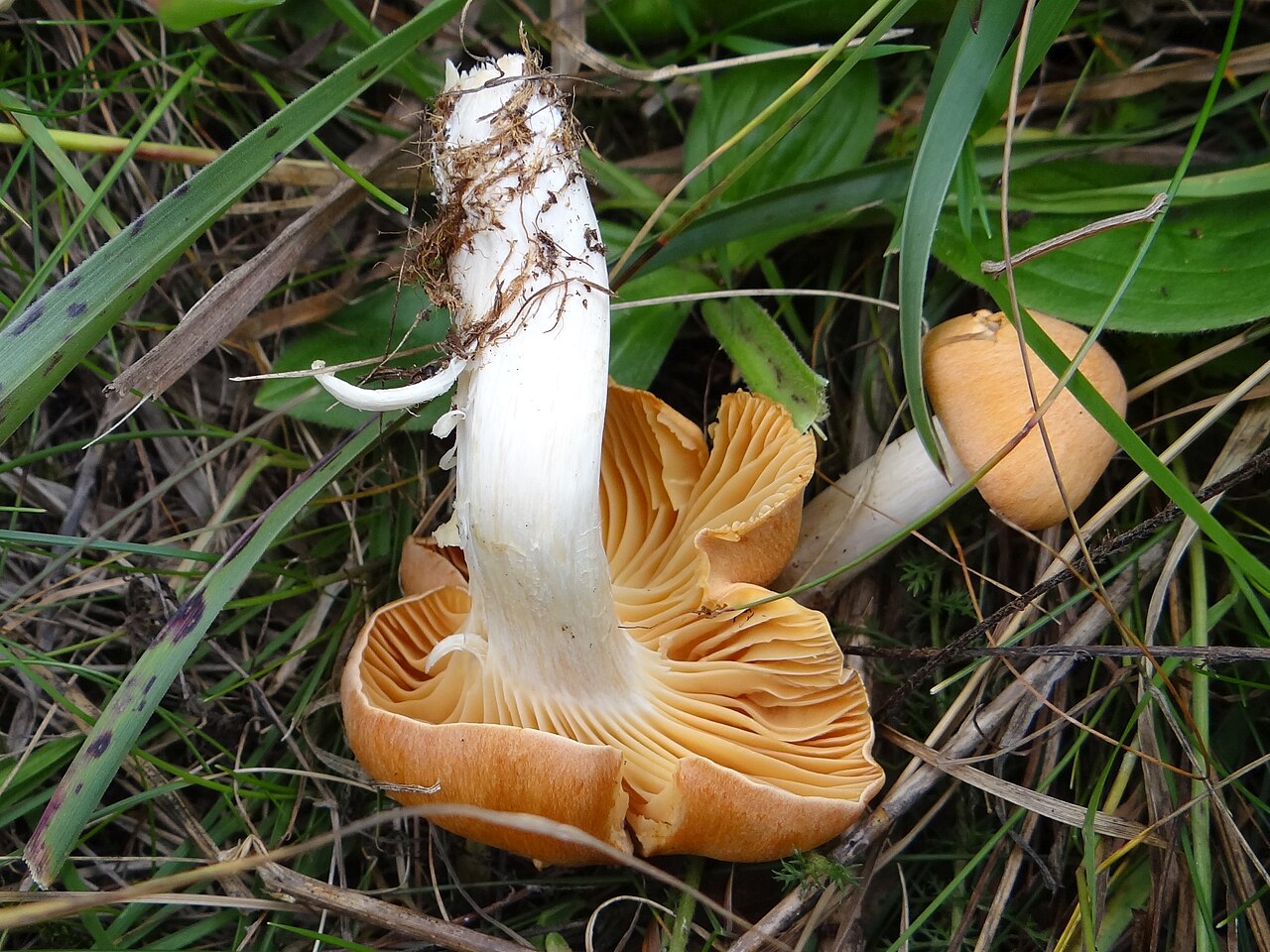
Photo: Jerzy Opioła · CC BY-SA 4.0 · Photo source · License
.jpg)
Description
A fleshy orange-ochre Hygrophorus with widely spaced thick gills and a mild mealy smell.
Identification features
The cap starts convex and later flattens, with a finely fibrillose surface. Gills are paler than the cap and slightly decurrent.
Identification checklist
Check the orange-ochre fleshy cap, widely spaced thick pale gills that run slightly down the stem, and woodland habitat. The mild mealy smell is supportive but not diagnostic on its own.
Detailed features
- Cap
- A fleshy orange-ochre waxcap relative with thick, widely spaced gills and a mild mealy smell.
- Hymenophore
- The cap is initially convex and later flattens, with a finely fibrous surface. The gills are paler than the cap and slightly decurrent.
- Flesh
- White to whitish and firm.
- Smell
- Mild mealy smell.
- Spore print
- White.
Size
- Cap diameter
- 4–10 cm
- Stem height
- 4–8 cm
- Stem diameter
- 1–1,5 cm
Habitat
In deciduous and mixed woodland, often with oak and beech on base-rich or calcareous soils; mainly in autumn.
Fruiting period
September, October, November
Ecology
- Trophic mode
- Mycorrhizal
- Host trees
- Oak (Quercus), Beech (Fagus)
- Substrate
- Forest soil
- Soil
- Calcareous
- Notes
- Mycorrhizal species. In deciduous and mixed woodland, often with oak and beech on base-rich or calcareous soils; mainly in autumn.
How to separate similar species
Meadow waxcap grows in grassland rather than typical woodland. Similar Hygrophorus species differ in sliminess, colour and tree association; compare several characters together.
Similar species
Interesting facts
Did you know? A mild mealy smell and thick, distant gills complement the orange-ochre cap colour.