Species details
Meadow waxcap
Cuphophyllus pratensis
Conditional / expert preparation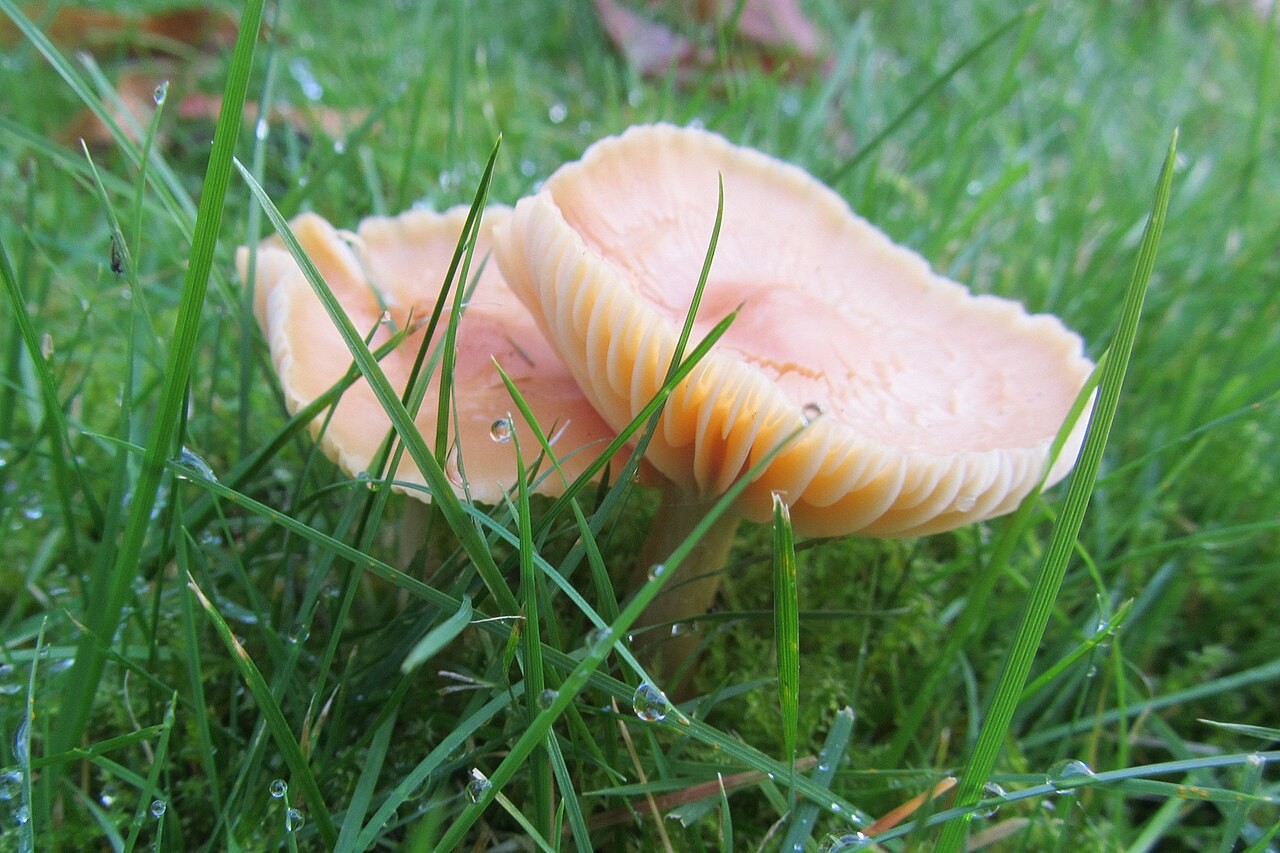
Photo: Strobilomyces · CC BY-SA 3.0 · Photo source · License

Description
An orange-ochre to brownish waxcap with thick, widely spaced gills running down the stem.
Identification features
Cap 2–6 cm, bell-shaped at first, later flattened, orange-ochre to fox-brown. Gills are pale orange, thick, widely spaced and vein-connected, gradually decurrent. Stem is similarly coloured to the cap.
Identification checklist
Check the orange-ochre cap and especially the thick, widely spaced gills that are vein-connected and run down the stem.
Detailed features
- Cap
- Cap 2–6 cm, bell-shaped at first, later flattened, orange-ochre to fox-brown.
- Hymenophore
- The gills are pale orange, thick, widely spaced, connected by veins and gradually decurrent.
- Stem
- Stem is similarly coloured to the cap.
Size
- Cap diameter
- 2–6 cm
Habitat
Grows on woodland meadows and pastures among grass and moss, usually in groups in autumn.
Fruiting period
September, October
Ecology
- Substrate
- Grassland
- Notes
- Grows on woodland meadows and pastures among grass and moss, usually in groups in autumn.
How to separate similar species
Cuphophyllus virgineus is usually white to cream. Other waxcaps may be similar; grassland habitat and gill structure are important.
Similar species
- Snowy waxcap (Cuphophyllus virgineus)
- Cuphophyllus lacmus
- Hygrocybe species
Conservation
- Red list
- I – indeterminate category
- Notes
- On the Slovenian Red List: I – indeterminate category.