Species details
Matt bolete
Xerocomellus pruinatus
Traditionally edible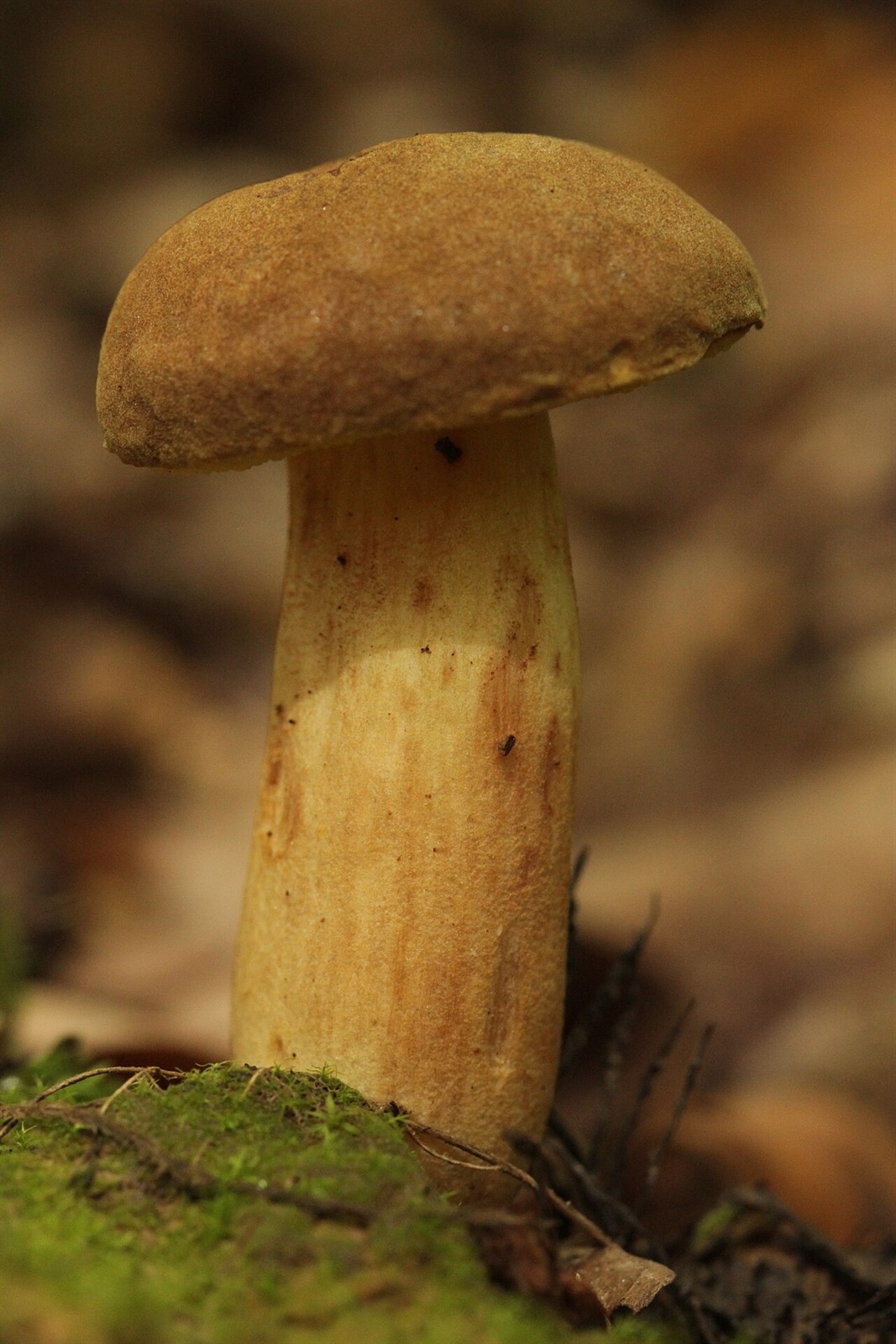
Photo: Björn S... · CC BY-SA 2.0 · Photo source · License
.jpg)
Description
A dark-brown velvety bolete with yellow pores that green on pressure and yellowish flesh that blues slightly.
Identification features
The cap is dark brown, finely velvety and frosted, usually not cracking with age. Tubes and pores are yellow. The stem is yellow to reddish; flesh blues slightly when cut.
Identification checklist
Check the frosted dark cap without characteristic red cracks, yellow pores, slight blue staining, and conifer habitat.
Detailed features
- Cap
- The cap is dark brown, finely velvety and frosted, usually not cracking with age.
- Hymenophore
- Tubes and pores are yellow.
- Stem
- The stem is yellow to reddish; flesh blues slightly when cut.
- Flesh
- Yellowish, usually bluing slightly when cut.
- Smell
- Pleasant and mild.
- Spore print
- Olive-brown.
Size
- Cap diameter
- ≤ 10 cm
- Stem height
- ≤ 8 cm
- Stem diameter
- ≤ 2 cm
Habitat
Mycorrhizal mainly with spruce and other conifers, often in upland woodland, from late summer to late autumn.
Fruiting period
August, September, October, November
Ecology
- Trophic mode
- Mycorrhizal
- Host trees
- Spruce (Picea)
- Substrate
- Forest soil
- Notes
- Mycorrhizal mainly with spruce and other conifers, often in upland woodland, from late summer to late autumn.
How to separate similar species
Xerocomellus chrysenteron often has a cracked cap with wine-red fissures. Similar boletes require checking cap, pores, stem, and cut flesh.
Similar species
Interesting facts
Did you know? The cap usually does not crack with age, helping separate it from cracking relatives.