Species details
Ruby bolete
Hortiboletus rubellus
Conditional / expert preparation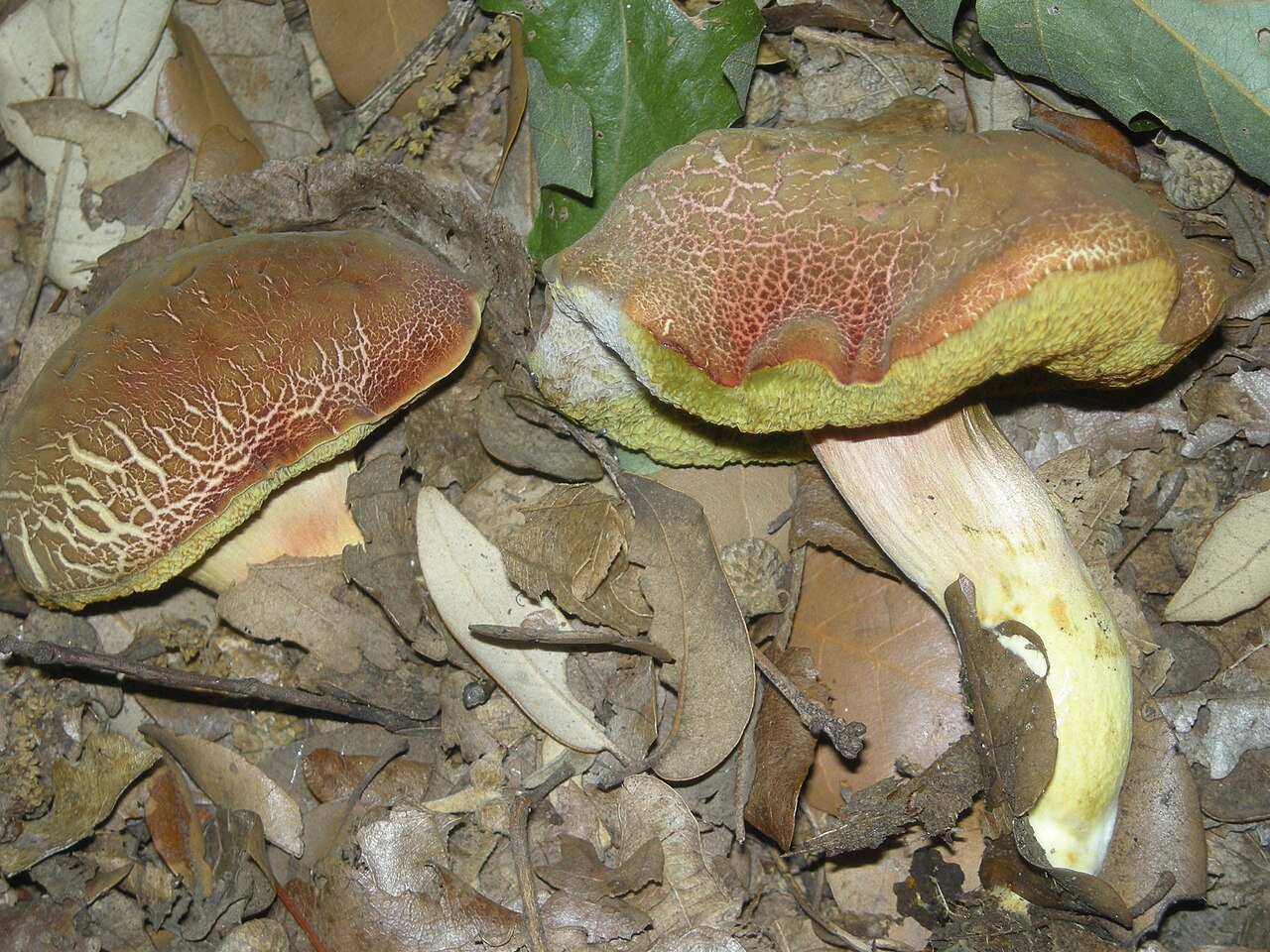
Photo: Albarubescens · CC BY-SA 4.0 · Photo source · License
.JPG)
Description
A small to medium bolete with a vivid red cap and yellow pores.
Identification features
The stem is yellow with reddish tones, flesh may blue slightly, and the base often shows red dots.
Identification checklist
Check the entire fruitbody for identification. A small to medium bolete with a vivid red cap and yellow pores. The stem is yellow with reddish tones, flesh may blue slightly, and the base often shows red dots. Typical habitat: Parks, gardens, grassy edges and open deciduous woodland.
Detailed features
- Cap
- 3–7 cm, hemispherical to cushion-flattened, vivid red to scarlet, finely felted and becoming patchier with age.
- Hymenophore
- Bright yellow pores, becoming greenish; they may bruise blue or green.
- Stem
- 4–8 × 0.6–1.5 cm, yellow, often pink to reddish in the middle, longitudinally fibrous.
- Flesh
- Yellow, reddish beneath the cap skin; may blue slightly when cut.
- Smell
- Pleasant, indistinct.
- Spore print
- Olive-ochre.
Size
- Cap diameter
- 3–7 cm
- Stem height
- 4–8 cm
- Stem diameter
- 0,6–1,5 cm
Habitat
Parks, gardens, grassy edges and open deciduous woodland.
Fruiting period
June, July, August, September, October
Ecology
- Trophic mode
- Mycorrhizal
- Host trees
- Oak (Quercus)
- Substrate
- Soil, Grassland
- Notes
- Occurs in parks, gardens, grassy margins and open broadleaved woodland, often with deciduous trees.
How to separate similar species
Compare especially with these similar species: Xerocomellus chrysenteron, Cyanoboletus pulverulentus. Check the combination of cap shape and colour, spore-bearing surface, stem, flesh changes and habitat. A single feature or photograph is not enough; if the key characters do not match the description, do not treat the identification as confirmed.
Similar species
- Red-cracking bolete (Xerocomellus chrysenteron)
Xerocomellus chrysenteron usually has a brownish cracking cap with reddish flesh showing in the cracks.
- Ink-stain bolete (Cyanoboletus pulverulentus)
Inkstain bolete is usually brown and turns intensely blue almost instantly when damaged.
Interesting facts
Did you know? The vivid red cap is the easiest feature to notice, but the yellow pores and stem colours are also important for identification.