Species details
Ink-stain bolete
Cyanoboletus pulverulentus
Conditional / expert preparation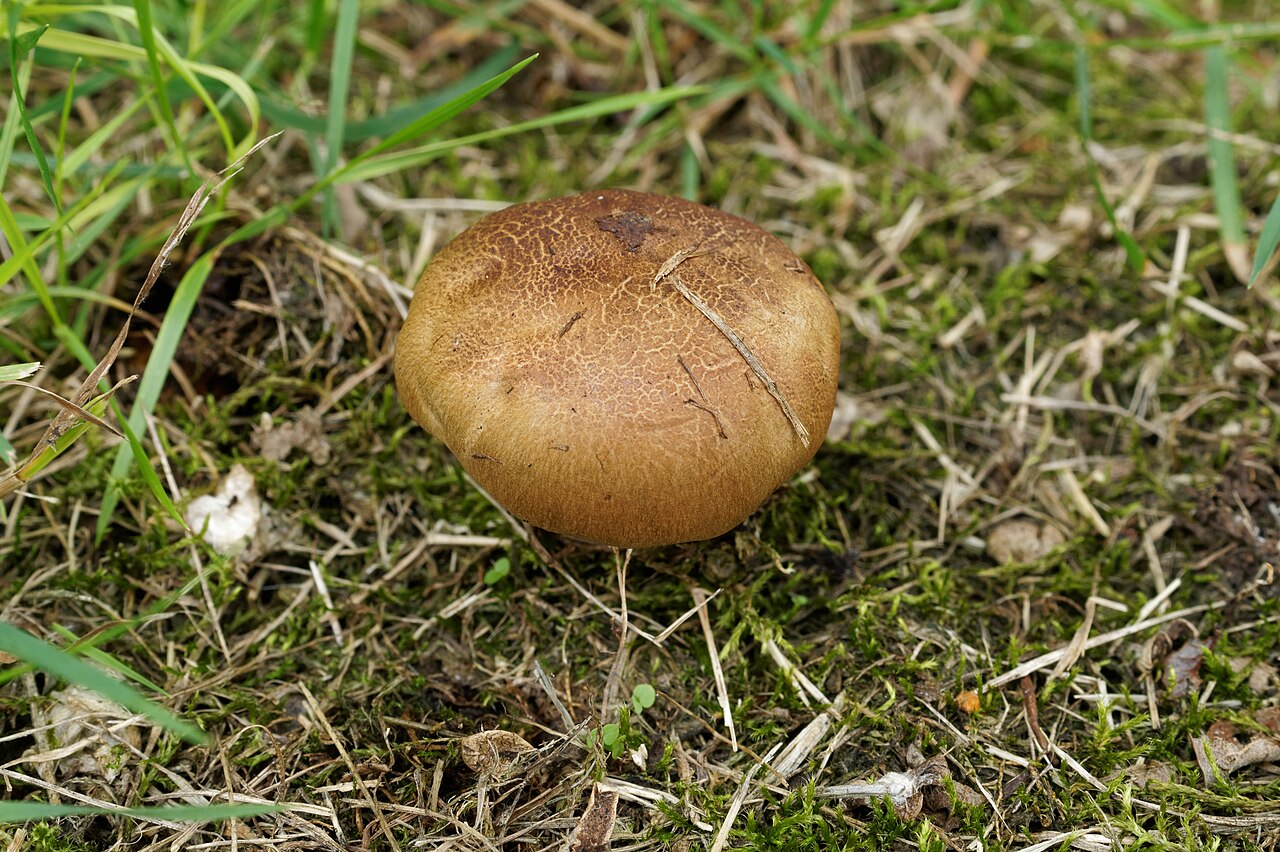
Photo: Lukas from London, England · CC BY-SA 2.0 · Photo source · License
.jpg)
Description
A smaller bolete that turns intensely blue almost immediately when bruised or cut.
Identification features
Pores are yellow, the stem yellow to reddish brown; very rapid blue staining is distinctive.
Identification checklist
Check the entire fruitbody for identification. A smaller bolete that turns intensely blue almost immediately when bruised or cut. Pores are yellow, the stem yellow to reddish brown; very rapid blue staining is distinctive. Typical habitat: Warm deciduous and mixed woodland, often with oak and beech.
Detailed features
- Cap
- 3–15 cm, hemispherical to convex, tobacco-brown to olive-grey, velvety when young and smoother later.
- Hymenophore
- Yellowish to greenish tubes and pores that turn intensely blue almost immediately when touched.
- Stem
- Up to 10 × 2 cm, yellow at the top and reddish to purplish-brown below; instantly blues on handling and then darkens.
- Flesh
- Bright yellow, turning intensely blue immediately on cutting and later grey-blue.
- Smell
- Pleasant, sometimes slightly fruity.
- Spore print
- Dark olive to olive-brown.
Size
- Cap diameter
- 3–15 cm
- Stem height
- ≤ 10 cm
- Stem diameter
- ≤ 2 cm
Habitat
Warm deciduous and mixed woodland, often with oak and beech.
Fruiting period
June, July, August, September, October
Ecology
- Trophic mode
- Mycorrhizal
- Host trees
- Oak (Quercus), Beech (Fagus)
- Substrate
- Forest soil
- Notes
- A mycorrhizal species of warmer broadleaved and mixed woodland, often associated with oak and beech.
How to separate similar species
Compare especially with these similar species: Neoboletus luridiformis, Suillellus luridus, Hortiboletus rubellus. Check the combination of cap shape and colour, spore-bearing surface, stem, flesh changes and habitat. A single feature or photograph is not enough; if the key characters do not match the description, do not treat the identification as confirmed.
Similar species
- Scarletina bolete (Neoboletus luridiformis)
Neoboletus luridiformis usually has red pores and a stouter stem with red dotting.
- Ruby bolete (Hortiboletus rubellus)
Ruby bolete has a vivid red cap and usually much weaker blue staining.
Interesting facts
Did you know? The epithet pulverulentus means dusty; the most striking field character is the extremely rapid blue staining of damaged tissue.