Species details
Geranium-scented brittlegill
Russula fellea
Inedible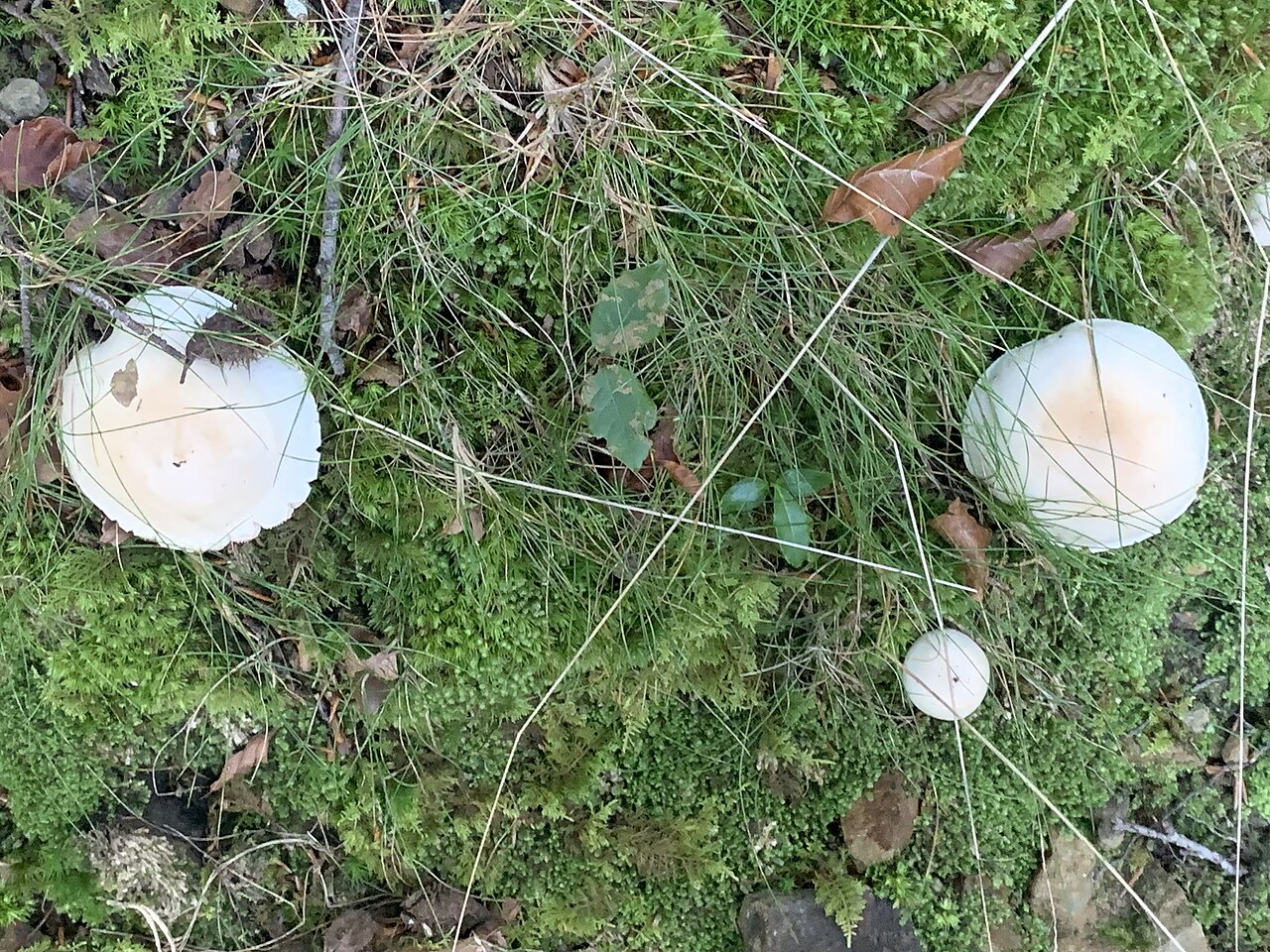
Photo: Jose Angel Urquia Goitia · CC BY-SA 4.0 · Photo source · License

Description
A pale ochre brittlegill in which cap, gills and stem share similar yellowish-ochre tones.
Identification features
Gills are fairly crowded and brittle, the stem cylindrical, and flesh white to ochre and brittle. The species is known as strongly acrid, but tasting is not recommended for identification.
Identification checklist
Check the entire fruitbody for identification. A pale ochre brittlegill in which cap, gills and stem share similar yellowish-ochre tones. Gills are fairly crowded and brittle, the stem cylindrical, and flesh white to ochre and brittle. The species is known as strongly acrid, but tasting is not recommended for identification. Most often under beech, frequently in large groups; summer to late autumn.
Detailed features
- Cap
- A pale ochre brittlegill in which the cap, gills and stem show similar yellow-ochre tones.
- Hymenophore
- Gills are fairly crowded and brittle, the stem cylindrical, and flesh white to ochre and brittle.
- Stem
- Gills are fairly crowded and brittle, the stem cylindrical, and flesh white to ochre and brittle.
- Flesh
- White, later ochre-brown, firm and brittle.
- Smell
- Pleasant, somewhat fruity smell.
- Spore print
- White.
Size
- Cap diameter
- 4–8 cm
- Stem height
- 4–6 cm
- Stem diameter
- 1–1,5 cm
Habitat
Most often under beech, frequently in large groups; summer to late autumn.
Fruiting period
July, August, September, October, November
Ecology
- Trophic mode
- Mycorrhizal
- Host trees
- Beech (Fagus)
- Substrate
- Forest soil
- Notes
- Mycorrhizal species. Most often under beech, frequently in large groups; summer to late autumn.
How to separate similar species
Compare especially with: Russula ochroleuca, Russula grata, Russula nobilis. A single feature or photograph is not sufficient for reliable identification.
Similar species
- Ochre brittlegill (Russula ochroleuca)
- Russula grata
- Beechwood sickener (Russula nobilis) DANGEROUS
Russula nobilis is usually more vividly reddish and is also unsuitable for eating; colour alone is insufficient in Russula identification.
Interesting facts
Did you know? Cap, gills and stem share a similar pale ochre colour, giving the species a very uniform appearance.