Species details
Gemmed Amanita
Amanita gemmata
Poisonous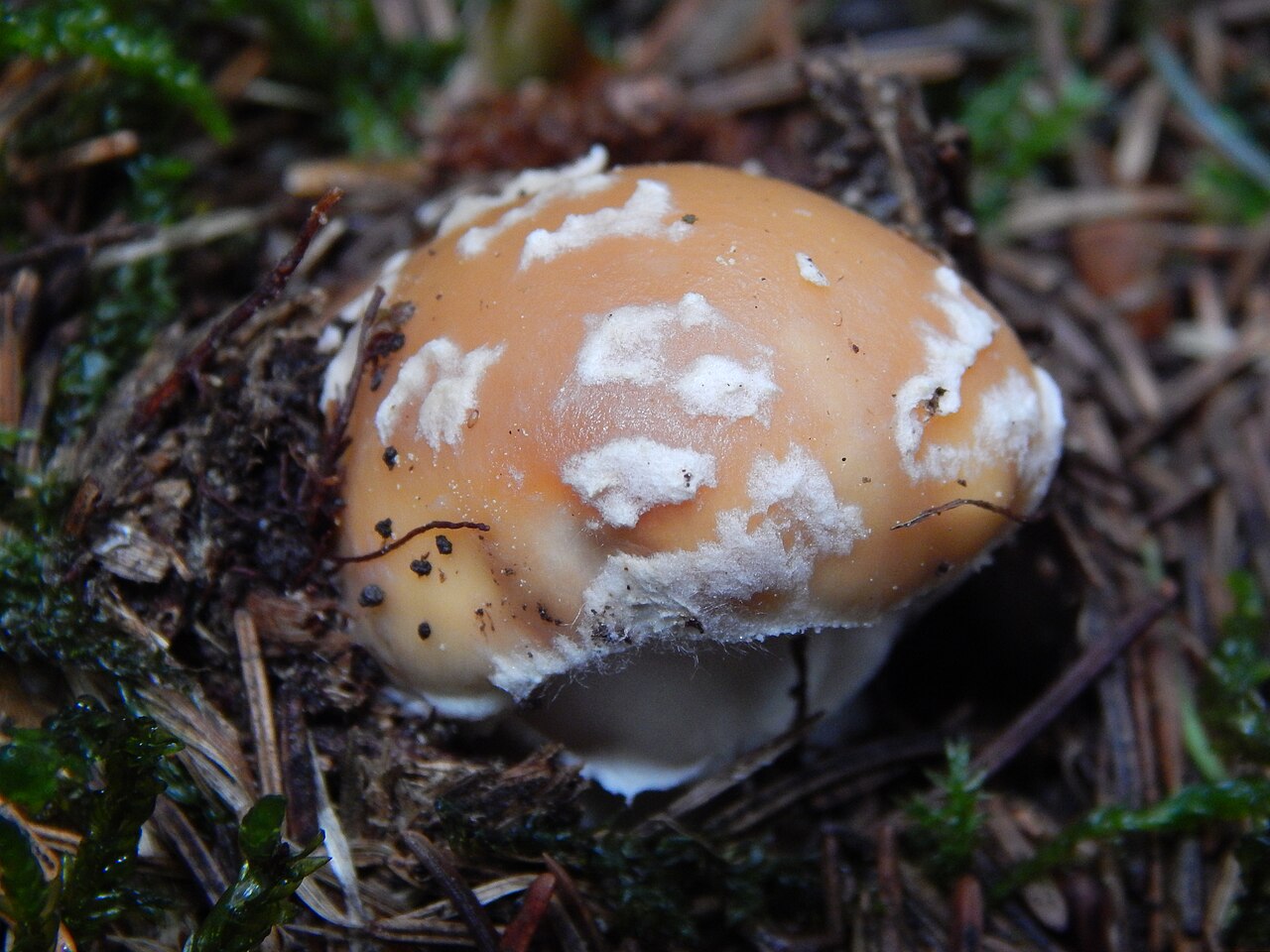
Photo: JovanaKoturov · CC BY-SA 4.0 · Photo source · License

Description
A yellow to ochre Amanita with white veil patches on the cap, white gills and a ring.
Identification features
The base is bulbous with veil remnants; the species may contain ibotenic acid and muscimol.
Identification checklist
Check the entire fruitbody for identification. A yellow to ochre Amanita with white veil patches on the cap, white gills and a ring. The base is bulbous with veil remnants; the species may contain ibotenic acid and muscimol. Typical habitat: Coniferous and mixed woodland, often on sandy or acidic soils.
Detailed features
- Cap
- 5–11 cm, hemispherical to expanded, pale to stronger yellow, often with sparse white veil remnants; margin striate.
- Hymenophore
- Gills white, crowded, broad and free from the stem.
- Stem
- 6–12 × 1–2 cm, white, with a ring around mid-stem; base bulbous with veil remnants.
- Flesh
- White, delicate and brittle; yellowish beneath the cap skin.
- Smell
- Indistinct.
- Taste
- Do not taste.
- Spore print
- White.
Size
- Cap diameter
- 5–11 cm
- Stem height
- 6–12 cm
- Stem diameter
- 1–2 cm
Habitat
Coniferous and mixed woodland, often on sandy or acidic soils.
Fruiting period
May, June, July, August, September, October
Ecology
- Trophic mode
- Mycorrhizal
- Substrate
- Forest soil
- Notes
- A mycorrhizal species of various woodland types, fruiting from late spring into autumn.
How to separate similar species
Compare especially with these similar species: Amanita muscaria, Amanita citrina, Amanita pantherina. Check the combination of cap shape and colour, spore-bearing surface, stem, flesh changes and habitat. A single feature or photograph is not enough; if the key characters do not match the description, do not treat the identification as confirmed.
Similar species
- Panther cap (Amanita pantherina) DANGEROUS
Panther cap is usually brown, with more numerous white warts and a more distinctly rimmed bulb.
- False death cap (Amanita citrina) DANGEROUS
False death cap is usually greener-yellow and often smells strongly of raw potato.
Interesting facts
Did you know? The species can cause pantherina syndrome and should therefore be treated as a poisonous amanita.