Species details
Deadly fibrecap
Inosperma erubescens
Poisonous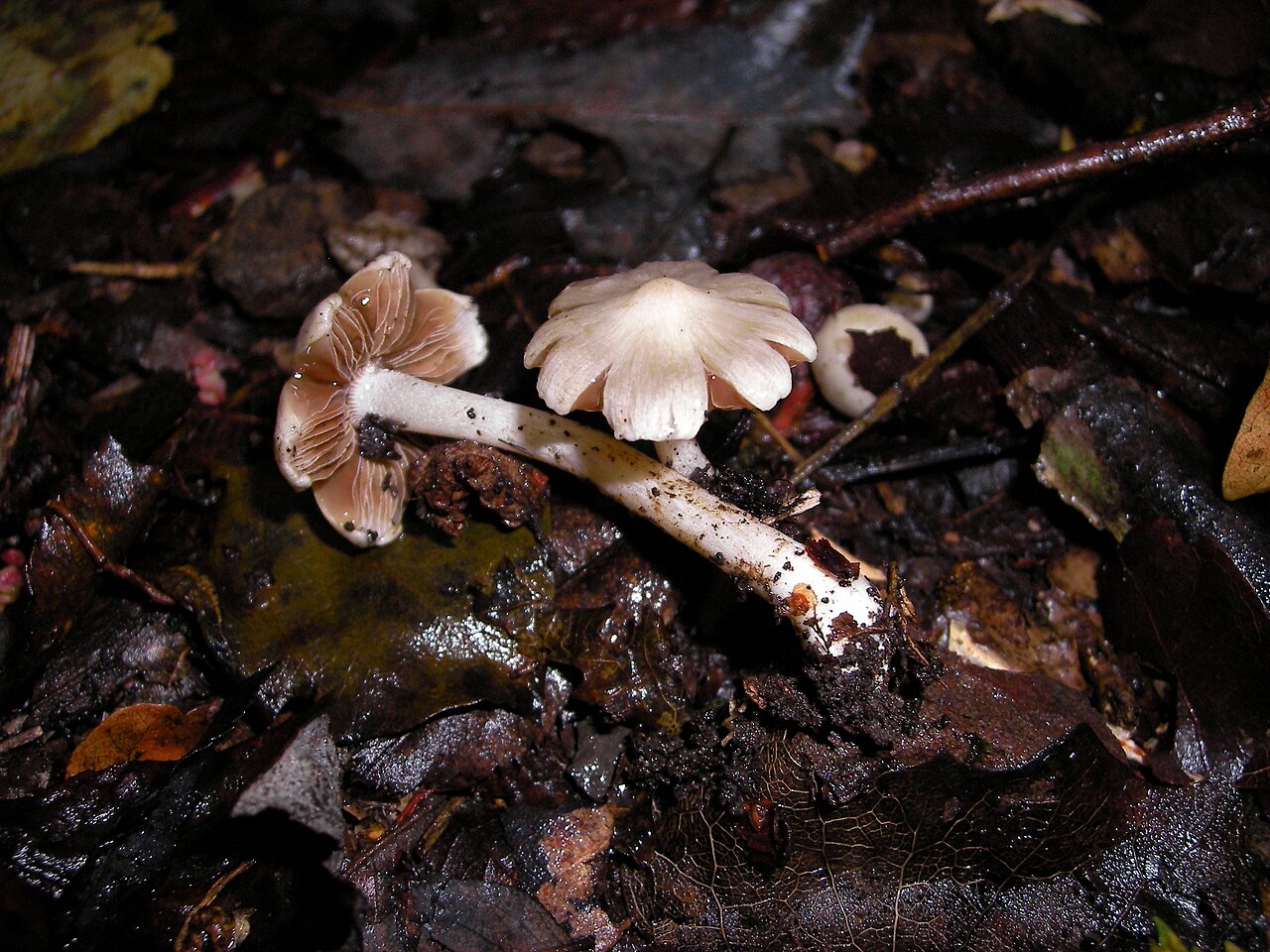
Photo: Bartiebert · CC BY-SA 3.0 · Photo source · License

Description
A whitish to ochre fibrecap that turns distinctly brick-red where damaged and with age.
Identification features
The cap is radially fibrous and often cracked, and the smell may seem pleasantly fruity. It contains high levels of muscarine and is highly poisonous.
Identification checklist
Check the entire fruitbody for identification. A whitish to ochre fibrecap that turns distinctly brick-red where damaged and with age. The cap is radially fibrous and often cracked, and the smell may seem pleasantly fruity. It contains high levels of muscarine and is highly poisonous. Typical habitat: In warm deciduous woodland, parks, and pathsides, especially on calcareous soil.
Detailed features
- Cap
- 3–8 cm, initially conical to bell-shaped, later expanding, whitish-cream to ochre, conspicuously radially fibrous; reddening with age and damage.
- Hymenophore
- Gills are pale at first, later ochre to olive-brown; they may develop reddish tones with maturity and damage.
- Stem
- 4–10 × 1–1.5 cm, whitish, fibrous, later often reddish-spotted or reddened.
- Flesh
- White to pale; reddening may be more evident on the cap surface, gills and stem than deep in the flesh.
- Smell
- Mild to somewhat fruity-sweet, not a reliable identification character.
- Spore print
- Brown.
Size
- Cap diameter
- 3–8 cm
- Stem height
- 4–10 cm
- Stem diameter
- 1–1,5 cm
Habitat
In warm deciduous woodland, parks, and pathsides, especially on calcareous soil.
Fruiting period
April, May, June, July
Ecology
- Trophic mode
- Mycorrhizal
- Host trees
- Beech (Fagus), Hornbeam (Carpinus)
- Substrate
- Forest soil
- Soil
- Calcareous
- Notes
- Mycorrhizal with broadleaved trees, especially beech and hornbeam, often on neutral to calcareous soils in open woodland, parks and along paths.
Distribution
- Notes
- A European species of warm deciduous habitats, especially on base-rich soils.
How to separate similar species
Compare especially with these similar species: Calocybe gambosa, Entoloma sinuatum. Check the combination of cap shape and colour, spore-bearing surface, stem, flesh changes and habitat. A single feature or photograph is not enough; if the key characters do not match the description, do not treat the identification as confirmed.
Similar species
- St George's mushroom (Calocybe gambosa)
St George’s mushroom is fleshier, has white gills and a strong mealy smell, and does not redden in the same way; confusion is particularly dangerous.
Interesting facts
Did you know? The species contains muscarine and can cause severe cholinergic poisoning; it is among the most dangerous lookalikes of pale spring mushrooms.