Species details
Bronze bolete
Boletus aereus
Extra caution required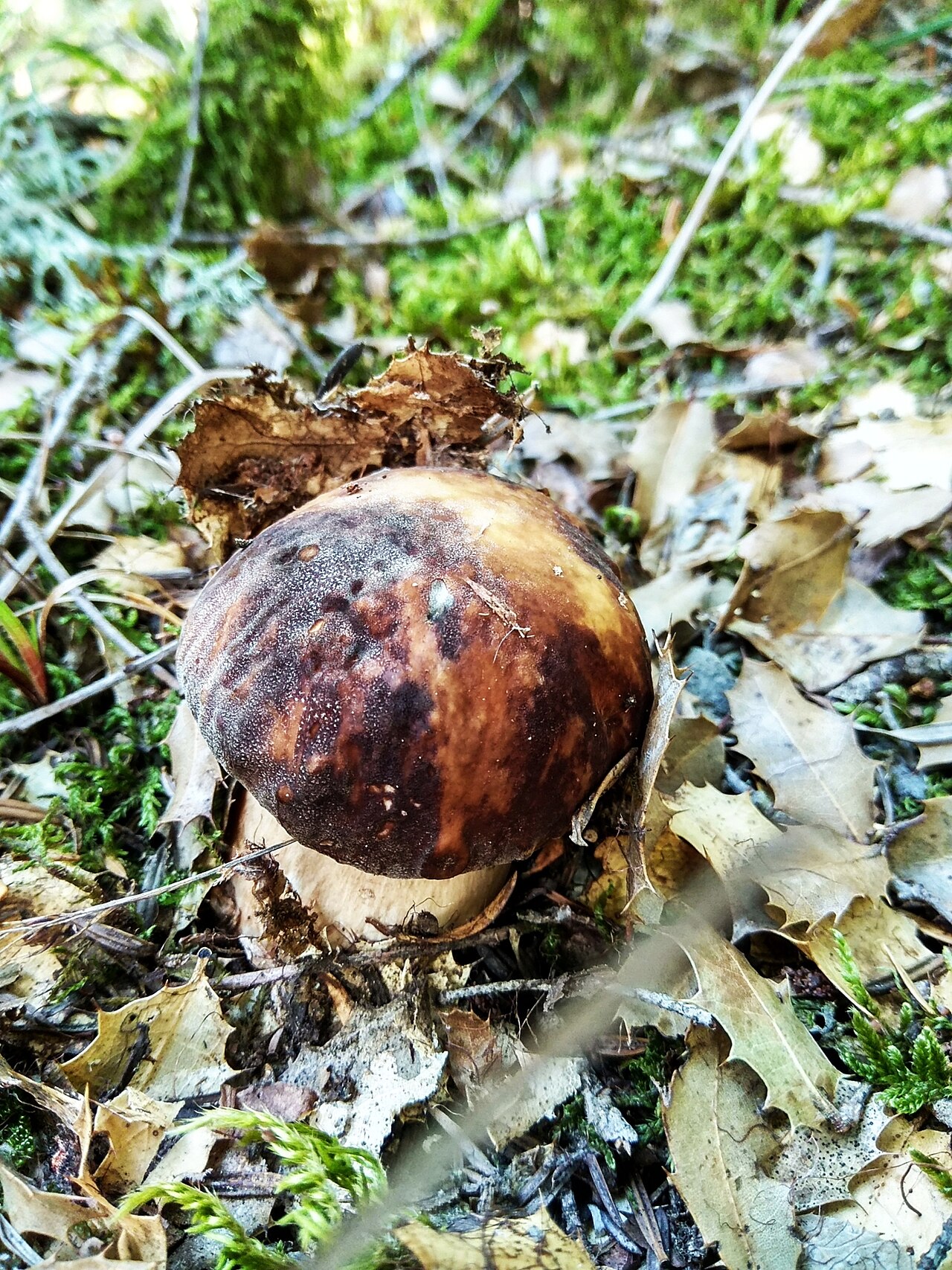
Photo: Sarah Faulwetter · CC BY 4.0 · Photo source · License

Description
A stout bolete with a very dark brown cap, white to olive pores, and a distinct net on the stem.
Identification features
The flesh is white and normally does not blue; the cap is dry to velvety and the stem is often bulbous.
Identification checklist
Check the entire fruitbody for identification. A stout bolete with a very dark brown cap, white to olive pores, and a distinct net on the stem. The flesh is white and normally does not blue; the cap is dry to velvety and the stem is often bulbous. Typical habitat: Warm deciduous woodland, especially with oak, beech, and sweet chestnut.
Detailed features
- Cap
- 6–20 cm, hemispherical to cushion-shaped, very dark brown to almost black-bronze, dry and velvety; not slimy.
- Hymenophore
- Tubes and pores start white, then become yellow and olive-green.
- Stem
- 7–15 × 3–6 cm, initially bulbous, later cylindrical, firm, with fine reticulation.
- Flesh
- White and firm, normally not blueing.
- Smell
- Mild and pleasant.
- Spore print
- Brown-olive.
Size
- Cap diameter
- 6–20 cm
- Stem height
- 7–15 cm
- Stem diameter
- 3–6 cm
Habitat
Warm deciduous woodland, especially with oak, beech, and sweet chestnut.
Fruiting period
June, July, August, September, October
Ecology
- Trophic mode
- Mycorrhizal
- Host trees
- Oak (Quercus), Sweet chestnut (Castanea)
- Substrate
- Forest soil
- Notes
- A warmth-loving mycorrhizal species of deciduous woodland, especially with oak and sweet chestnut.
How to separate similar species
Compare especially with these similar species: Boletus edulis, Boletus reticulatus, Tylopilus felleus. Check the combination of cap shape and colour, spore-bearing surface, stem, flesh changes and habitat. A single feature or photograph is not enough; if the key characters do not match the description, do not treat the identification as confirmed.
Similar species
- Penny bun (Boletus edulis)
Usually has a paler, often slightly sticky cap and a more distinct white network near the top of the stem.
- Summer bolete (Boletus reticulatus)
Often paler, with a coarser and more extensive stem network.
- Bitter bolete (Tylopilus felleus)
Pores become pinkish at maturity, the network is darker and coarse; the species is intensely bitter.