Species details
Bitter webcap
Cortinarius infractus
Poisonous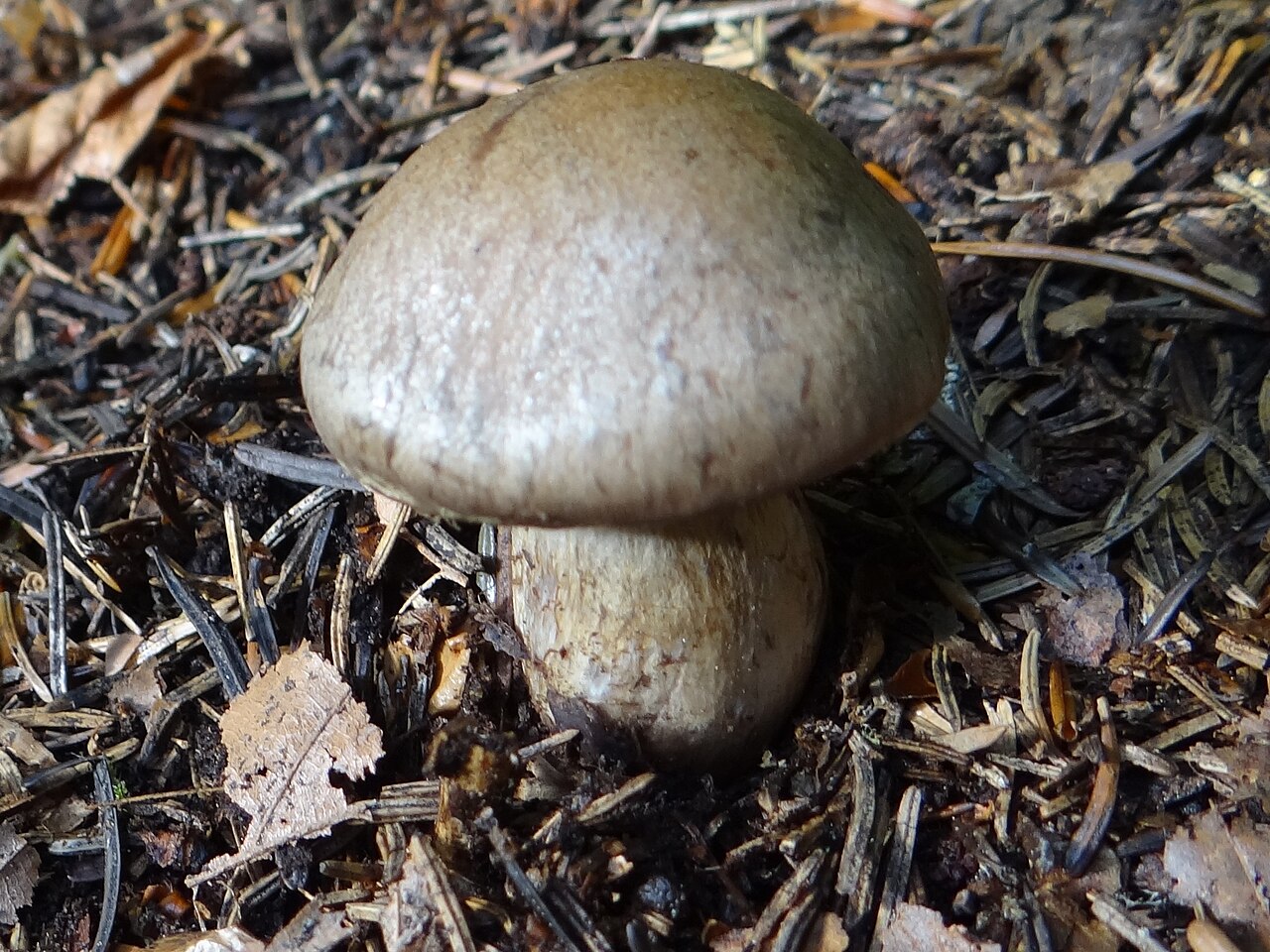
Photo: Jerzy Opioła · CC BY-SA 4.0 · Photo source · License
.JPG)
Description
A variable olive-grey to dirty-brown webcap with dark sooty-brown gills and a cap that becomes slimy when wet.
Identification features
The cap is often irregular or humped, slimy when wet and shiny when dry. Gills are dark grey to olive-brown early on. The stem is dirty white to silver-grey, cylindrical or club-shaped and may be enlarged at the base.
Identification checklist
Check for a dirty olive-grey to brown cap, dark sooty-olive gills, rust-brown spores and cortina remnants. Strong bitterness is reported in references, but FungiTrail does not recommend tasting wild mushrooms.
Detailed features
- Cap
- A variable olive-grey to dirty-brown webcap with dark soot-brown gills and a cap that is slimy in damp weather.
- Hymenophore
- Gills are dark grey to olive-brown early on.
- Stem
- The stem is dirty white to silver-grey, cylindrical or club-shaped and may be enlarged at the base.
- Flesh
- Grey to dirty white, sometimes pale blue-grey in the upper stem.
- Smell
- No distinctive smell.
- Spore print
- Rust-brown.
Size
- Cap diameter
- 3–9 cm
- Stem height
- 4–8 cm
- Stem diameter
- 0,7–2 cm
Habitat
Mycorrhizal with both deciduous and coniferous trees, often on calcareous soils; mainly in autumn.
Fruiting period
September, October, November
Ecology
- Trophic mode
- Mycorrhizal
- Substrate
- Forest soil
- Soil
- Calcareous
- Notes
- Mycorrhizal species. Mycorrhizal with both deciduous and coniferous trees, often on calcareous soils; mainly in autumn.
How to separate similar species
Other slimy webcaps can be very similar. Compare young gill colour, stem base, cap, tree association and spore print; a cap-only photograph is insufficient.
Similar species
- Blue-foot webcap (Cortinarius glaucopus)
- Contrary webcap (Cortinarius varius)
- Cortinarius species
Interesting facts
Did you know? A very bitter taste is a classic descriptive character, but tasting unknown wild mushrooms is not an appropriate identification method.