Species details
Yellowing brittlegill
Russula puellaris
Traditionally edible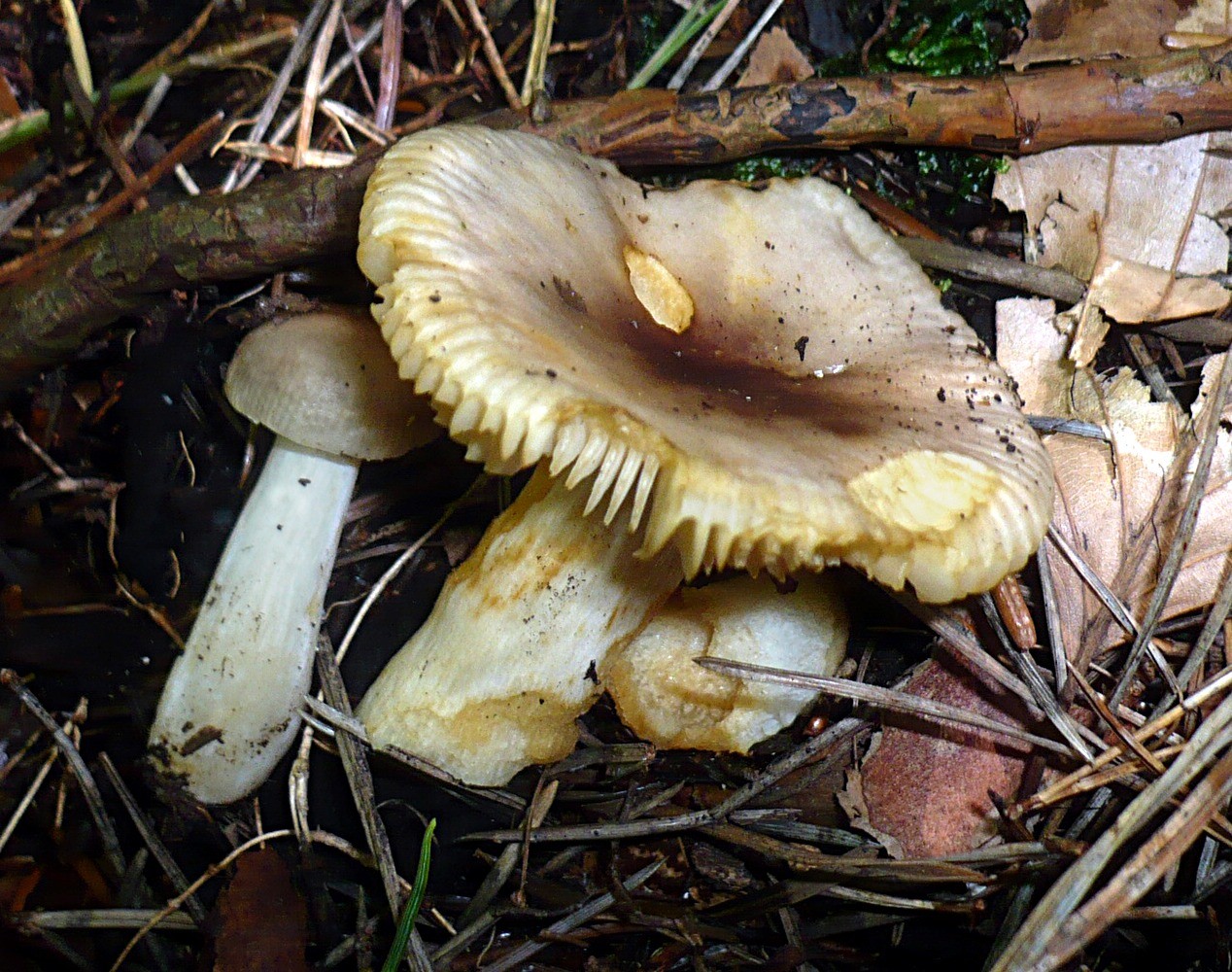
Photo: Gerhard Koller · CC BY-SA 3.0 · Photo source · License

Description
A small brittle Russula with a violet-pink cap that yellows and browns as it matures, and cream to yellow waxy-looking gills.
Identification features
The cap is 2–6 cm wide, initially violet to pink with a very dark centre, later yellowing and browning. Gills are cream, then yellow and waxy-looking. The stem starts white and yellows with age.
Identification checklist
Check the small brittle build, strong cap colour change, yellowing stem and waxy-looking gills. Cap colour alone is insufficient in Russula.
Detailed features
- Cap
- The cap is 2–6 cm wide, initially violet to pink with a very dark centre, later yellowing and browning.
- Hymenophore
- Gills are cream, then yellow and waxy-looking.
- Stem
- The stem starts white and yellows with age.
Size
- Cap diameter
- 2–6 cm
Habitat
Grows in damp woodland with broadleaved or coniferous trees, especially spruce and often in moss, in summer and autumn.
Fruiting period
June, July, August, September, October
Ecology
- Host trees
- Spruce (Picea)
- Soil
- Moist
- Notes
- Grows in damp woodland with broadleaved or coniferous trees, especially spruce and often in moss, in summer and autumn.
How to separate similar species
Several similar small Russula have violet, pink or yellow tones. Reliable identification requires combining habitat, spore print and other characters.
Similar species
- Russula versicolor
- Russula nauseosa
- Grey brittlegill (Russula grisea)