Species details
Yellowdrop milkcap
Lactarius chrysorrheus
Poisonous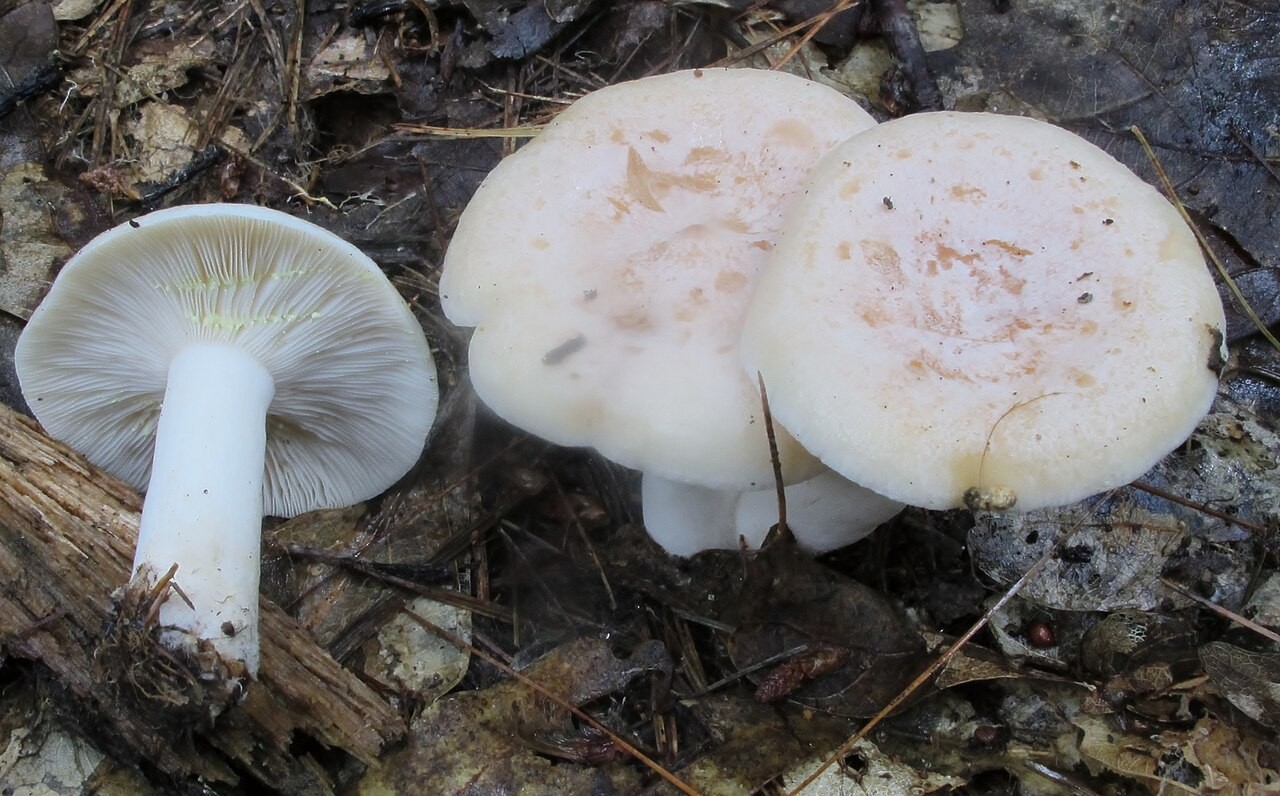
Photo: mycowalt · CC BY-SA 4.0 · Photo source · License

Description
An ochre to orange-brown milkcap whose white latex rapidly turns sulphur- to golden-yellow after damage.
Identification features
The cap is smooth, ochre to pink-orange, and often faintly zoned. Gills are pale to flesh-pink. Latex is initially white, then rapidly yellows; the taste is acrid.
Identification checklist
The key feature is white latex that rapidly turns strongly yellow in air. Also check oak association and gill colour; although the taste is described as acrid, FungiTrail does not recommend tasting.
Detailed features
- Cap
- The cap is smooth, ochre to pink-orange, and often faintly zoned.
- Hymenophore
- Gills are pale to flesh-pink.
- Stem
- Latex is initially white, then rapidly yellows; the taste is acrid.
- Flesh
- White and brittle; latex starts white and rapidly turns golden-yellow.
- Smell
- No characteristic smell.
- Spore print
- Whitish.
Size
- Cap diameter
- 4–6 cm
- Stem height
- 3–8 cm
- Stem diameter
- 0,6–1 cm
Habitat
Mycorrhizal mainly with oaks, also in mixed woodland, from summer to late autumn.
Fruiting period
July, August, September, October, November
Ecology
- Trophic mode
- Mycorrhizal
- Host trees
- Oak (Quercus), Sweet chestnut (Castanea), Pine (Pinus)
- Substrate
- Forest soil
- Notes
- Mycorrhizal mainly with oaks, also in mixed woodland, from summer to late autumn.
How to separate similar species
Edible saffron milkcaps have orange to reddish latex, not white latex that turns strongly yellow. Other white-latex milkcaps can look similar; check tree association and latex colour change.
Similar species
Interesting facts
Did you know? The latex starts white and turns golden-yellow very rapidly in air.