Species details
Poplar milkcap
Lactarius controversus
Inedible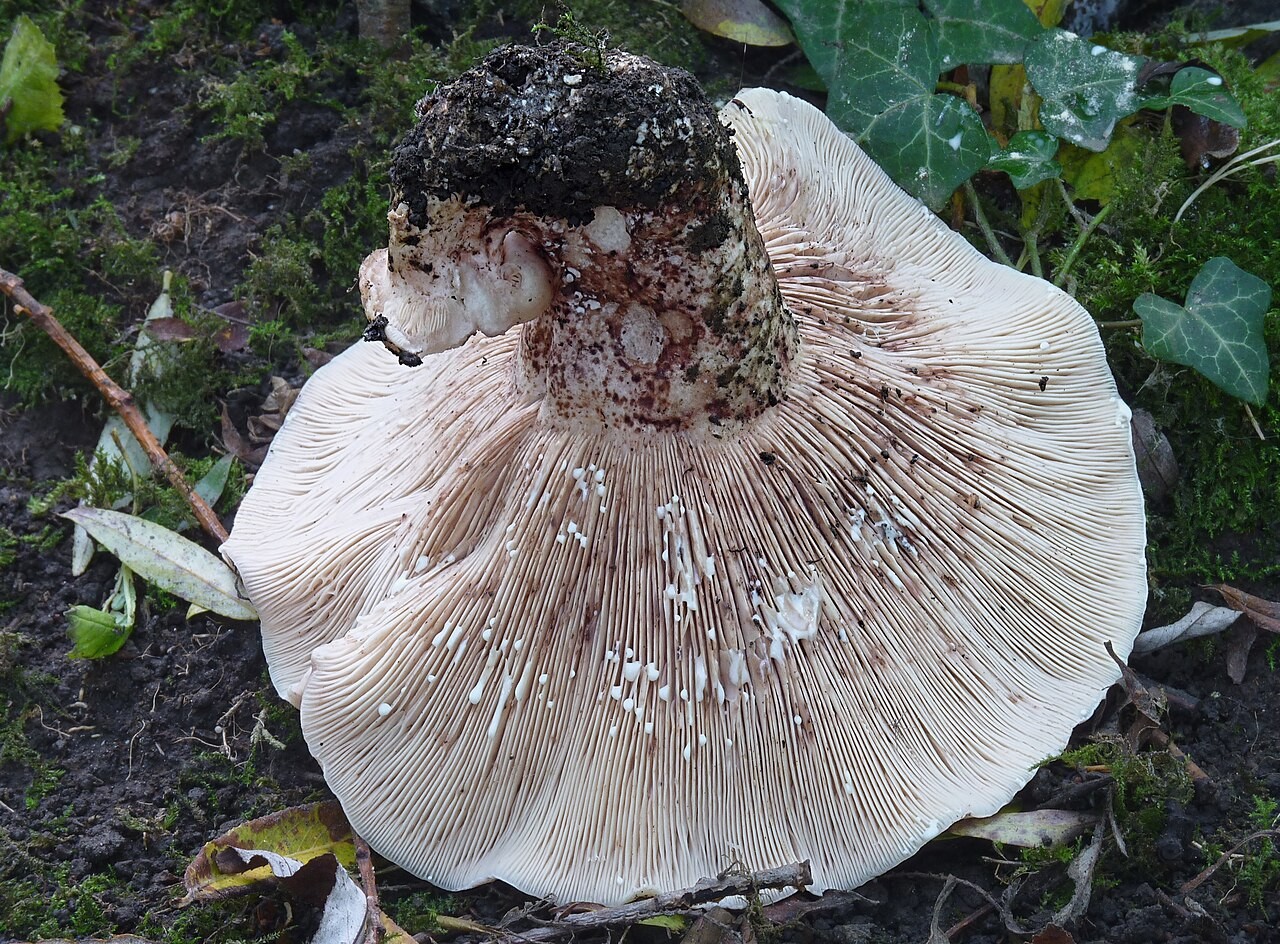
Photo: Jamain · CC BY-SA 3.0 · Photo source · License

Description
A large white to ivory milkcap with pink patches or zones, dense pinkish-buff gills, and abundant white latex.
Identification features
The cap is large, fleshy, and strongly inrolled when young, becoming slimy when wet. Gills are very crowded and later pinkish buff. Latex remains white.
Identification checklist
Check the very crowded pinkish-buff gills, unchanged white latex, pink cap markings, and association with poplars.
Detailed features
- Cap
- The cap is large, fleshy, and strongly inrolled when young, becoming slimy when wet.
- Hymenophore
- Gills are very crowded and later pinkish buff.
- Stem
- Latex remains white.
- Flesh
- White, hard and brittle; abundant white latex does not change colour.
- Smell
- Faintly fruity.
- Spore print
- White with a faint pinkish tinge.
Size
- Cap diameter
- 8–30 cm
- Stem height
- 2,5–5 cm
- Stem diameter
- 1,5–3,5 cm
Habitat
Most often grows with poplars and aspens, frequently in dense groups or rings, mainly in autumn.
Fruiting period
September, October
Ecology
- Trophic mode
- Mycorrhizal
- Host trees
- Poplar / aspen (Populus)
- Substrate
- Forest soil
- Notes
- Most often grows with poplars and aspens, frequently in dense groups or rings, mainly in autumn.
How to separate similar species
Lactifluus vellereus is also large and white but differs in cap surface and gill spacing. Tree association is important.
Similar species
- Lactifluus vellereus
- Zoned milkcap (Lactarius zonarius)
Interesting facts
Did you know? Association with poplars and aspens is very characteristic; it may grow in dense groups or rings.