Species details
Chestnut bolete
Gyroporus castaneus
Extra caution required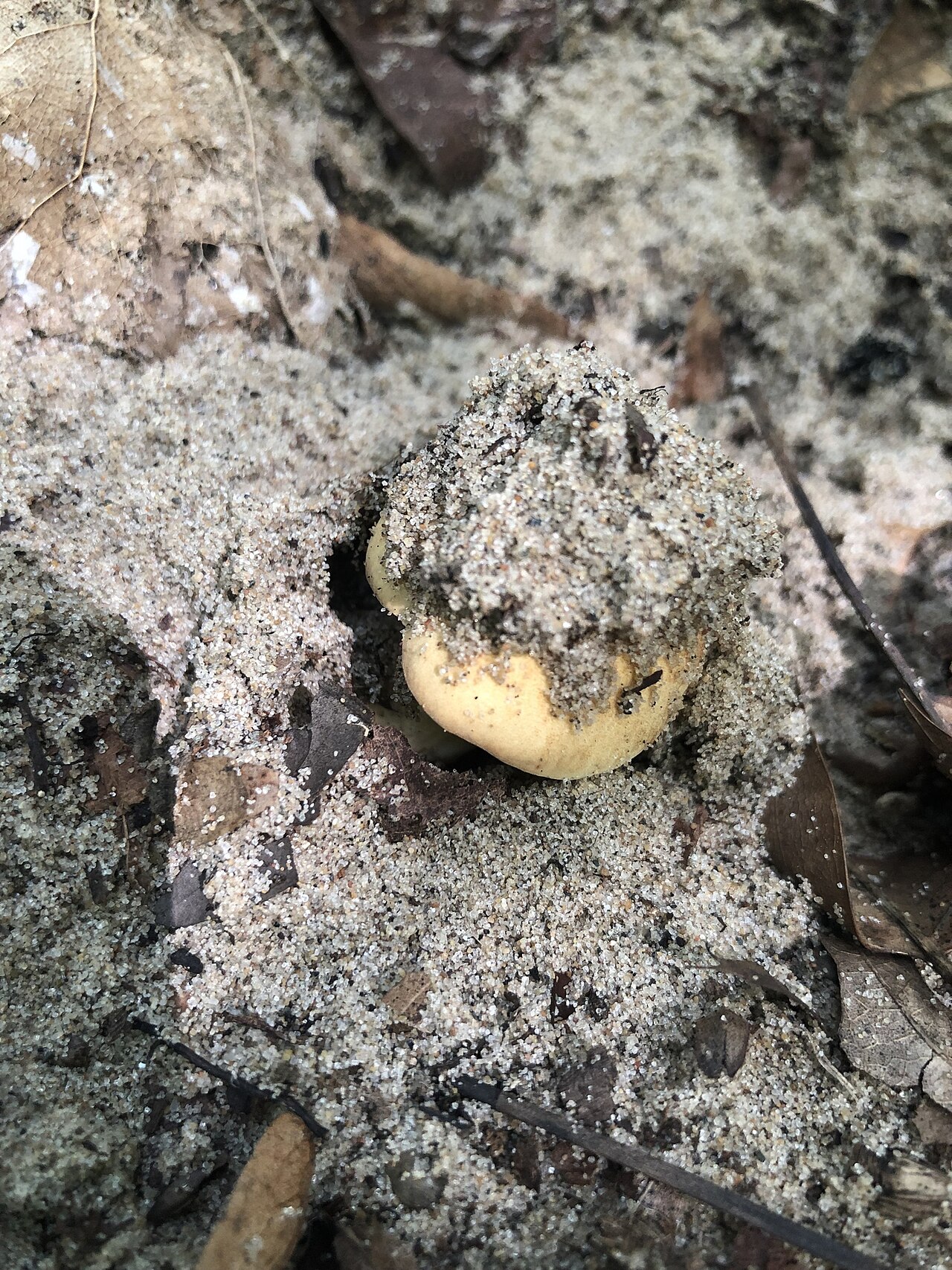
Photo: Robert M Hallock · CC BY 4.0 · Photo source · License

Description
A chestnut-brown bolete with white pores and a brittle, often hollow stem.
Identification features
The flesh is white and does not blue; the stem breaks chalk-like and has no net.
Identification checklist
Check the entire fruitbody for identification. A chestnut-brown bolete with white pores and a brittle, often hollow stem. The flesh is white and does not blue; the stem breaks chalk-like and has no net. Typical habitat: Warm deciduous woodland on sandy or acidic soils with oak and beech.
Detailed features
- Cap
- Up to about 10 cm, dry and matt, chestnut to cinnamon-brown.
- Hymenophore
- Tubes are almost free from the stem; pores start white and later become yellowish to olive.
- Stem
- Up to about 6 × 1.5 cm, brown and velvety; becomes hollow or chambered inside with age.
- Flesh
- White, without conspicuous blueing.
- Smell
- Not distinctive.
- Spore print
- Pale yellowish.
Size
- Cap diameter
- 1–10 cm
- Stem height
- 1–6 cm
- Stem diameter
- 0,5–1,5 cm
Habitat
Warm deciduous woodland on sandy or acidic soils with oak and beech.
Fruiting period
June, July, August, September, October
Ecology
- Trophic mode
- Mycorrhizal
- Host trees
- Sweet chestnut (Castanea), Beech (Fagus), Oak (Quercus)
- Substrate
- Sandy soil, Forest soil
- Soil
- Acidic
- Notes
- Often on sandy acidic soils in open deciduous or mixed woodland.
How to separate similar species
Compare especially with these similar species: Gyroporus cyanescens, Boletus edulis, Tylopilus felleus. Check the combination of cap shape and colour, spore-bearing surface, stem, flesh changes and habitat. A single feature or photograph is not enough; if the key characters do not match the description, do not treat the identification as confirmed.
Similar species
- Gyroporus cyanescens
The flesh blues strongly when bruised.
- Bay bolete (Imleria badia)
Has a solid rather than chambered stem, and pores often blue when bruised.
- Bitter bolete (Tylopilus felleus)
Pores turn pinkish at maturity and the stem is reticulate.
Conservation
- Red list
- R – rare species
- Notes
- On the Slovenian Red List: R – rare species.