Species details
Bay bolete
Imleria badia
Traditionally edible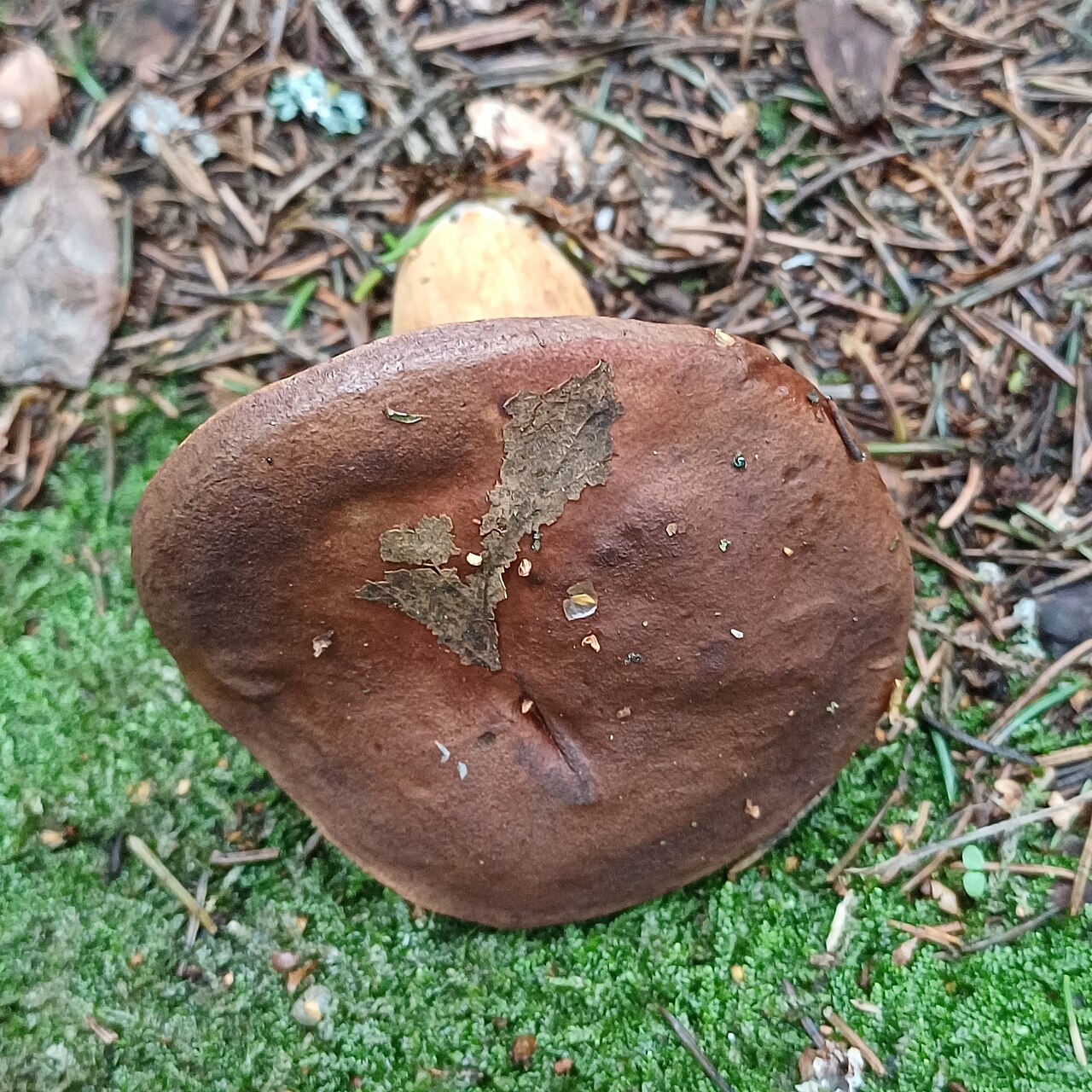
Photo: Mikko Heikkinen · CC BY 4.0 · Photo source · License

Description
A chestnut-brown bolete with yellow pores that often turn blue when pressed.
Identification features
The stem is smooth to fibrous and lacks a net, while the cap is sticky when wet. Pore bluing may be weak or strong.
Identification checklist
Check the entire fruitbody for identification. A chestnut-brown bolete with yellow pores that often turn blue when pressed. The stem is smooth to fibrous and lacks a net, while the cap is sticky when wet. Pore bluing may be weak or strong. Typical habitat: In coniferous and mixed woodland, often with spruce and pine on acidic soil.
Detailed features
- Cap
- 5–15 cm, chestnut to dark brown, velvety when young, later smoother and somewhat sticky when wet.
- Hymenophore
- Pores are yellow to olive-yellow and characteristically bruise blue-green on pressure.
- Stem
- 5–10 × 1.5–4 cm, brownish, smooth to longitudinally fibrous, without a conspicuous reticulum.
- Flesh
- White to pale yellowish; may blue moderately above the tubes and when cut.
- Smell
- Mild mushroom-like smell.
- Spore print
- Olive-brown.
Size
- Cap diameter
- 5–15 cm
- Stem height
- 5–10 cm
- Stem diameter
- 1,5–4 cm
Habitat
In coniferous and mixed woodland, often with spruce and pine on acidic soil.
Fruiting period
June, July, August, September, October, November
Ecology
- Trophic mode
- Mycorrhizal
- Host trees
- Spruce (Picea), Pine (Pinus)
- Substrate
- Forest soil
- Soil
- Acidic
- Notes
- Most often in conifer and mixed woodland with spruce and pine, commonly on acidic soils; it may also occur near decaying wood.
Distribution
- Notes
- A widely distributed European woodland species, especially common in conifer forests.
How to separate similar species
Compare especially with these similar species: Boletus edulis, Xerocomus species. Check the combination of cap shape and colour, spore-bearing surface, stem, flesh changes and habitat. A single feature or photograph is not enough; if the key characters do not match the description, do not treat the identification as confirmed.
Similar species
- Penny bun (Boletus edulis)
Cep usually has a pale reticulum on the upper stem, and its pores do not bruise blue so characteristically.
Interesting facts
Did you know? The blue-green bruising of the pores is useful but should always be combined with stem form and absence of a reticulum.