Species details
Cedarwood waxcap
Cuphophyllus russocoriaceus
Traditionally edible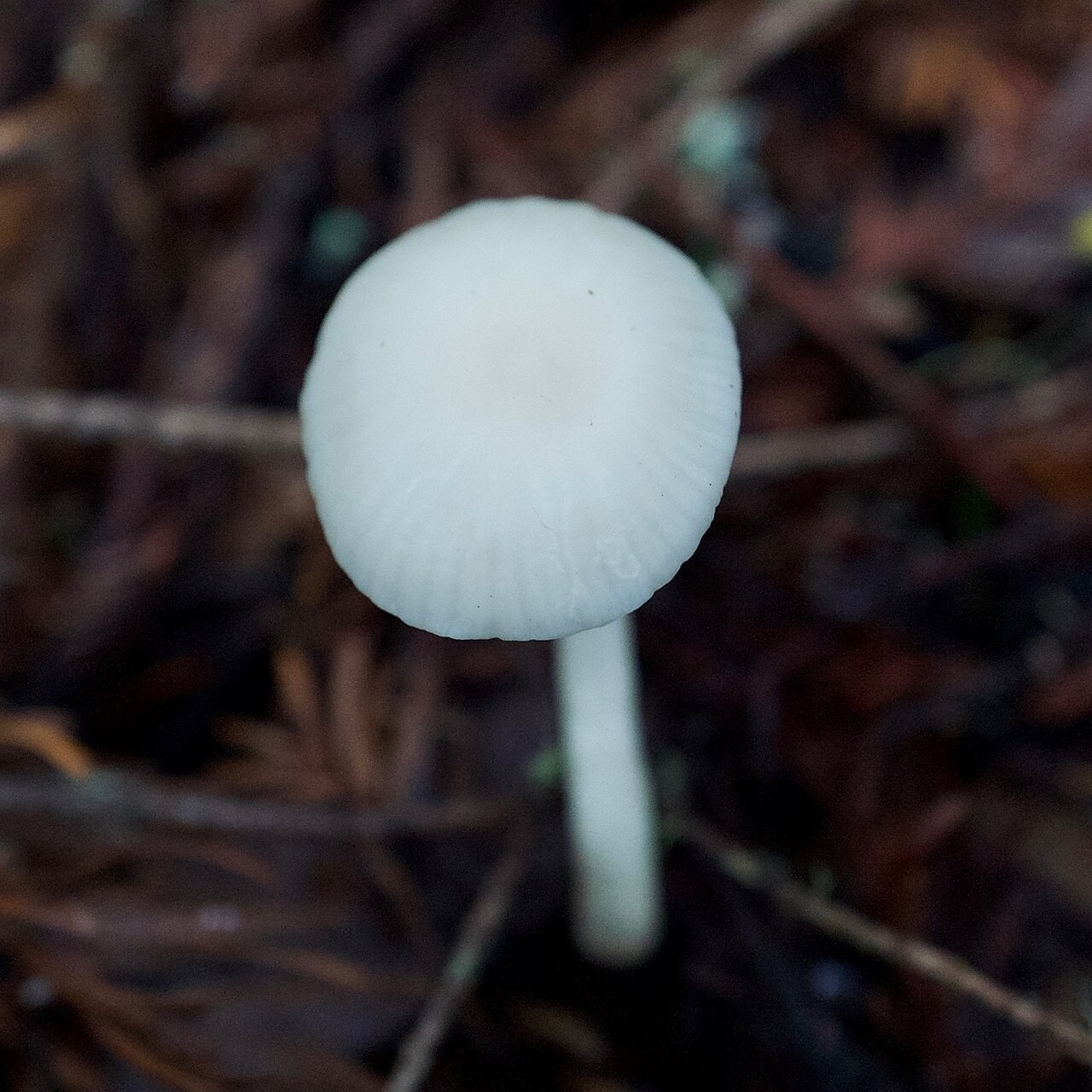
Photo: Adam Bryant · CC BY-SA 4.0 · Photo source · License

Description
A small ivory-white to pale-yellow waxcap with a very distinctive strong cedarwood or Russian-leather odour.
Identification features
Cap about 1–2 cm, convex at first and later almost flat, smooth, ivory-white to pale yellow and hygrophanous. Gills are cream, thick, distant and partly decurrent. Stem is cream-white and may have a pinkish tinge.
Identification checklist
Besides the pale yellowish appearance, the key clue is a strong persistent smell of cedarwood, cedar oil or Russian leather.
Detailed features
- Cap
- Cap about 1–2 cm, convex at first and later almost flat, smooth, ivory-white to pale yellow and hygrophanous.
- Hymenophore
- The gills are cream-coloured, thick, widely spaced and partly decurrent.
- Stem
- Stem is cream-white and may have a pinkish tinge.
Size
- Cap diameter
- 1–2 cm
Habitat
Grows on meadows and lawns, including coastal grassland, in summer and autumn.
Fruiting period
July, August, September, October
Ecology
- Substrate
- Grassland
- Notes
- Grows on meadows and lawns, including coastal grassland, in summer and autumn.
How to separate similar species
Cuphophyllus virgineus can be very similar in colour. A photo cannot confirm the characteristic odour, so AI should not show high confidence without smell information.
Similar species
- Snowy waxcap (Cuphophyllus virgineus)
- Meadow waxcap (Cuphophyllus pratensis)
- Cuphophyllus species