Species details
Beech milkcap
Lactarius blennius
Inedible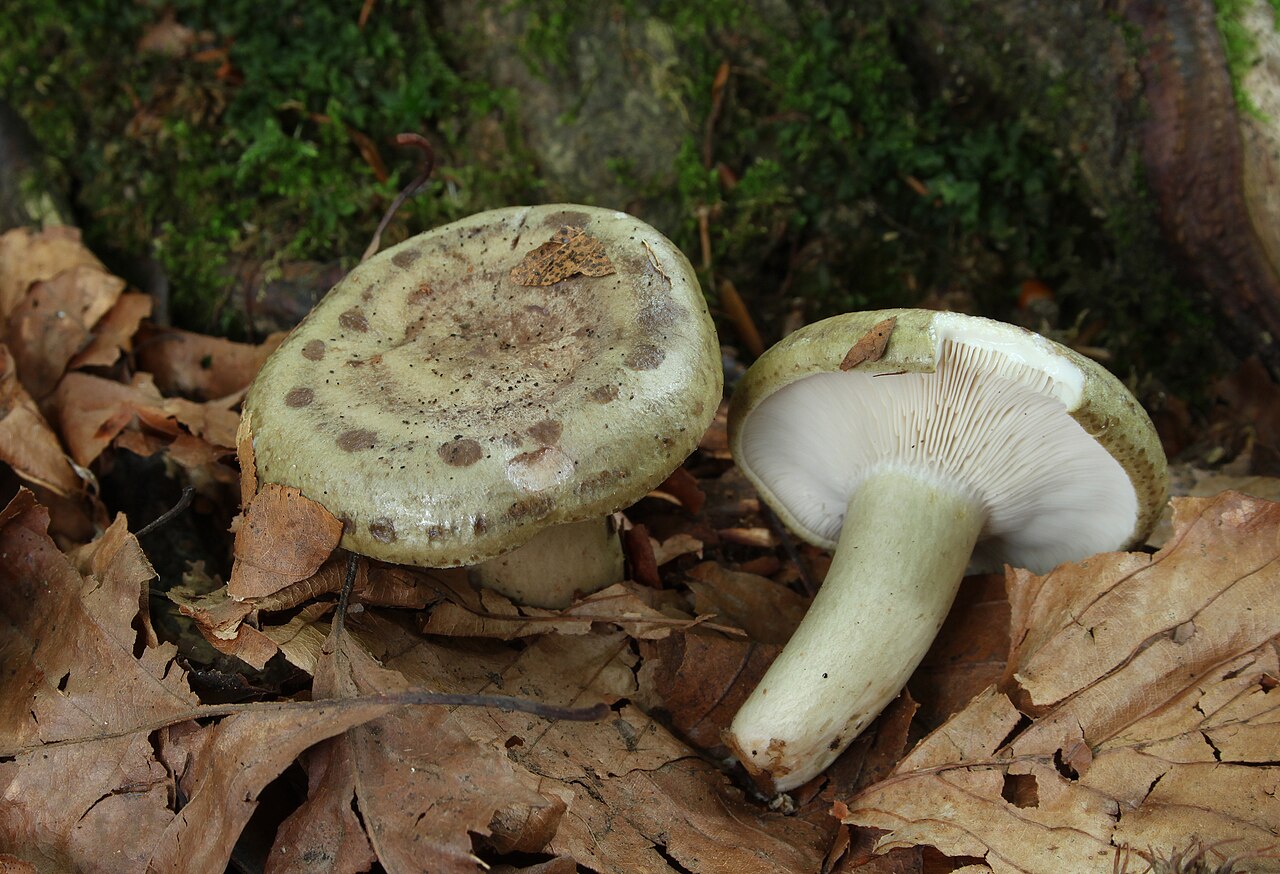
Photo: Holger Krisp · CC BY 3.0 · Photo source · License

Description
An olive-grey to grey-green milkcap with a sticky cap and darker concentric blotches, characteristically associated with beech.
Identification features
The pale gills release white, distinctly acrid latex when damaged; the flesh is brittle and may grey slightly in air.
Identification checklist
Check the entire fruitbody for identification. An olive-grey to grey-green milkcap with a sticky cap and darker concentric blotches, characteristically associated with beech. The pale gills release white, distinctly acrid latex when damaged; the flesh is brittle and may grey slightly in air. Typical habitat: Deciduous woodland, especially beech woods, from summer into autumn.
Detailed features
- Cap
- An olive-grey to grey-green milkcap with a slimy cap and darker concentric spots, characteristically associated with beech.
- Hymenophore
- The pale gills exude white, distinctly acrid milk when damaged; the flesh is brittle and may become slightly grey in air.
- Flesh
- White and brittle, sometimes greying slightly in air.
- Smell
- No distinctive smell.
- Spore print
- Pale cream.
Size
- Cap diameter
- 4–10 cm
- Stem height
- 4–6 cm
- Stem diameter
- 1–1,5 cm
Habitat
Deciduous woodland, especially beech woods, from summer into autumn.
Fruiting period
July, August, September, October
Ecology
- Trophic mode
- Mycorrhizal
- Host trees
- Beech (Fagus)
- Substrate
- Forest soil
- Notes
- Mycorrhizal species. Deciduous woodland, especially beech woods, from summer into autumn.
How to separate similar species
Compare especially with these similar species: Lactarius fluens, Lactarius quietus, Lactarius species. Check the entire fruitbody, spore-bearing surface, stem, texture, changes after bruising and habitat. A single feature or photograph is not enough for reliable identification.
Similar species
- Lactarius fluens
- Oak milkcap (Lactarius quietus)
- Lactarius species
Interesting facts
Did you know? The species is characteristically associated with beech; white acrid latex and a sticky grey-olive cap are key clues.