Species details
Beech knight
Tricholoma sciodes
Poisonous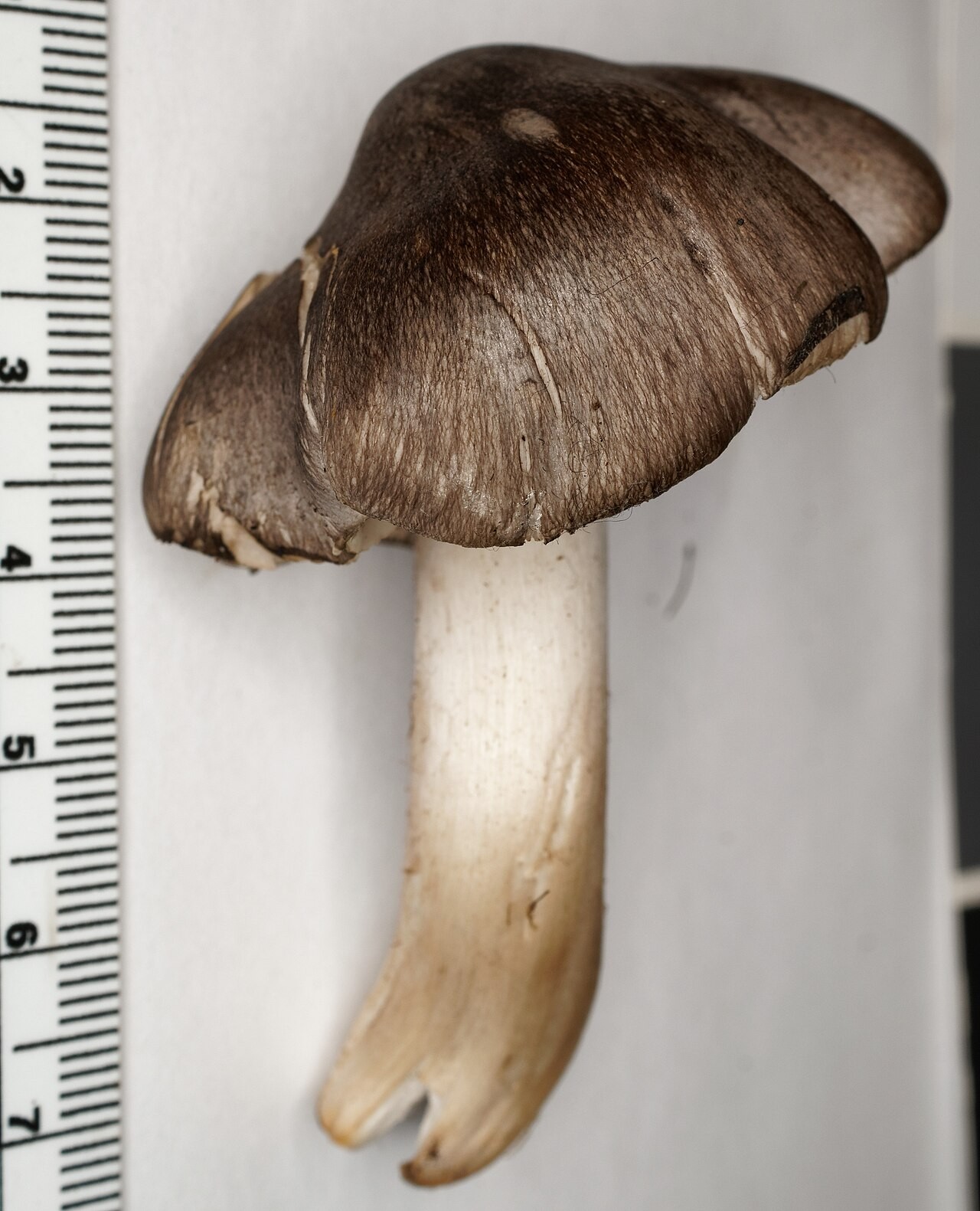
Photo: Adrien BENOIT à la GUILLAUME · CC BY-SA 4.0 · Photo source · License
_02.jpg)
Description
A grey fibrous Tricholoma with a bossed cap, greyish gills, and bitter to acrid flesh; it causes gastrointestinal poisoning.
Identification features
The cap is 4–7 cm wide, grey and radially fibrous, often with a pink or violet tinge and a distinct boss. Gills start white and become greyish, sometimes with darker edges.
Identification checklist
Check the grey bossed radially fibrous cap, greying gills, beech habitat, and absence of yellow tones. FungiTrail does not recommend tasting.
Detailed features
- Cap
- The cap is 4–7 cm wide, grey and radially fibrous, often with a pink or violet tinge and a distinct boss.
- Hymenophore
- Gills start white and become greyish, sometimes with darker edges.
- Smell
- No distinctive smell.
- Spore print
- White.
Size
- Cap diameter
- 4–7 cm
- Stem height
- 4–7 cm
- Stem diameter
- 0,7–1,5 cm
Habitat
Grows mainly with beech and in mixed woodland, mostly in autumn.
Fruiting period
September, October, November
Ecology
- Trophic mode
- Mycorrhizal
- Host trees
- Beech (Fagus)
- Substrate
- Forest soil
- Notes
- Grows mainly with beech and in mixed woodland, mostly in autumn.
How to separate similar species
Edible Tricholoma portentosum usually has yellowish tones on the gills or stem. T. virgatum is similarly grey but usually has a sharper pointed boss.
Similar species
- Charcoal burner knight (Tricholoma portentosum)
- Ashen knight (Tricholoma virgatum)
- Tiger knight (Tricholoma pardinum) DANGEROUS
T. pardinum is poisonous, usually larger and distinctly dark-scaled.
Interesting facts
Did you know? Check the grey bossed radially fibrous cap, greying gills, beech habitat, and absence of yellow tones. FungiTrail does not recommend tasting.