Species details
Charcoal burner knight
Tricholoma portentosum
Extra caution required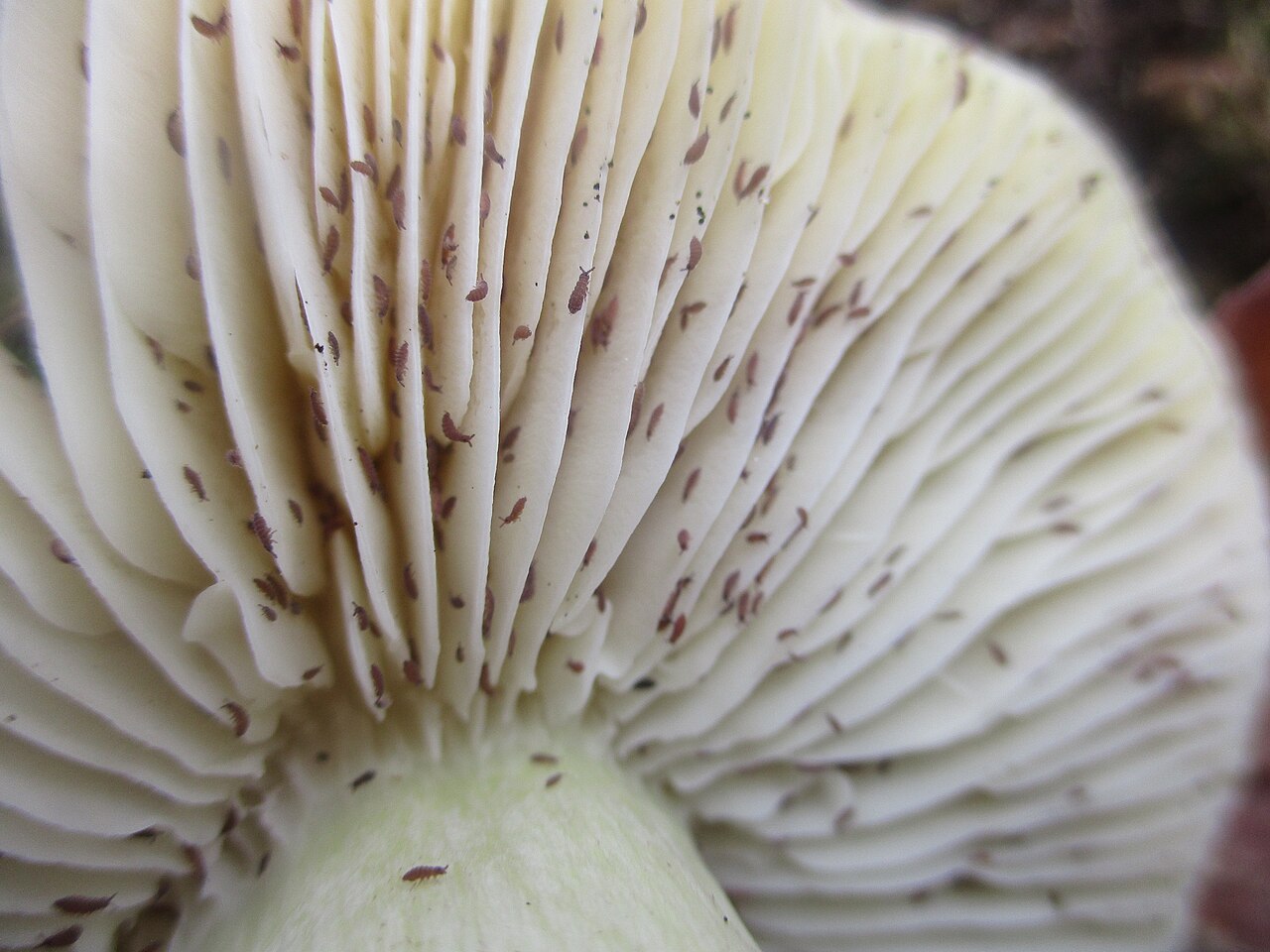
Photo: Mycowalt · CC BY-SA 4.0 · Photo source · License
.jpg)
Description
A grey to charcoal knight with radial dark fibres and yellowish tones on gills and stem.
Identification features
The moist cap is slightly sticky, gills are white to yellowish, and smell and taste are mealy.
Identification checklist
Check the entire fruitbody for identification. A grey to charcoal knight with radial dark fibres and yellowish tones on gills and stem. The moist cap is slightly sticky, gills are white to yellowish, and smell and taste are mealy. Typical habitat: Late in the season in conifer and mixed woodland, especially under pine and spruce.
Detailed features
- Cap
- 5–10 cm, grey to grey-yellow, with innate radial fibres, distinctly sticky when moist; initially hemispherical to bell-shaped, later flattened.
- Hymenophore
- Gills white to grey, broad and spaced, often yellowing with age; notched at the stem.
- Stem
- 6–12 × 1–2 cm, white and fibrous, sometimes yellowing with age, solid and cylindrical.
- Flesh
- White, greyish beneath the cap skin, tender.
- Smell
- Pleasant, often mealy.
- Spore print
- White.
Size
- Cap diameter
- 5–10 cm
- Stem height
- 6–12 cm
- Stem diameter
- 1–2 cm
Habitat
Late in the season in conifer and mixed woodland, especially under pine and spruce.
Fruiting period
September, October, November, December
Ecology
- Trophic mode
- Mycorrhizal
- Host trees
- Pine (Pinus)
- Substrate
- Forest soil
- Notes
- A mycorrhizal species often associated with pines; fruits late in autumn and can persist after the first frosts.
How to separate similar species
Compare especially with these similar species: Tricholoma sejunctum, Tricholoma virgatum, Tricholoma pardinum. Check the combination of cap shape and colour, spore-bearing surface, stem, flesh changes and habitat. A single feature or photograph is not enough; if the key characters do not match the description, do not treat the identification as confirmed.
Similar species
- Tiger knight (Tricholoma pardinum) DANGEROUS
The poisonous species is more robust and has distinct dark scales rather than a sticky, innately fibrous cap surface.
- Deceiving knight (Tricholoma sejunctum)
The cap is usually more olive-green to yellowish and less uniformly grey.