Species details
Arched woodwax
Hygrophorus camarophyllus
Conditional / expert preparation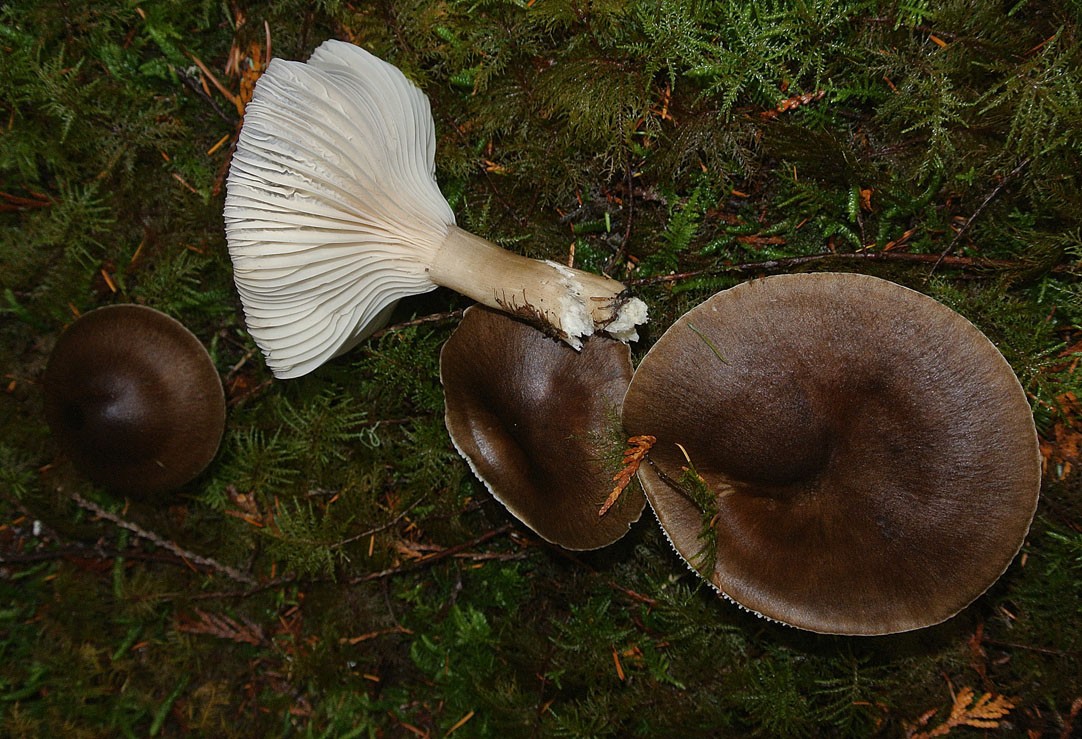
Photo: Dick Culbert from Gibsons, B.C., Canada · CC BY 2.0 · Photo source · License
.jpg)
Description
A grey-brown woodwax with thick white-to-grey gills, grey stem, and a characteristic honey smell; rare.
Identification features
The cap is 5–12 cm wide, grey-brown, radially fibrous, and sticky when moist. Gills are white then greyish, thick, and spaced. The stem is grey and narrows toward the base.
Identification checklist
Check the grey-brown radially fibrous cap, thick spaced pale gills, grey stem, and honey smell. Its rarity calls for careful documentation.
Detailed features
- Cap
- The cap is 5–12 cm wide, grey-brown, radially fibrous, and sticky when moist.
- Hymenophore
- Gills are white then greyish, thick, and spaced.
- Stem
- The stem is grey and narrows toward the base.
Size
- Cap diameter
- 5–12 cm
Habitat
Grows in coniferous woodland, mainly with pine and spruce on acidic soils, in summer and autumn; rare.
Fruiting period
July, August, September, October, November
Ecology
- Host trees
- Spruce (Picea), Pine (Pinus)
- Soil
- Acidic
- Notes
- Grows in coniferous woodland, mainly with pine and spruce on acidic soils, in summer and autumn; rare.
How to separate similar species
Hygrophorus atramentosus is very similar and was separated only through closer study. Additional characters may be needed for reliable identification.
Similar species
- Hygrophorus atramentosus
- Almond woodwax (Hygrophorus agathosmus)
Conservation
- Red list
- R – rare species
- Notes
- On the Slovenian Red List: R – rare species.