Species details
Yellow stagshorn
Calocera viscosa
Inedible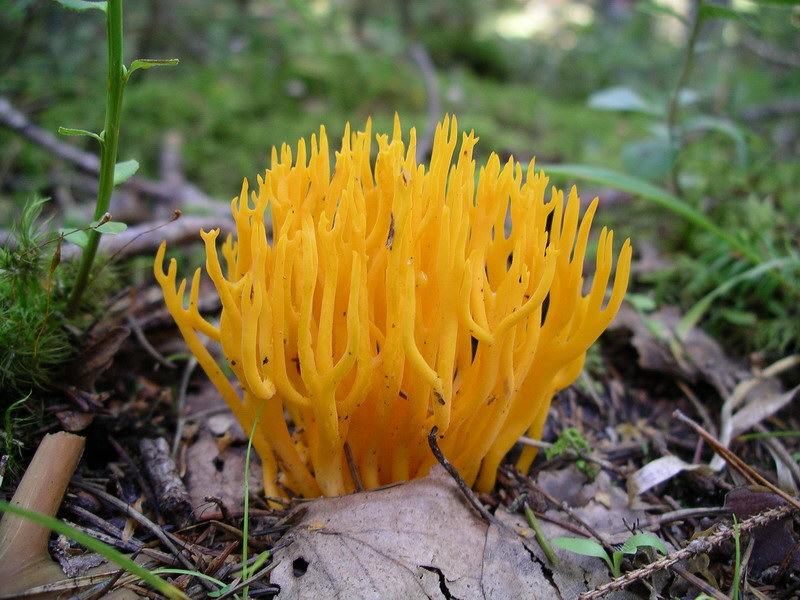
Photo: Nomeda Vėlavičienė · CC BY-SA 3.0 · Photo source · License

Description
A yellow to orange, coral-like branched wood fungus with small elastic branches and a sticky surface when wet.
Identification features
The branches are tough and gelatinous-elastic, often forked at the tips; the fertile surface covers the smooth outside of the branches.
Identification checklist
Check the entire fruitbody for identification. A yellow to orange, coral-like branched wood fungus with small elastic branches and a sticky surface when wet. The branches are tough and gelatinous-elastic, often forked at the tips; the fertile surface covers the smooth outside of the branches. Typical habitat: On decaying conifer wood, especially spruce stumps, roots and buried timber.
Detailed features
- Cap
- A yellow to orange, coral-like branched wood fungus with fine flexible branches and a sticky surface in damp conditions.
- Hymenophore
- The branches are tough and gelatinous-elastic, often forked at the tips; the fertile layer covers the smooth outer surface of the branches.
- Flesh
- Yellowish, elastic and tough, almost cartilaginous.
- Smell
- No distinctive smell.
- Spore print
- Yellow-brown.
Habitat
On decaying conifer wood, especially spruce stumps, roots and buried timber.
Fruiting period
June, July, August, September, October, November
Ecology
- Trophic mode
- Saprotrophic
- Host trees
- Spruce (Picea), Pine (Pinus)
- Substrate
- Dead wood, Stumps, Buried wood
- Notes
- Saprotrophic species. On decaying conifer wood, especially spruce stumps, roots and buried timber.
How to separate similar species
Compare especially with these similar species: Clavulina coralloides, Ramaria species, Clavulinopsis species. Check the entire fruitbody, spore-bearing surface, stem, texture, changes after bruising and habitat. A single feature or photograph is not enough for reliable identification.
Similar species
- Crested coral (Clavulina coralloides)
C. coralloides is whitish to grey, not conspicuously sticky, and normally grows on soil rather than decaying conifer wood.
- Ramaria species
- Clavulinopsis species
Interesting facts
Did you know? Although coral-like, its sticky elastic surface and growth on wood are important clues.