Species details
Crested coral
Clavulina coralloides
Traditionally edible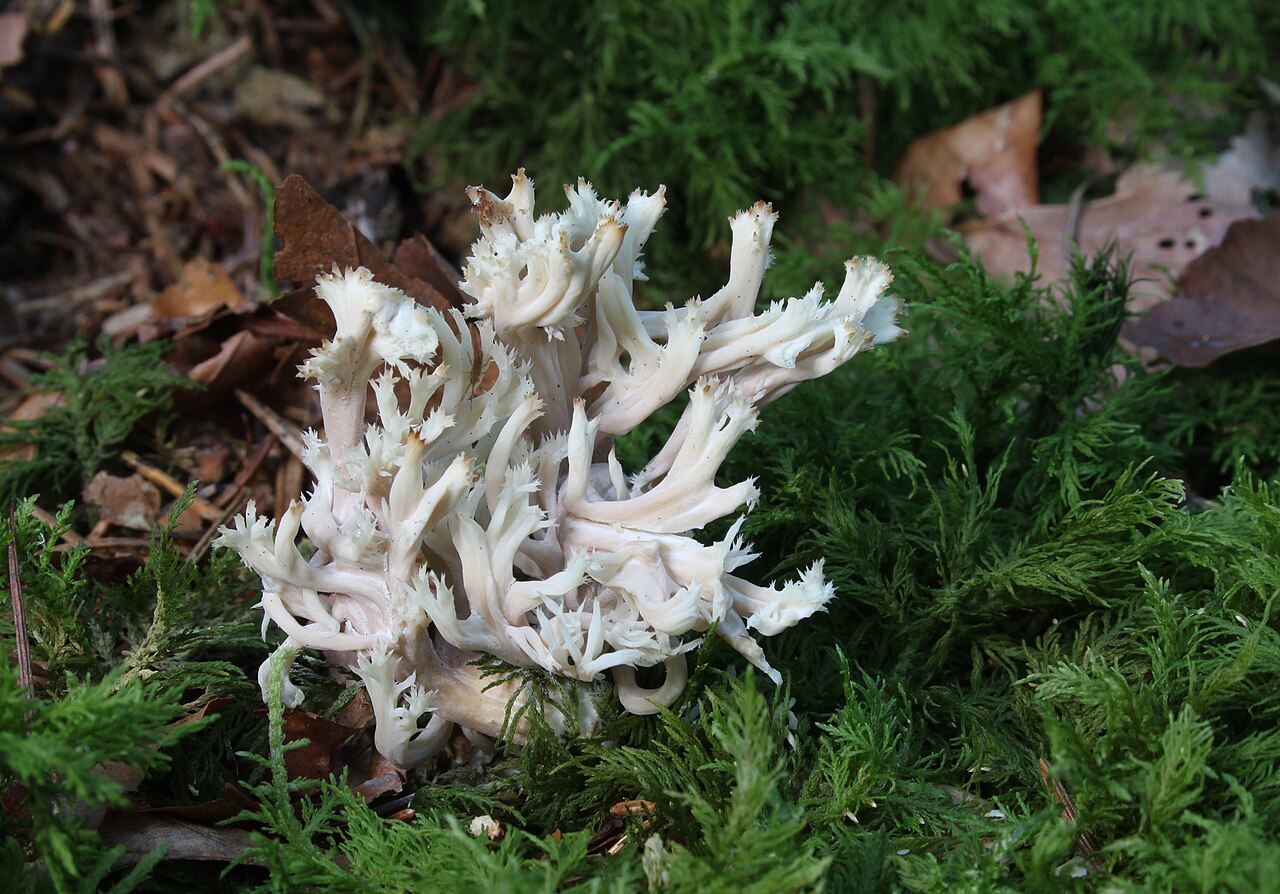
Photo: Holger Krisp · CC BY 3.0 · Photo source · License

Description
A whitish to grey coral fungus with branched arms whose tips are characteristically flattened and crested.
Identification features
The fruitbody is usually only a few centimetres tall; branches arise from a common base and the flesh is white and somewhat tough.
Identification checklist
Check the entire fruitbody for identification. A whitish to grey coral fungus with branched arms whose tips are characteristically flattened and crested. The fruitbody is usually only a few centimetres tall; branches arise from a common base and the flesh is white and somewhat tough. Typical habitat: On the ground in deciduous and coniferous woodland, often with spruce, from late summer into late autumn.
Detailed features
- Cap
- A whitish to grey coral fungus with branched arms whose tips are characteristically flattened and crested.
- Hymenophore
- The fruitbody is usually only a few centimetres tall; the branches arise from a common base and the flesh is white and somewhat tough.
- Flesh
- White and somewhat tough.
- Smell
- Mild to pleasant.
- Spore print
- White.
Habitat
On the ground in deciduous and coniferous woodland, often with spruce, from late summer into late autumn.
Fruiting period
August, September, October, November
Ecology
- Host trees
- Spruce (Picea)
- Substrate
- Forest soil
- Notes
- On the ground in deciduous and coniferous woodland, often with spruce, from late summer into late autumn.
How to separate similar species
Compare especially with these similar species: Clavulina cinerea, Ramaria species, Calocera viscosa. Check the entire fruitbody, spore-bearing surface, stem, texture, changes after bruising and habitat. A single feature or photograph is not enough for reliable identification.
Similar species
- Clavulina cinerea
- Ramaria species
- Yellow stagshorn (Calocera viscosa)
Interesting facts
Did you know? Flattened, toothed branch tips are among the more useful macroscopic characters.