Species details
Tuberous polypore
Polyporus tuberaster
Traditionally edible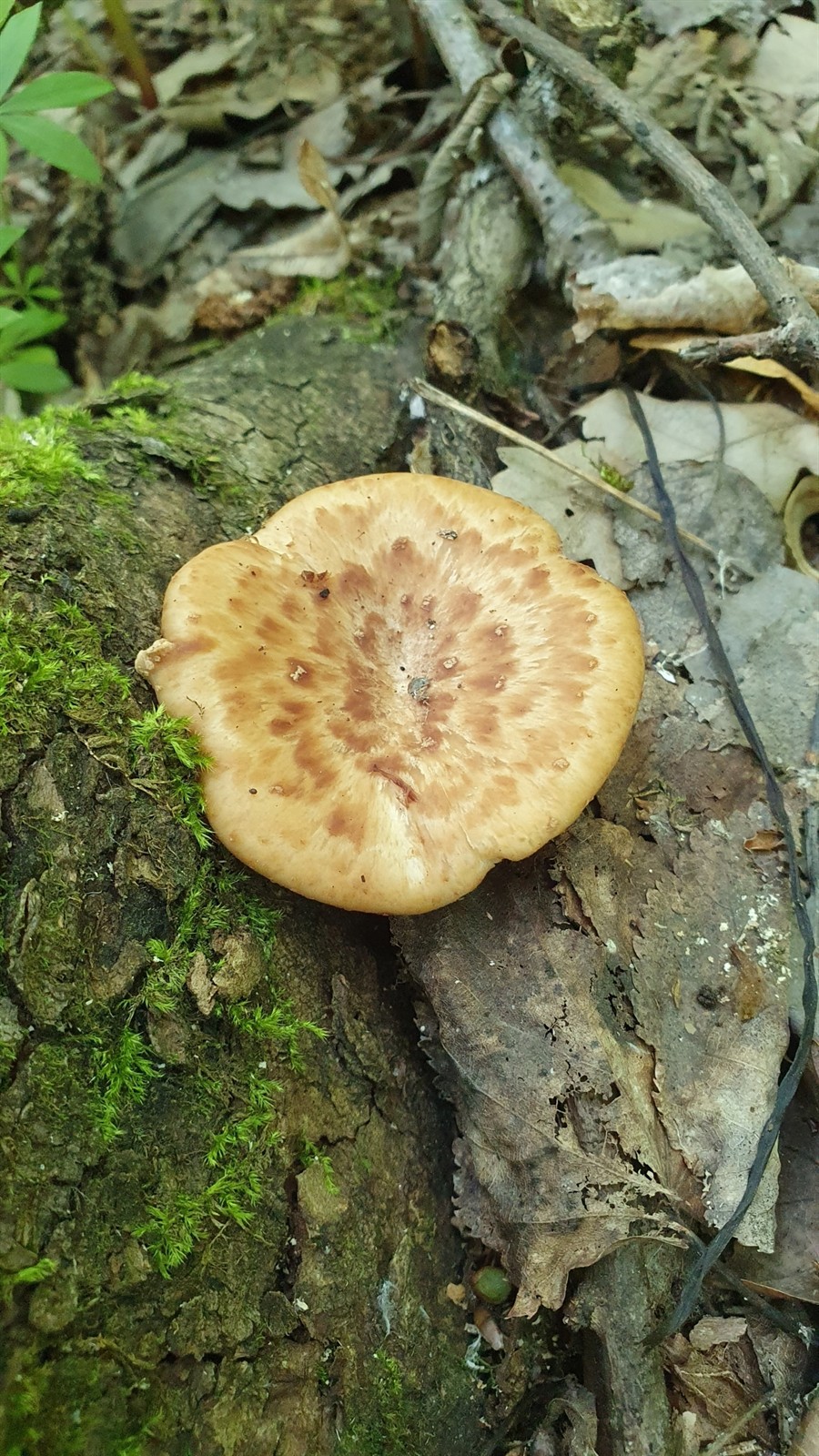
Photo: Анна Митрошенкова · CC BY 4.0 · Photo source · License

Description
A smaller scaly polypore on hardwood with a tuberously thickened base or underground sclerotium; edible when young.
Identification features
The cap is 3–8 cm or larger, flat to depressed, ochre to reddish-brown and covered with concentric dark pointed scales. Pores are pale, large and angular.
Identification checklist
Check the smaller scaly cap, large angular pores and tuberous base or sclerotium.
Detailed features
- Cap
- The cap is 3–8 cm or larger, flat to depressed, ochre to reddish-brown and covered with concentric dark pointed scales.
- Hymenophore
- Pores are pale, large and angular.
Size
- Cap diameter
- 3–8 cm
Habitat
Grows in deciduous woodland, especially with beech, on decaying wood from spring to autumn.
Fruiting period
May, June, July, August, September, October
Ecology
- Host trees
- Beech (Fagus)
- Substrate
- Dead wood
- Notes
- Grows in deciduous woodland, especially with beech, on decaying wood from spring to autumn.
How to separate similar species
Cerioporus squamosus is usually much larger and lacks the same characteristic tuberous base.
Similar species
- Dryad's saddle (Cerioporus squamosus)
- Polyporus species
- Neofavolus species