Species details
Sepia bolete
Xerocomellus porosporus
Traditionally edible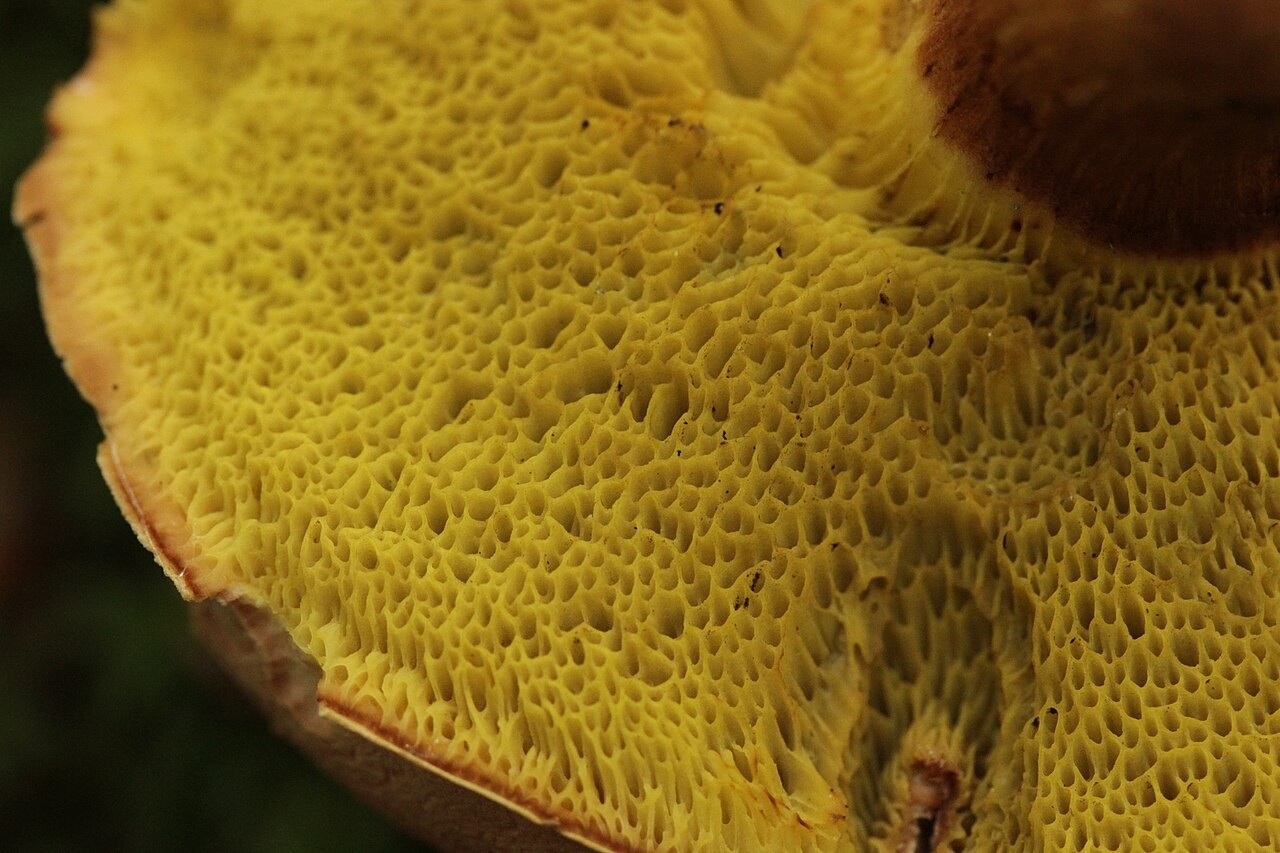
Photo: Svencapoeira · CC BY-SA 4.0 · Photo source · License

Description
A brown cracking Xerocomellus with yellow pores that blue when pressed; microscopically characterised by spores with a truncate tip.
Identification features
The cap reaches about 8 cm, beige to dark brown and cracks early; the cracks generally do not redden. Pores are dirty yellow to yellow-green and blue when pressed.
Identification checklist
Check the brown cracked cap without red tissue in the cracks and blue staining of pores and stem. Reliable separation from relatives may require spore microscopy.
Detailed features
- Cap
- The cap reaches about 8 cm, beige to dark brown and cracks early; the cracks generally do not redden.
- Hymenophore
- Pores are dirty yellow to yellow-green and blue when pressed.
Size
- Cap diameter
- ≤ 8 cm
Habitat
Grows in mixed and oak woodland, singly or in small groups, mainly in autumn.
Fruiting period
September, October, November
Ecology
- Host trees
- Oak (Quercus)
- Notes
- Grows in mixed and oak woodland, singly or in small groups, mainly in autumn.
How to separate similar species
Xerocomellus chrysenteron often shows reddish tissue in cap cracks. Macroscopic differences among Xerocomellus overlap.