Species details
Scaly sawgill
Neolentinus lepideus
Inedible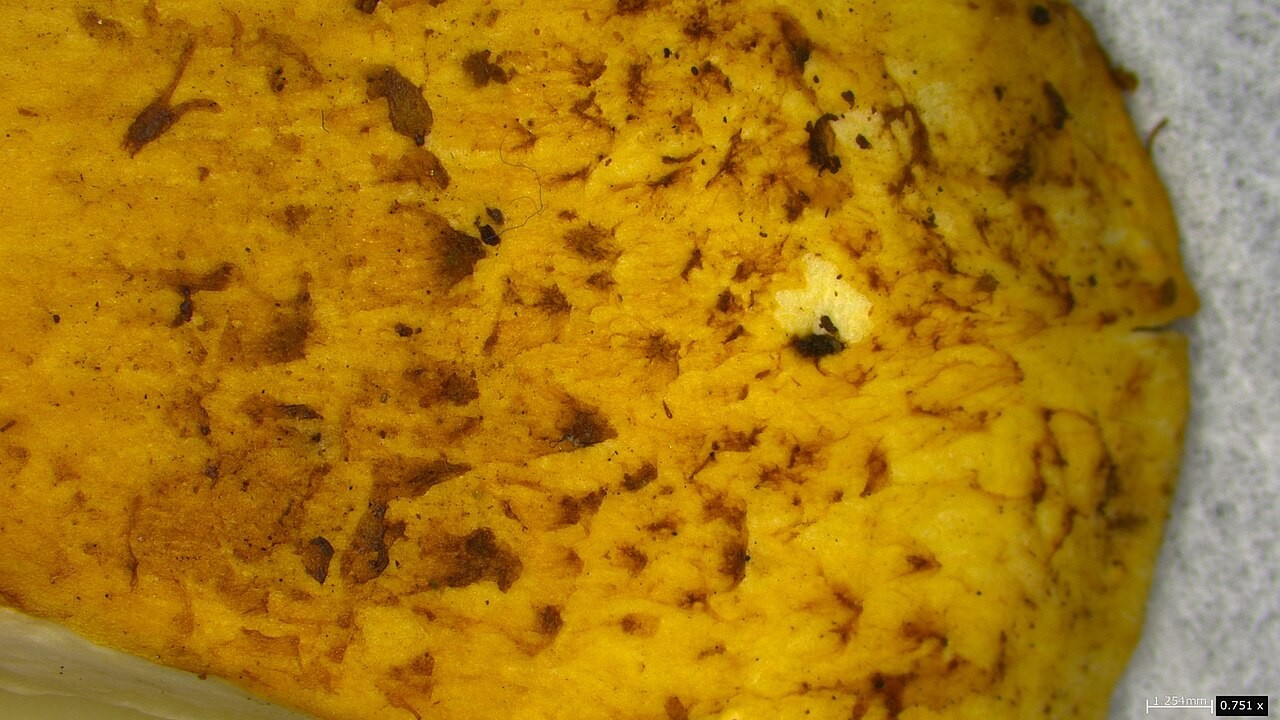
Photo: Daniel Estabrooks · CC0 · Photo source · License

Description
A tough whitish-brown wood fungus with brown scales, saw-edged gills and a strong anise smell; grows mainly on conifer wood.
Identification features
The cap is 4–12 cm wide, whitish to pale brown and covered with brown scales. Gills are white to ochre, spaced and strongly saw-edged. The tough stem is scaly below a fleeting ring.
Identification checklist
Check growth on conifer wood, the scaly cap, saw-edged gills and strong anise smell.
Detailed features
- Cap
- The cap is 4–12 cm wide, whitish to pale brown and covered with brown scales.
- Hymenophore
- The gills are white to ochre, widely spaced and strongly saw-toothed along the edges.
- Stem
- The tough stem is scaly below a fleeting ring.
Size
- Cap diameter
- 4–12 cm
Habitat
Grows on conifer stumps and worked conifer timber, including old wooden sleepers and bridges, from summer to autumn.
Fruiting period
June, July, August, September, October
Ecology
- Substrate
- Stumps, Wood
- Notes
- Grows on conifer stumps and worked conifer timber, including old wooden sleepers and bridges, from summer to autumn.
How to separate similar species
Lentinus tigrinus grows mainly on hardwood and has a different pattern of dark scales. Substrate is an important clue.
Similar species
- Tiger sawgill (Lentinus tigrinus)
- Lilac oysterling (Panus conchatus)
- Pleurotus species